 Into The Music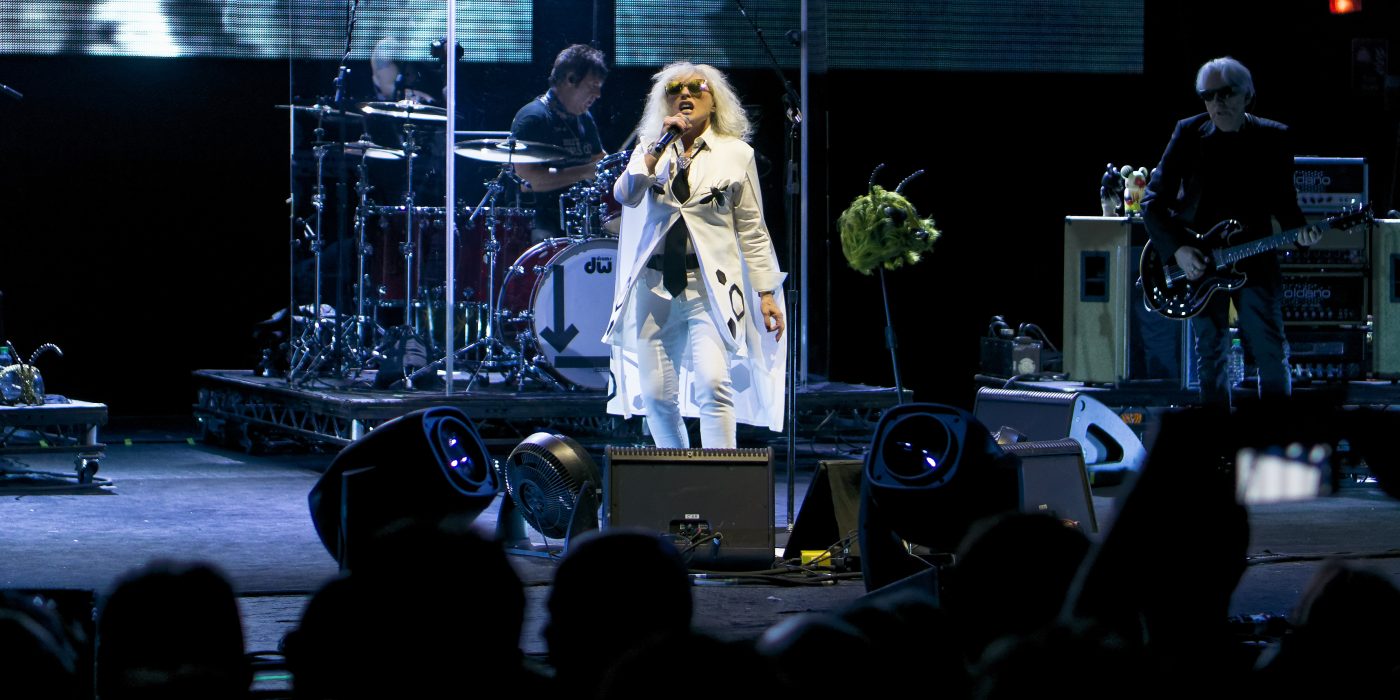
New wave arrived without a proper announcement and left without a clear ending. That is part of why it is still so difficult to pin down even now, four decades past its commercial peak. Ask ten people to name a new wave band and you will get ten different answers, some of them correct, some of them arguable, and at least a few of them covering artists who would have bristled at the label while alive. That slipperiness is not a bug. It is the defining feature of a genre that was always more of a sensibility than a sound.
The roughest definition puts new wave as what happened when punk energy met art school ambition and studio technology in the late 1970s. Punk had cleared the field. It had made it acceptable again to be strange, angular, and deliberately difficult. New wave picked that up and ran it through synthesizers, through art school color theory, through the influence of Kraftwerk and Bowie and Roxy Music, and produced something that was simultaneously more polished and weirder than the music it emerged from.
Blondie is the easiest entry point for most people, and “Heart of Glass” remains one of the most formally perfect pieces of pop music from that entire era. But Blondie was also a band that absorbed disco and reggae and eventually hip-hop, which tells you something about how porous these genre walls actually were. The Cars were new wave in the American sense, meaning they were radio-friendly but with just enough chill and detachment to keep them from being simply rock. Devo were new wave by virtue of being too strange for punk and too confrontational for pop. Talking Heads were art rock and new wave and something else entirely depending on which album you were listening to.
The British end of new wave was its own ecosystem. The post-punk bands who made the jump from abrasion to accessibility, Wire, Gang of Four, XTC, pushed rhythm and dissonance into a more functional relationship with the pop song. The synth-pop acts that followed, Depeche Mode in their early years, the Human League, Soft Cell, were doing something adjacent but distinct. Joy Division and then New Order traced an arc from pure post-punk to new wave to the floor of the club, taking their audience with them without losing the emotional intensity that had always been their selling point.
What unified these wildly different acts was an attitude toward artifice. New wave was not embarrassed about sounding constructed. The synthesizer, the drum machine, the deliberate flatness of certain vocals, these were not limitations to work around. They were aesthetic choices that said something specific about modernity and alienation and the strange intimacy of pop music made in an age of mass reproduction. When Gary Numan sang “Are ‘Friends’ Electric?”, the quotation marks around “Friends” were doing real philosophical work.
New wave’s commercial peak ran roughly from 1979 to 1985, and its decline is usually blamed on the consolidation of pop into something more polished and less interested in difficulty. That is true as far as it goes, but it leaves out the degree to which new wave simply absorbed into the mainstream and became the default mode of a certain kind of pop ambition. The influence is audible everywhere from mid-period Radiohead to contemporary electronic-adjacent indie, from Wet Leg to Caroline Polachek to the recent Robyn record, artists who are doing something that would not exist without the idea that pop music and genuine strangeness are not incompatible.
The genre’s legacy is not a narrow corridor of specific sounds. It is an ongoing permission slip, the reminder that pop music has always had room for the angular, the cerebral, and the deliberately odd, if you are willing to make that case in a way that is also, underneath all the art-school cool, genuinely catchy.
What’s interesting here is that the blueprint analogy is more literal than people realize. When you trace synth-pop’s rhythm structures back, you’re finding the same approach to groove and call-and-response that defined a lot of Motown’s mid-period work , just run through a completely different set of machines. The Wrecking Crew and the Funk Brothers were doing layered texture in a studio context that new wave producers later reinvented without always knowing the lineage.
You can’t really talk about a genre refusing to define itself without mentioning that half of those early new wave acts were directly pulling from Jamaican rhythms and dub production , Madness, The Specials, The Police, all of them had ska in their roots. That nervous, choppy guitar and that offbeat bounce didn’t come from nowhere. The British music scene in that period was so saturated with Caribbean influence that calling it purely “new” was always a bit of a stretch. Still love the music though, don’t get me wrong.
“Never agreed on what it was” , that’s a polite way of saying it was built on borrowed ideas and nobody wanted to give credit. Some of those bands had real heart, I’ll grant you that. But the whole “blueprint for everything” framing bothers me a bit. Plenty of what followed came directly from traditions that were already well established and got conveniently relabeled once the right faces attached themselves to it.
The ‘blueprint for everything that followed’ claim is supportable when you trace the harmonic language. New wave normalized the use of modal harmony in pop , the Dorian and Mixolydian borrowings that were unusual in mainstream rock became standard currency. That’s not borrowed ideas without credit; that’s how harmonic vocabulary actually spreads through a culture. The influence is structural, not just aesthetic.
I don’t care what it was or wasn’t , Madness and the English Beat were MADE for dancing and that’s enough for me. The ska influence in new wave gave it a rhythmic literacy that most rock movements completely lack. When the offbeat hits right, the whole body knows it. New wave at its best had that. That’s not nothing, that’s everything.