 Into The Music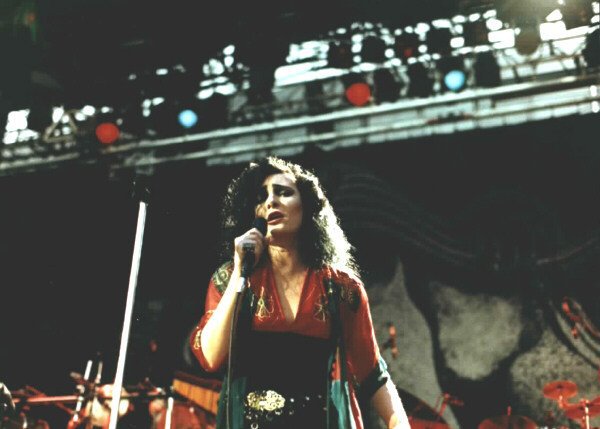
Post-punk is not a genre that has a clear origin point, a founding text, or an agreed-upon definition. It is, instead, a name applied after the fact to everything that happened when punk burned itself out and left a generation of musicians standing in the ash trying to figure out what came next.
What came next was enormous. Gang of Four turned Marxist theory into dance music. Joy Division made depression into texture. Wire stripped songs down to their structural essentials and found out the essentials were stranger than the decoration. The Slits absorbed dub and reggae and returned something that sounded like neither. Siouxsie and the Banshees grafted gothic drama onto angular guitar lines. Talking Heads moved to New York and let African rhythmic structures rearrange everything they thought they knew about songwriting.
None of these acts sounded like each other. That is the point. Post-punk was defined by refusal. It refused genre consolidation, refused the expectation that what happened after punk would sound like what punk had sounded like. The common thread was not sonic but attitudinal: a commitment to experimentation, an interest in what music could carry beyond its surface pleasure, and a conviction that popular form was worth engaging with intellectually rather than just emotionally.
The mid-1990s brought a revival of interest in the original post-punk bands, and that revival accelerated in the early 2000s when the Strokes, Interpol, Bloc Party, Franz Ferdinand, and LCD Soundsystem all pointed back to 1979-1984 as their primary reference. That was a strange moment. Music critics spent years arguing about whether these bands were genuine heirs or merely aesthetically literate borrowers. The argument was somewhat beside the point. What mattered was that a generation of listeners discovered Gang of Four and Wire and the Fall through bands they already loved, and went backward to find out where those sounds had come from.
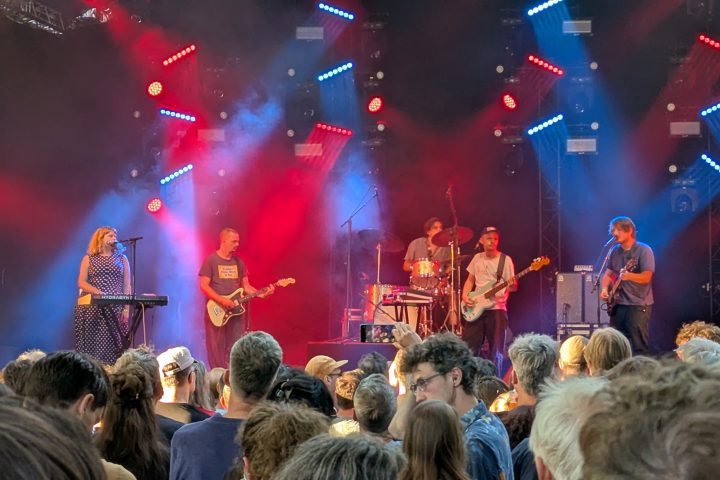
Post-punk never really went away after that second wave. It retreated into smaller rooms, toured the same venues, and kept producing records that the mainstream never quite got to. Savages made post-punk that felt genuinely threatening in the early 2010s. Idles showed up later in the decade and turned it into something closer to a community event. Dry Cleaning introduced a different kind of literary cool. BCNR raised the compositional ambitions until the category started feeling inadequate.
What all of these acts share, beyond their obvious debt to the original wave, is an understanding that post-punk is less a sound than a method. It is music made by people who love pop structure and are simultaneously suspicious of what that structure asks them to suppress. The tension between the two is where everything interesting lives.
Right now, that tension is as productive as it has been in decades. Irish and Scottish scenes are particularly strong, generating acts that channel the original post-punk energy without simply recreating it. American acts are doing the same, though the American version tends toward a different kind of anxious energy, more interior, less confrontational. The genre keeps refilling itself from different sources and keeps finding new things to say with a forty-year-old set of tools.
The reason post-punk endures is that the problem it was invented to solve, what do you do after the most exciting thing has already happened, is a problem every generation faces. The answer post-punk offered was to refuse the premise. The most exciting thing has not already happened. There is always somewhere further to go if you are willing to be uncomfortable about how you get there.

What’s analytically interesting about post-punk is how much of it was musicians who knew their theory deliberately unlearning it in public. Wire’s Pink Flag is a good case study , you can hear the competence underneath the abrasion. That’s different from the Ramones, who were genuinely working with minimal tools. Post-punk was choosing difficulty, not inheriting it.
This is making me think of Caetano Veloso and the Tropicália movement , also a genre that didn’t know what it was becoming, also a sound that was confrontational without being purely negative, also something that only made full sense retrospectively. Every country has its version of this story! The universal thing is that the best music always confuses its own moment.
Every generation of rock critics writes a piece like this about some genre from 40 years ago and somehow it’s always treated as deep. Meanwhile drill and trap are doing the exact same thing right now , refusing to define themselves, being messy and abrasive on purpose , and those same critics write think pieces about whether it’s even music. The double standard is consistent.