 Into The Music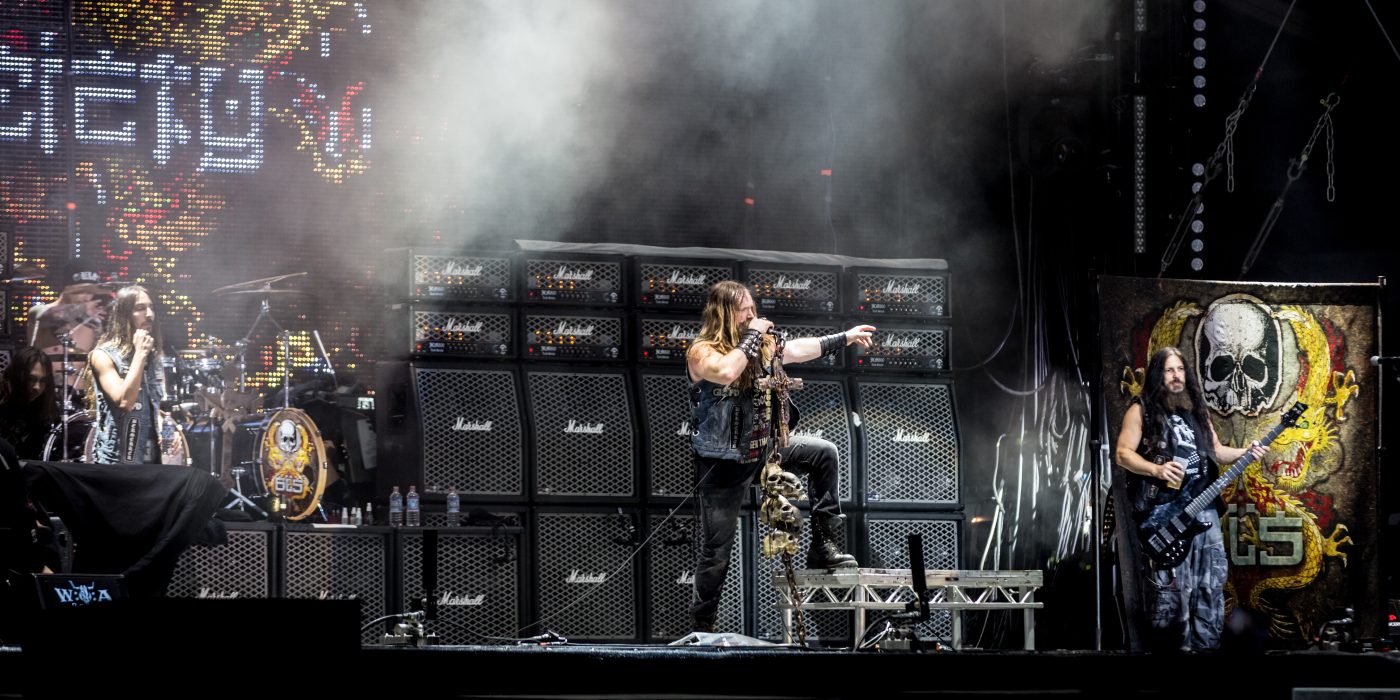
Heavy metal is the genre that everyone has an opinion about and almost nobody can define precisely. Ask ten metal fans what counts as metal and you will get ten different answers, probably with heat behind them. This is not a bug in the genre’s design. It is the feature that has kept heavy metal alive, mutating, and impossible to bury for more than fifty years.
The origin point is usually placed somewhere around 1970, with Black Sabbath releasing their self-titled debut and reorienting rock around the low end, the minor key, and a kind of crushing heaviness that had not existed before. Led Zeppelin was already doing something adjacent, but Sabbath committed harder and more specifically to the darkness. They created a template that was immediately copied, disputed, and then extended in directions the original architects could not have anticipated.
The seventies gave metal its foundational grammar. Sabbath provided the doom. Deep Purple added the virtuosity. Judas Priest refined the twin-guitar attack and the leather aesthetic into something that read as self-contained subculture rather than just a musical style. By the time the decade ended, metal had fans who did not just like the music. They had reorganized their entire self-presentation around it. That kind of devotion, the kind that rewrites how someone dresses and who they spend time with, is not common in pop music. It is almost universal in metal.
The eighties were the genre’s commercial peak and its most fractious period simultaneously. On one side, you had the MTV-friendly hard rock of Bon Jovi and Motley Crue, which sold enormous numbers and drew enormous contempt from the underground. On the other, you had the thrash explosion: Metallica, Slayer, Anthrax, Megadeth. Faster, angrier, technically demanding, and explicitly positioned against what the mainstream had done with the genre. Both were called metal. Neither side was entirely happy about sharing the name.
That tension, between accessibility and severity, has been the defining argument in metal ever since. It produced death metal, black metal, doom metal, power metal, folk metal, progressive metal, mathcore, and a dozen more subgenres that sometimes barely resemble each other. A Napalm Death record and a Within Temptation record are both metal in some meaningful sense. Getting from one to the other would take some explaining, but the lineage is there if you look for it.
What metal has always done better than almost any other genre is create community around shared intensity. The festival culture around metal, from Download in the UK to Wacken in Germany to Ozzfest in its American heyday, is one of the most durable live-music traditions in the world. Metal fans travel further, spend more, and show up more reliably than fans of most other genres. The audience is not passive. It participates, physically, in ways that have their own vocabulary: the pit, the wall of death, the horns in the air.
Right now, metal is in a genuinely interesting moment. The old guard continues to tour to aging but devoted audiences. Black Label Society released Engines of Demolition earlier this year to a fanbase that has never wavered. Meanwhile, younger bands are doing things with metal’s building blocks that would have been unrecognizable to the original practitioners but are clearly descended from them. The genre is not shrinking. It is not consolidating. It is still spreading, still splintering, still finding new corners of human aggression and grief and catharsis to occupy.
That is what heavy metal has always been for. The name was never meant to be comforting. It was meant to tell you exactly what you were getting into, and then deliver on the promise.