 Into The Music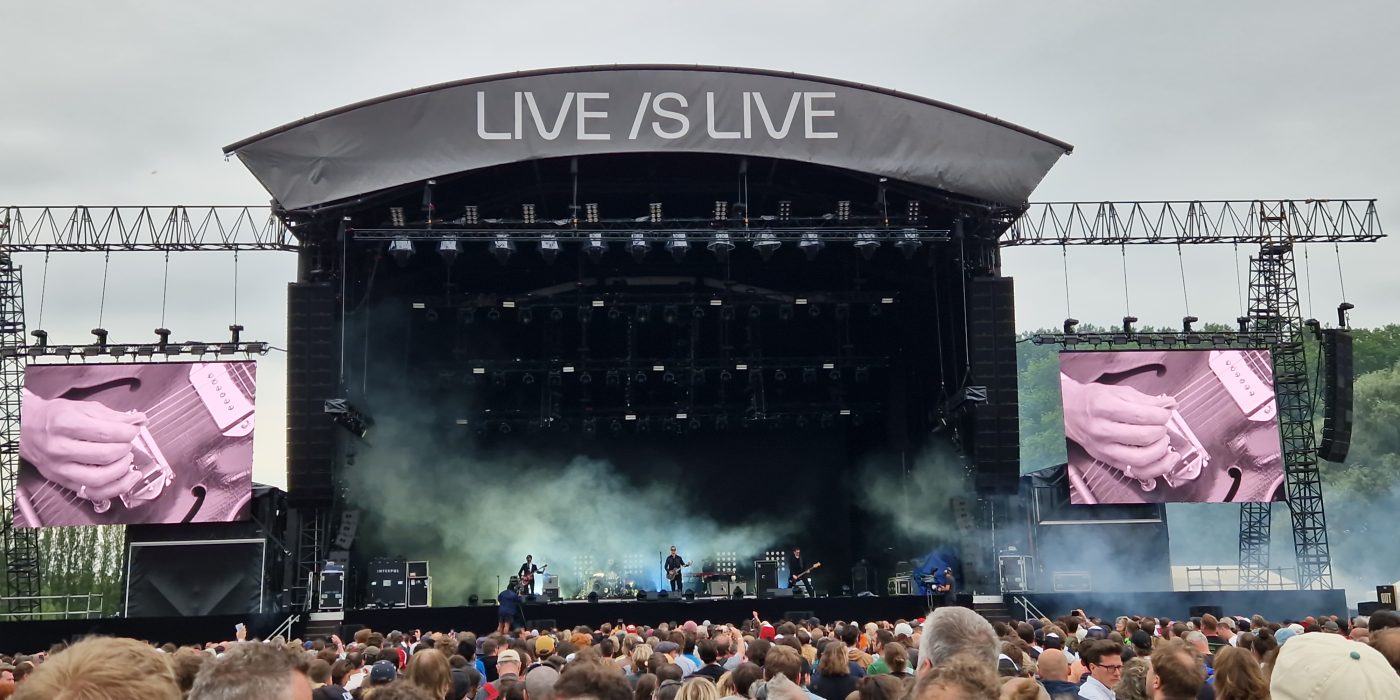
Post-punk arrived because punk had already answered its own question. By 1978 it was clear that three chords and speed were a statement, not a method. The bands that came next took the energy and the attitude and asked what you could build with them if you were willing to slow down and think.
The results were not particularly predictable. Post-punk is one of those genre terms that describes a historical moment more than a sound. Joy Division and Gang of Four and Wire and the Talking Heads and Siouxsie and the Banshees all get filed under the same label, despite sounding almost nothing alike. What they shared was a rejection of the idea that rock music had to operate within its inherited vocabulary. The guitar could do things besides chug and riff. Rhythm could be the lead instrument. A song could have a center of gravity that was not a chorus.
Joy Division is the name most people say first, partly because of the mythology and partly because the records genuinely earned the attention. Unknown Pleasures from 1979 sounds like it was made in a place that no longer exists. The production is cavernous in a way that feels less like a studio choice and more like a document. Ian Curtis’s voice is one of the most distinctive in recorded music, and not because it is technically exceptional. It is because it sounds like it means everything it says.
Gang of Four took a different route. Entertainment! is essentially a treatise on how to make people dance while explaining to them that the system is broken. The funk influence was overt and the lyrics were explicitly political in a way that most rock music was too cautious to be. They made agitation feel like a good time.
Wire stripped everything down so aggressively that their early records are almost academic. Pink Flag has 21 songs in 35 minutes. Most of them are shorter than your commute to work. The point was precision, not minimalism for its own sake. They were asking how much you could remove before a song stopped being a song.
The Talking Heads crossed the Atlantic and landed somewhere nobody had expected. David Byrne’s anxious, jittery presence on stage and record made the band feel genuinely alien even when the songs were designed to be accessible. Fear of Music and Remain in Light, the latter made with Brian Eno and drawing heavily on African polyrhythms, expanded what was possible within the genre’s frame to the point where the frame basically disappeared.
What happened to post-punk over the following decades is a familiar story. The original moment ended. The influence spread everywhere. By the 1990s you could hear it in Pavement and Sonic Youth. In the early 2000s, bands like Interpol and the Strokes and the Yeah Yeah Yeahs made it sound urgent again by basically just playing it straighter, leaning into the aesthetics and the attitude without trying to reinvent the wheel.
That 2000s revival got a lot of coverage at the time and has since become its own nostalgic touchstone. Which is ironic, given that the original scene was defined by a refusal to look backward. Post-punk wanted to break from the classic rock of its moment. Its descendants eventually became the classic rock of theirs.
The current moment for post-punk is dispersed and harder to chart. There are bands working in the tradition, some of them in the UK, some in the United States and Australia, many operating below the level of mainstream coverage. The genre has never stopped producing interesting music. It has just stopped being a scene in the sense of something you could point to and say, this is what is happening right now.
What survives from the original era is the basic insight that made it worth paying attention to: rock music is not obligated to do what rock music has always done. That idea was radical in 1979. It has been absorbed so thoroughly that it barely registers as an insight anymore. Post-punk is the genre that made that absorption possible.

Honestly the post-punk conversation always feels like it’s written for people who already agree with each other. Three chords being a “statement not a method” , trap producers have been making that same argument about 808s for fifteen years and nobody writes these think-pieces about it. The genre-that-refused-to-inherit framing is cool until you realize drill is doing the exact same thing to hip-hop right now and getting called noise.
The 1978 cutoff mentioned here is approximately correct, though I’d argue the real rupture happened in 1977 with Wire’s Pink Flag and Magazine’s debut , those records made the punk-to-post-punk leap in real time, not after the fact. My gripe is that everyone credits Joy Division and PiL while the Canterbury Scene had already been doing structurally adventurous post-rock for most of the decade. Post-punk didn’t come from nowhere. Nothing ever does.