 Into The Music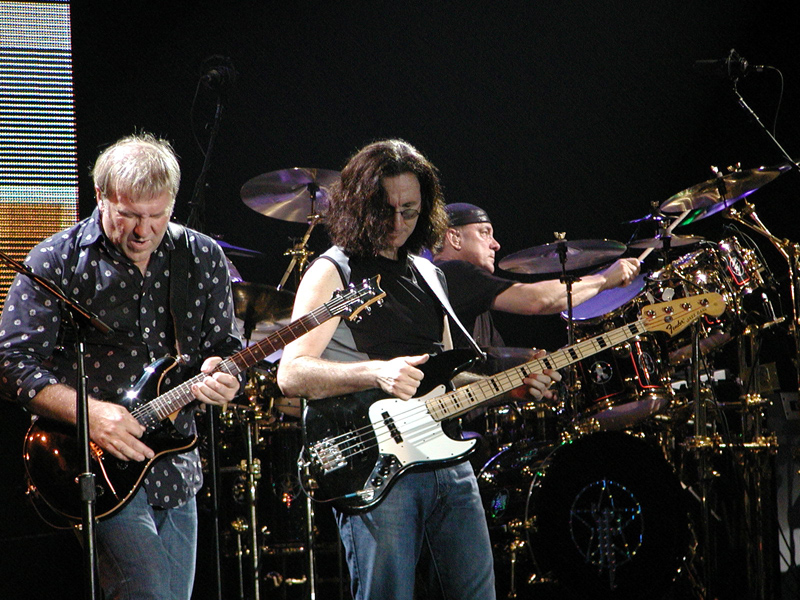
For eleven years, Rush did not perform. Neil Peart died in January 2020, and the band that had existed for nearly five decades went quiet the way it always said it would if something like that happened. Geddy Lee and Alex Lifeson were gracious about it in interviews, clear about their reasoning, and consistent: there was no Rush without Neil. That was that.
Until, apparently, it was not.
At the 2026 Juno Awards in Canada, Rush performed for the first time since 2015, with Anika Nilles behind the drum kit. The audience gave it what it deserved: a standing ovation that started before the song ended. Footage ran on a screen behind the band showing Neil Peart during the performance, a choice that landed exactly right, acknowledging what was lost without pretending the moment was not happening.
Rush formed in Toronto in 1968, though the lineup that most people mean when they say “Rush” came together in 1974 when Neil Peart replaced original drummer John Rutsey. What followed was one of the stranger careers in rock history. They were too proggy for mainstream rock radio, too hard for the art rock crowd, too Canadian for the American market to fully embrace on its own terms. They sold out arenas for decades anyway.
The band’s catalog reads like a map of rock’s possibilities from the mid-seventies through the mid-eighties. 2112 in 1976, a concept album about a dystopian future where music is controlled by a totalitarian priesthood, is the record that saved their career after a label tried to push them toward commercial accessibility. They wrote it as a goodbye if it failed. It did not fail. Hemispheres, Permanent Waves, Moving Pictures, then the synthesizer-heavy period of Signals and Grace Under Pressure, then the long drift of the nineties and the partial comeback of the 2000s.
Peart was the drummer and the lyricist, a combination unusual enough that it defined the band’s identity in ways that were hard to replace. His drumming was technical in a way that converted people who had never cared about drumming before. His lyrics were earnest in a way that earned more mockery than they deserved. He wrote about free will and philosophy and the nature of human ambition, and he did it without irony, which made him an easy target and an enduring one.
Lee and Lifeson have both been active musically since Peart’s death, in various side projects and collaborations, but the Rush brand stayed closed. The Juno performance changes that calculus slightly. It does not mean a tour. It does not mean a new album. Lifeson has said there are no plans beyond this. But it means the music is still alive in some form, still performable, still capable of the kind of moment that stops a room cold.
Anika Nilles, for her part, is a formidable drummer in her own right. The choice was not made lightly. She has spoken publicly about the weight of it, about learning these parts and sitting behind a kit that carries so much history. That she pulled it off, that the performance worked, is credit to everyone involved.
Eleven years is a long time to wait. The Junos gave people who needed closure something close to it, and left open just enough space to wonder what comes next.