 Into The Music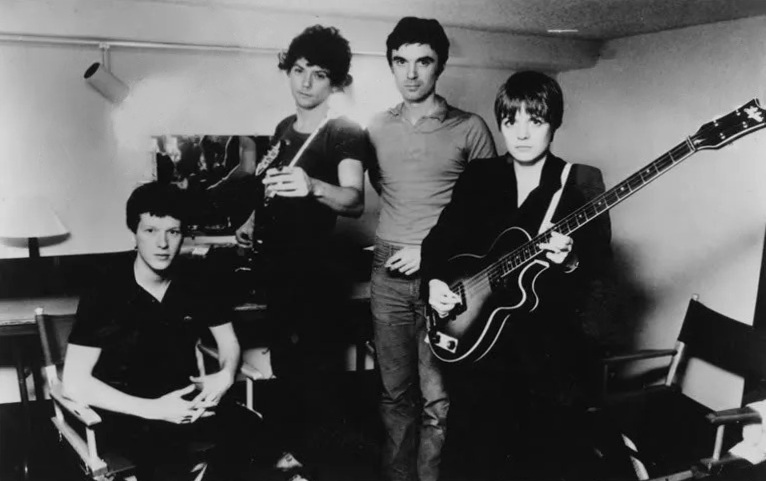
New Wave is a genre that has always meant more than it should be able to. That is a feature, not a bug. Born out of punk’s energy and punk’s disgust with arena rock grandeur, it kept the attitude while trading the noise for something stranger and more cerebral. New Wave decided that synthesizers, art theory, angular rhythms, and pop hooks were not contradictions. They were the point.
The timeline starts in the late 1970s, though you could argue it started earlier, whenever someone decided that the Velvet Underground mattered more than Led Zeppelin. By 1977 and 1978, bands on both sides of the Atlantic were making music that owed as much to Kraftwerk and Brian Eno as to Chuck Berry. The Talking Heads were writing paranoid funk. Devo were turning alienation into a performance art concept. The Cars were making anxiety sound like the most glamorous thing in the world.
What set New Wave apart from punk, its immediate parent, was the emphasis on ideas. Punk said: tear it down. New Wave said: tear it down and then build something weirder in its place. The songwriting became more deliberately odd. The visuals became more consciously constructed. Bands like the Talking Heads were not just playing songs, they were developing a theory about how music and performance related to culture and identity. David Byrne did not wear that oversized suit at Stop Making Sense by accident.
The British strand of New Wave had its own character. The Cure, Siouxsie and the Banshees, Joy Division, Wire. These bands were less concerned with funk rhythms and more interested in texture, atmosphere, and the productive uses of despair. Ian Curtis moved like he was being operated by something he could not control. Robert Smith built an entire aesthetic architecture out of the idea that beauty and suffering were inseparable. These were artists making work that did not fit anywhere else and did not try to.
New Wave also produced some of the great pop music of the era, which is easy to forget when the conversation focuses only on the experimental wing. The Go-Go’s, Blondie, Squeeze, Elvis Costello. These were not art-damaged outsiders, they were gifted songwriters using the moment’s sensibility to write radio songs that happened to be smart. Blondie’s Parallel Lines is an album that works as both a New Wave document and as a collection of hooks that still do not quit.
The genre’s influence has never actually stopped. Every era of indie music carries New Wave’s fingerprints somewhere. The 2000s revival brought Interpol and the Strokes and Franz Ferdinand. More recently, artists like Wet Leg and Dry Cleaning have taken the angular guitar patterns and deadpan delivery and applied them to the specific textures of contemporary anxiety. The vocabulary transfers because the underlying attitude transfers. The feeling that things are slightly wrong, that the machinery of normal life has too many visible seams, that music can point at that wrongness and make it danceable.
New Wave has also always had a particular relationship with artifice that was ahead of its time. These bands understood that image and performance were not separate from music, they were part of the same project. In an era when authenticity is endlessly performed on social media, when everyone has a brand and a carefully constructed visual identity, New Wave’s knowing engagement with surface and spectacle reads as prescient rather than cynical.
It is a genre that rewards sustained attention. The obvious entry points, Talking Heads, the Cure, Blondie, the Police, lead to stranger and more rewarding territory. Wire’s Pink Flag. Gang of Four’s Entertainment. Pere Ubu’s Dub Housing. The Raincoats. Scritti Politti before they went pop. Bands that were asking genuinely odd questions about what a song was and what it was supposed to do.
New Wave never died. It just kept mutating into whatever came next.
What’s underappreciated about New Wave from a musician’s standpoint is how much the genre understood tension and release differently from rock. Rock resolves tension. New Wave often just… sustains it. The Talking Heads in particular were brilliant at this , Byrne’s rhythmic phrasing sits just slightly against the groove rather than with it, which creates this perpetual low-level unease that reads as ‘cool’ but is actually a pretty sophisticated compositional choice.
What the article calls ‘ideas turned into pop’ is worth sitting with, because it implies a certain kind of generosity , taking something that could be hermetic and deliberately opening a door. In Senegal we’ve watched mbalax do something parallel: take the sabar drum’s complexity, which is almost philosophical in its layering, and make it accessible to people dancing at a thiéboudienne. New Wave had that same tension between the conceptual and the accessible, which is maybe why it lasted beyond the moment that birthed it.
Born out of punk’s energy they say , but did it keep any of punk’s actual conviction? I’d argue half of New Wave just took the haircut and left the politics at the door. Give me the Clash over Duran Duran any day of the week. That said, the article’s right that it turned ideas into pop. I’ll grudgingly admit the Talking Heads were doing something real.