 Into The Music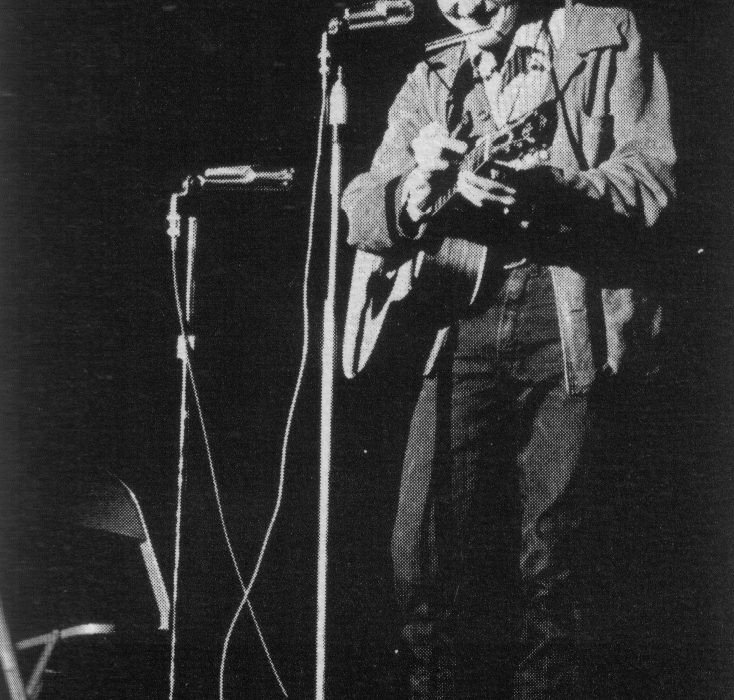
Bob Dylan launched a Patreon this week. It costs five dollars a month. The posts so far include an embed of a Mahalia Jackson live performance, three long audio essays about Aaron Burr, Frank James, and Wild Bill Hickok that appear to be narrated by an AI voice, a fictional letter from Mark Twain to Rudolph Valentino attributed to a pen name, and a short story about bull riding credited to someone named Marty Lombard. Dylan’s official website makes no mention of it. He promoted it through an Instagram story.
This is either the strangest thing a Nobel Prize winner in literature has ever done, or a perfectly logical next step in a career that has spent sixty years refusing to do what anyone expected. Probably both.
The Patreon launch lands in a moment when the relationship between legacy artists and their audiences is being renegotiated from the ground up. Streaming has been catastrophic for catalog income at the per-play level. The old model, where you made an album, put it in stores, licensed it, and watched the royalties accumulate, has been replaced by something that works well for artists with massive, consistent streaming numbers and poorly for almost everyone else. The result has been a wave of legacy artists exploring direct-to-fan platforms, catalog sales, and subscription models that cut out the institutional middlemen they built their careers alongside.
Dylan is an interesting case study because he sold his master recordings to Universal Music Group in 2020 for a reported $400 million. That deal meant he received a massive lump sum in exchange for relinquishing future royalty income on the catalog. It was a financially rational move given his age and the uncertainty of streaming economics. It also meant that his financial relationship with his own music fundamentally changed. He no longer earns money every time “Blowin’ in the Wind” plays on Spotify. Universal does. The Patreon, in that context, is not a retirement plan. It is something else: a direct channel to the audience that bypasses every institution that has ever had a piece of him.
This is what makes the Dylan Patreon interesting beyond its obvious strangeness. The content itself may or may not be good (the AI-narrated essays are a choice that would be alarming from a lesser artist and is merely baffling from Dylan), but the structure of it is genuinely significant. A subscription model where the artist controls the relationship, the content, and the money is the purest expression of post-industry artistic autonomy available right now. The fact that it is Dylan, who has spent his entire career navigating and subverting the music industry’s expectations, doing this is not incidental.
Other artists have gotten here before him, and gotten there more gracefully. James Blake, who released his own album Trying Times this month on his own Good Boy Records label, has been building a direct-to-fan platform called Vault where he shares music, stems, and context with subscribers. Radiohead’s various experiments with name-your-price and direct distribution in the late 2000s and early 2010s set a template that the industry has still not fully caught up to. Bandcamp, despite its current corporate ownership troubles, remains the most artist-equitable major distribution platform available, and artists who have invested in it have built sustainable income streams that do not depend on the platforms treating them fairly.
What Dylan’s Patreon adds to this conversation is the weight of his name and, frankly, his age. He is 84. He is not trying to build a sustainable revenue model for a thirty-year career ahead of him. He is doing something weirder and, in its way, more interesting: he is using the tools of the contemporary internet to do whatever he actually wants, accountable to no label, no manager, no A&R person, and no legacy. The fictional Mark Twain letter. The AI voice reading Western history. The bull riding short story. Whether these are brilliant or indulgent, they are entirely his, presented directly to whoever hands over five dollars a month.
The music industry has spent years trying to figure out what to do with its legacy artists. Touring has become the dominant revenue source, catalog has been packaged and sold, greatest hits compilations keep getting released. But none of that addresses the more fundamental question of what an artist does with creative energy that does not fit the commercial pipeline. Dylan’s Patreon, whatever its many flaws, is an answer to that question. It is a room of his own, online, where no one can tell him what to put in it.
Whether that room is interesting or not is almost beside the point. That it exists, and that he built it himself, is the story.