 Into The Music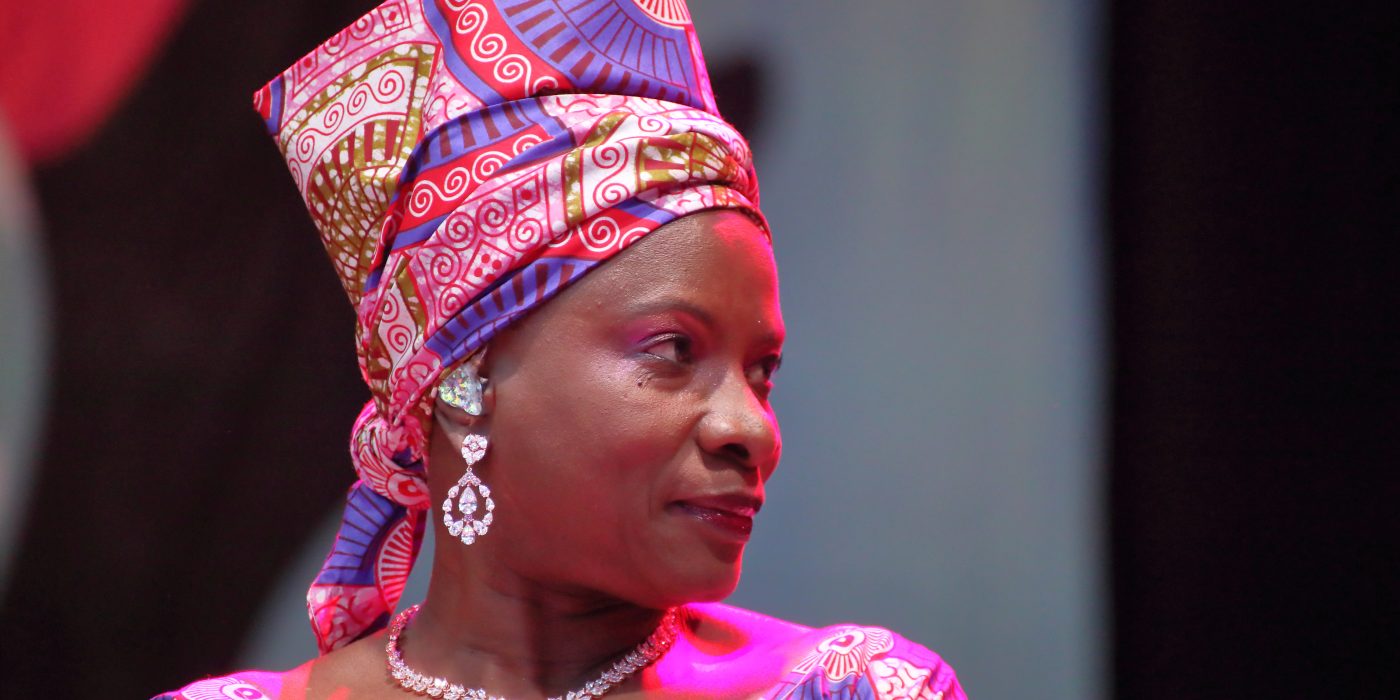
There is a conversation happening in global music right now that the Western press has not quite caught up with. It concerns Angélique Kidjo, who at 64 is releasing her most ambitious album yet, but it also concerns something larger: the way African artists and their diasporas are no longer waiting for validation from the traditional centers of the music industry, and what it means when someone who has been doing this for four decades turns that shift into a personal statement.
HOPE!!, due April 24, is Kidjo’s nineteenth studio album, a 16-track collection built around collaborators who span Afrobeats, gospel, R&B, and French chanson. Pharrell Williams produced three tracks. Ayra Starr and Davido are on it. So is Nile Rodgers, The Soweto Gospel Choir, and Charlie Wilson. The album is dedicated to Kidjo’s late mother Yvonne, and the emotional throughline is explicit from the title forward: this is an album that wants to be useful to people living through difficult times, not just beautiful.
That framing matters because it is categorically different from how international artists of African origin have typically been positioned for Western consumption. For most of the last thirty years, the critical language around African musicians was shaped by concepts like “world music,” a genre designation that operated as a kind of quarantine. It acknowledged the music’s existence while declining to treat it as having the same cultural stakes as what was being made in London, Los Angeles, or New York.
Kidjo has always refused that framing. Her 2019 album Celia, a reworking of Celia Cruz’s catalog that won the Grammy for Best World Music Album, was a statement about the African and Caribbean roots of music that the industry had been calling Latin for decades. Her 2021 album Mother Nature wove together Afropop, electronic music, and global folk traditions in ways that demanded you hear it as contemporary rather than traditional. HOPE!! goes further by treating the collaboration list as a map of where African music actually lives now: not in a separate section of a record store, but distributed through every corner of popular music.
Ayra Starr, who features on Aye Kan (Are You Coming Back?), is one of the clearest voices in current Afrobeats. Davido has been a central figure in the music’s global expansion for over a decade. Diamond Platnumz from Tanzania has built one of the largest followings of any artist on the African continent. The presence of these artists alongside Pharrell and Nile Rodgers on the same record is not a curatorial gesture. It reflects a reality that has been true for years: these worlds have been talking to each other continuously. The album just says so explicitly.
What HOPE!! does that is genuinely difficult to do well is maintain a consistent emotional register across 16 tracks and that many voices. The single Fall On Me, featuring PJ Morton, manages to be simultaneously gospel-inflected and entirely contemporary without sounding like it is reaching in either direction. The second single Aye Kan demonstrates that the collaborations are musical rather than promotional: Ayra Starr and Kidjo occupy the same sonic space in a way that suggests actual creative exchange rather than a feature drop.
The closing track, a philharmonic rendition of Malaika, the song Kidjo’s mother loved, arranged by Derrick Hodge with French singer Florent Pagny, lands as a personal statement rather than a big finish. It closes an album about resilience and connection with an image of transmission across generations, which is what the whole project is really about.
The broader significance of HOPE!! is not that Angélique Kidjo has made a good record, though she has. It is that the record she has made could only exist now, in a moment when the structures that once required African artists to translate themselves for Western audiences have loosened enough that an album like this can speak directly, in all the languages it has at its disposal, without having to explain itself first.
That is what makes HOPE!! worth paying attention to. It is not a crossover record. It is something more interesting: a record that does not need the concept of crossing over anymore.