 Into The Music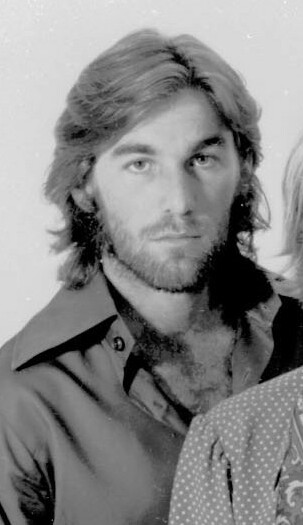
A song called “Rainbows” was not a single. It was not the reason anyone bought Pacific Ocean Blue when Dennis Wilson released his sole solo album in August 1977. It does not appear on most lists of the late Beach Boy’s best material. And yet, in March 2026, nearly 50 years after its initial release, it has turned up in two high-profile screen projects in the same month, a sci-fi film and an HBO comedy series, reaching audiences that have mostly never heard the rest of the album it comes from.
The film is Project Hail Mary, the Ryan Gosling adaptation of Andy Weir’s novel, directed by Phil Lord and Christopher Miller. “Rainbows” plays during a scene where Gosling’s character describes the beauty of Earth to an alien companion, and it lands exactly the way the filmmakers presumably intended: quietly devastating, full of a love for the physical world that the song’s words and melody carry without straining.
The other placement is DTF St. Louis on HBO, a stranger context. The show, which stars David Harbour and Jason Bateman, used the song in a scene involving an umbrella caught in a storm and a character who, for a moment, is just standing in the rain feeling lucky to be alive. “Rainbows” fits that moment as naturally as it fit the Gosling scene, which says something about the song’s essential quality.
Dennis Wilson made Pacific Ocean Blue under conditions that should have produced a mess. He had been struggling with substance abuse for years. His relationship with his brothers, particularly Brian, was complicated in ways that entire books have been written about. He had watched Charles Manson, whom he had housed for a period in the late 1960s, turn the era’s communal idealism into something horrific. He was, by most accounts, a man carrying more than anyone should have to carry.
The album that came out of all that is not a wounded record. It is, in places, a genuinely joyful one, uneven in the way that personally made records often are, but full of moments where the songs get out from under the weight and breathe. “River Song,” one of the actual singles, has an euphoric quality that sounds nothing like the rest of the Beach Boys catalog. “Moonshine” is a mess that somehow works. And “Rainbows,” cowritten with his brother Carl and poet Stephen Kalinich, is something else entirely: a simple, luminous song about how the world opens up when you let it.
The lyrics are not sophisticated. “Earth opens up its arms for me / and when you get the feeling / the feeling everything’s all right, you’re right.” That is the emotional core of it. But the melody is irresistible, and Wilson’s voice, which was not a technically impressive instrument, carries the vulnerability of someone who means every word. You cannot fake that quality, and producers and directors working decades later apparently recognized it immediately.
Dennis Wilson died in December 1983 at 39, drowning at Marina del Rey. He had been working on a follow-up album, Bambu, which remained unfinished at his death. A compilation of completed tracks was released in 2017, but it has not achieved anything like the profile of its predecessor.
What the current placements of “Rainbows” illustrate is how the canon of rock music is always being revised from the outside. Academic and critical consensus decides what matters, what deserves rediscovery, what gets reissued and reexamined. Screen placement is a different mechanism entirely, faster and less deliberate, and it has the power to surface things that critical attention missed or only partially honored. Nobody wrote a corrective essay about Pacific Ocean Blue. A couple of music supervisors with good taste did the work that retrospectives could not.
Brian Wilson, in his memoir, wrote that he never listened to his brother’s solo album after Dennis died. That is its own kind of story. The rest of us are listening now, and the songs are holding up the way good ones do, as if they were written for exactly this moment, even though that moment was fifty years in the future when the sessions were finished.