 Into The Music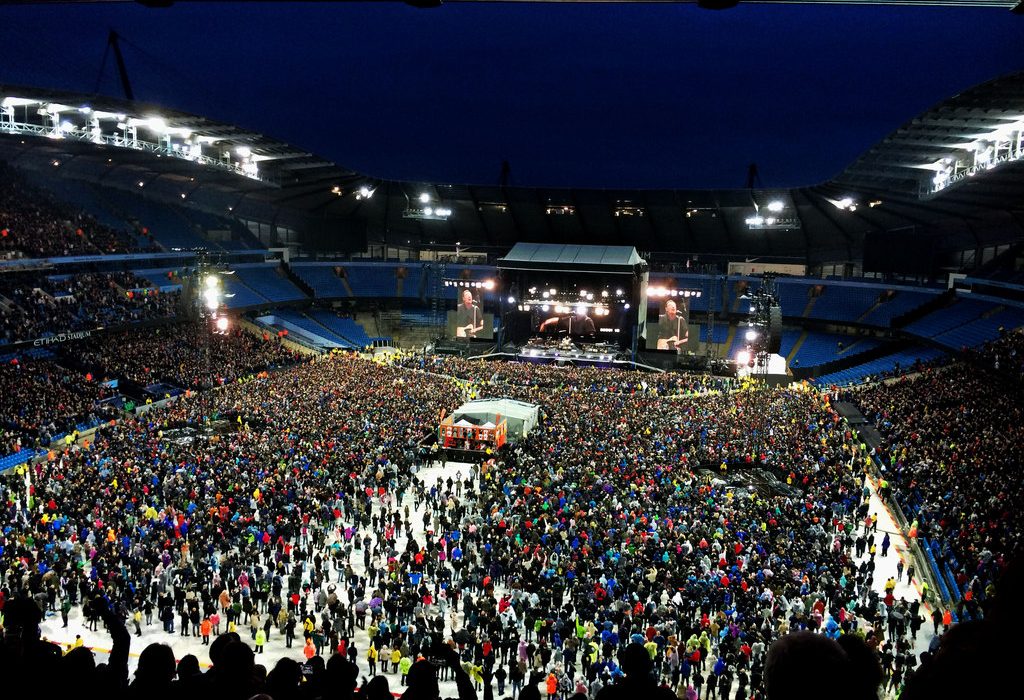
There is a long tradition of rock musicians making political statements from the stage. Most of them don’t mean much. The crowd cheers, the energy spikes for a moment, and then everyone goes home and the world stays exactly as it was. What Bruce Springsteen did at the opening night of his 2026 tour was different in degree, even if not in kind. He came out swinging and did not stop.
The show opened in the U.S. this week with Springsteen explicitly calling out “a president who can’t handle the truth,” a phrase that landed without any ambiguity about who it was directed at. He covered Bob Dylan’s “The Times They Are A-Changin'” and Prince’s “Sign O’ The Times” in the same set, choices that were clearly not accidental. Tom Morello, who joined him on stage, is not exactly known for his political neutrality. The message of the evening was coherent and it was direct. “Join us and let’s fight for the America that we love,” he told the crowd.
The question worth sitting with is what any of this actually accomplishes.
Springsteen has been making music about working-class America, about people being left behind by systems that claim to serve them, since the early 1970s. “Born in the USA” was so thoroughly misread as patriotic anthem that Ronald Reagan’s campaign tried to use it in 1984. Springsteen had to correct the record publicly. The song is not a celebration. It is a lament, and a bitter one. The fact that it got appropriated anyway tells you something about how political music functions in mass culture: it doesn’t always travel with its meaning intact.
At 76, Springsteen is not operating under any illusion that a concert is going to change a vote. But that’s probably not the right frame for what he’s doing. What he’s doing is closer to what musicians like Nina Simone understood, and what Pete Seeger spent his entire career demonstrating: that there is value in standing in a room with thousands of people and saying, out loud, that something is wrong. It doesn’t fix anything. But it names the thing. And naming the thing has its own kind of power.
The Dylan cover is interesting to think about. “The Times They Are A-Changin'” is a song that has been invoked so many times for so many different political moments that it has almost been hollowed out by overuse. And yet Springsteen playing it in 2026 does not feel cynical. It feels like someone reaching for a shared language at a moment when shared language has become scarce. Dylan himself launched a Patreon this week, which is both deeply mundane and somehow very on brand for a man who has spent sixty years refusing to be pinned down. These two figures, who have been in conversation with each other’s work for decades, are both active and both very much present.
The Prince choice is the more emotionally resonant one. “Sign O’ The Times” is a song about catastrophe accumulating, one headline after another, until the weight of it becomes almost abstract. Springsteen playing it now is not nostalgic. It’s contextual. The song fits because the moment fits.
What separates Springsteen from the more performative strain of rock political theater is that he has earned it. He is not using political statements to seem interesting or to drive engagement. He has been doing this work for fifty years and has taken real professional risks along the way. The Dixie Chicks lost their career for one offhand comment in 2003. Springsteen has been on record about his politics since before most of his current audience was born. He has built his entire catalog around the idea that the personal and the political are inseparable. A stadium full of people watching him cover Dylan and Prince in 2026 are not watching a brand moment. They’re watching someone mean it.
Whether any of it changes anything is almost beside the point. The work is to keep saying the thing. Springsteen is saying the thing. At his age, on a stage this big, with this much specificity, it’s hard not to find that at least somewhat moving.