 Into The Music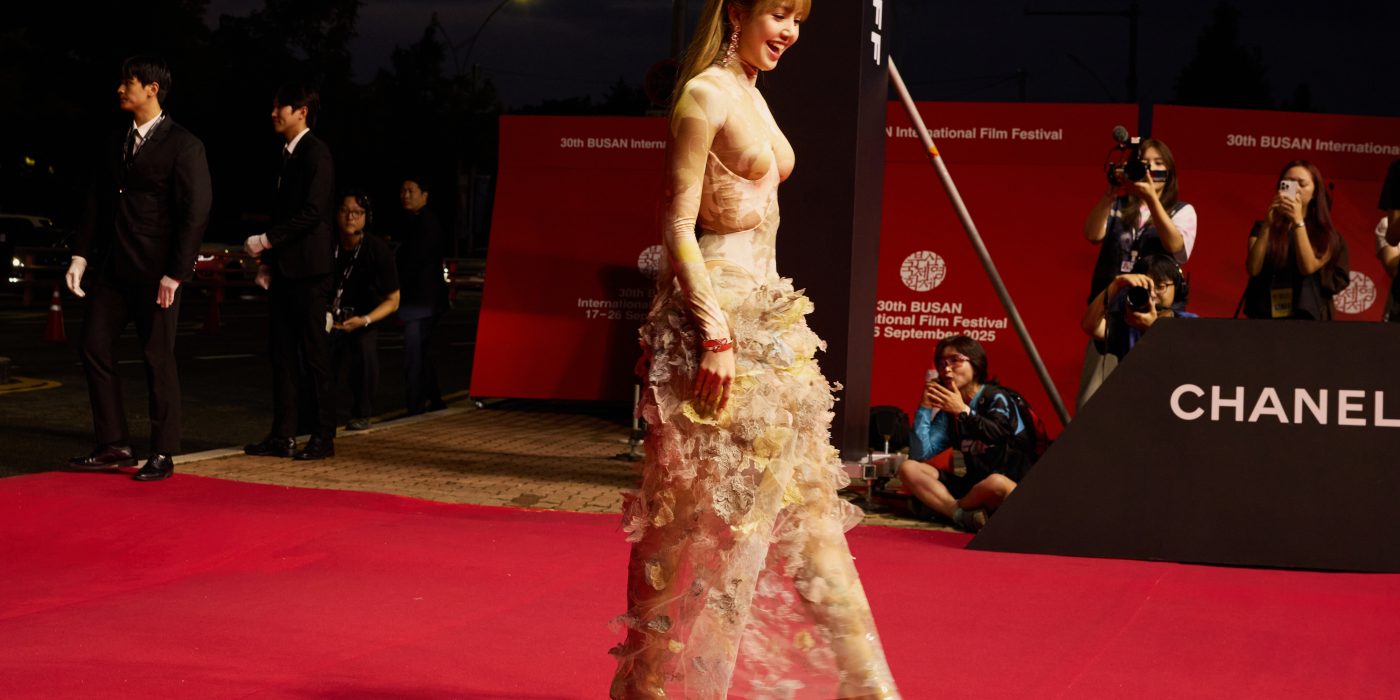
When Blackpink’s Lisa books a Las Vegas residency and becomes the first K-pop artist to do so, that’s not just a business milestone. It’s a signal that the Western music industry’s long-running attempt to treat K-pop as a niche interest has officially expired.
Lisa Manoban, the Thai-born member of Blackpink who has been building a solo career since the group’s hiatus, announced a residency at a Las Vegas venue this week. It’s the kind of booking that gets described as historic in press releases, but the history here is real. Las Vegas residencies are how the American entertainment industry signals permanent arrival. Celine Dion did it. Adele did it. Beyonce, briefly and legendarily, did a run there. The fact that a K-pop act is now in that conversation is not incidental.
K-pop’s trajectory in Western markets has been one of the more interesting stories in the music industry over the last decade. The genre, which developed in South Korea in the 1990s and was exported aggressively by labels and management companies through the 2000s, started making serious inroads in the U.S. and Europe around 2012 with Psy’s “Gangnam Style,” which was a novelty hit that probably did as much to confuse the Western media as to help the genre. BTS changed the math entirely. Their ability to mobilize fanbases, sell records, and fill arenas in markets where Korean-language pop had no prior commercial footprint forced the industry to reconsider its assumptions.
Blackpink followed a different path than BTS, leaning harder into the intersection of K-pop and Western pop production values. Their music was designed, to a greater degree than most of their contemporaries, to travel. The result was a group that crossed over without fully assimilating, maintaining a very specific K-pop aesthetic vocabulary while achieving numbers that Western labels had to take seriously.
Lisa’s solo career has been the most commercially interesting of the Blackpink members’ individual projects. She has not tried to become a conventional Western pop star. She has instead operated in the space where K-pop aesthetics, hip-hop influence, and global pop production overlap. The fanbase is enormous and intensely engaged in a way that Western management teams are still learning to understand and work with.
The Las Vegas residency represents something specific about where K-pop sits now. It’s no longer being covered as a curiosity or a cultural export story. It’s being treated as a mainstream live music draw in one of the most commercially rigorous entertainment markets on earth. Vegas audiences pay a lot of money to see shows that they expect to be polished, spectacular, and worth the trip. The booking is, among other things, a commercial judgment: the audience is there.
The question of what comes next for K-pop in Western markets is worth watching. The genre has consistently found ways to evolve its production and presentation while maintaining a fidelity to its own conventions. The idol system, the choreography-first approach, the very specific relationship between artists and fan communities, these are not going away. What’s changing is the ceiling. A Vegas residency was not imaginable for a K-pop act five years ago. It is now. The ceiling will continue to move.


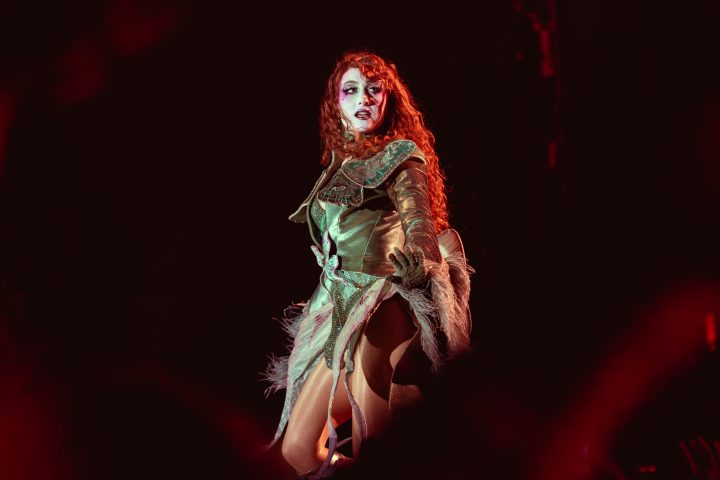
Standing on a stage is its own kind of miracle , I know that from playing barn dances to maybe forty people. What Lisa’s done, bringing K-pop all the way to a Vegas residency, feels like a reminder that music finds its audience when the artist is just honest enough to let it. That’s something.
The Las Vegas residency model as a legitimacy marker is worth unpacking historically. Residencies were once considered career twilight events , Sinatra’s Caesars Palace run being the archetype for an artist who’d conquered everything else and wanted a stable home. What Lisa’s booking signals is that K-pop has absorbed and redeployed the entire American entertainment playbook faster than most American artists have. Whether this represents the genre’s artistic maturation is a separate question, but the business acumen is genuinely hard to argue with.
There’s something that moves me about this that I can’t quite put into words in English. The distance Lisa has traveled, from a small country to a Las Vegas stage, feels like a kind of natural force, the way a river carves its path not by force but by persistence. Music that comes from a genuine place finds its way. It always does.
Okay this is HUGE and I feel like Western fans are underestimating what this means for Asian pop more broadly!! Lisa paved this road but the whole generation of C-pop artists coming up are watching closely. Sandy Lam was doing residency-style shows in Asia forever but the idea of a Vegas booking for an Asian act was basically unthinkable ten years ago. The ground really is shifting.
You have to respect the journey, and I mean that in a roots sense. The entertainment industry has been running the same gatekeeping operation since the days of sound system culture in Jamaica, controlling who gets the big room and who stays in the dance. What Lisa has done is push through a door that was never built with her in mind. That’s not just a business milestone, that’s the kind of thing people will point to later as a real before-and-after moment.
Look, I respect Lisa’s grind and I’m not mad at the Vegas moment. But the residency model as a legitimacy signal has always felt backwards to me. Like, the gatekeepers decide to let you in, and now that’s the proof you’ve arrived? Hip-hop didn’t wait for Las Vegas to validate it in 1994 and it still became the dominant culture. Respect the milestone, just don’t let the industry own the narrative of what it means.
I sat with this news for a while before I could put words to what I was feeling. There’s something about Lisa’s journey, the distance traveled, the years of discipline, landing in Las Vegas, that feels like a kind of deep breath completing. Like the nervous system finally exhaling after holding something enormous for a very long time. I hope she gets to feel that fully, not just perform it.
ABBA played their first show in decades as holograms and nobody called it a legitimacy milestone. Las Vegas is just a venue. Still, good for her.
I think the framing of ‘K-pop arrives’ misses the more interesting question, which is what changes for K-pop now that Vegas has said yes. Because here’s the thing: Taylor’s Eras Tour didn’t need a residency to prove the genre was real, it already was real. What a Las Vegas booking does is tell the entertainment industry’s old guard that they can monetize this audience now, and that’s a different thing from the music mattering. Lisa matters. The residency is just the industry catching up.