 Into The Music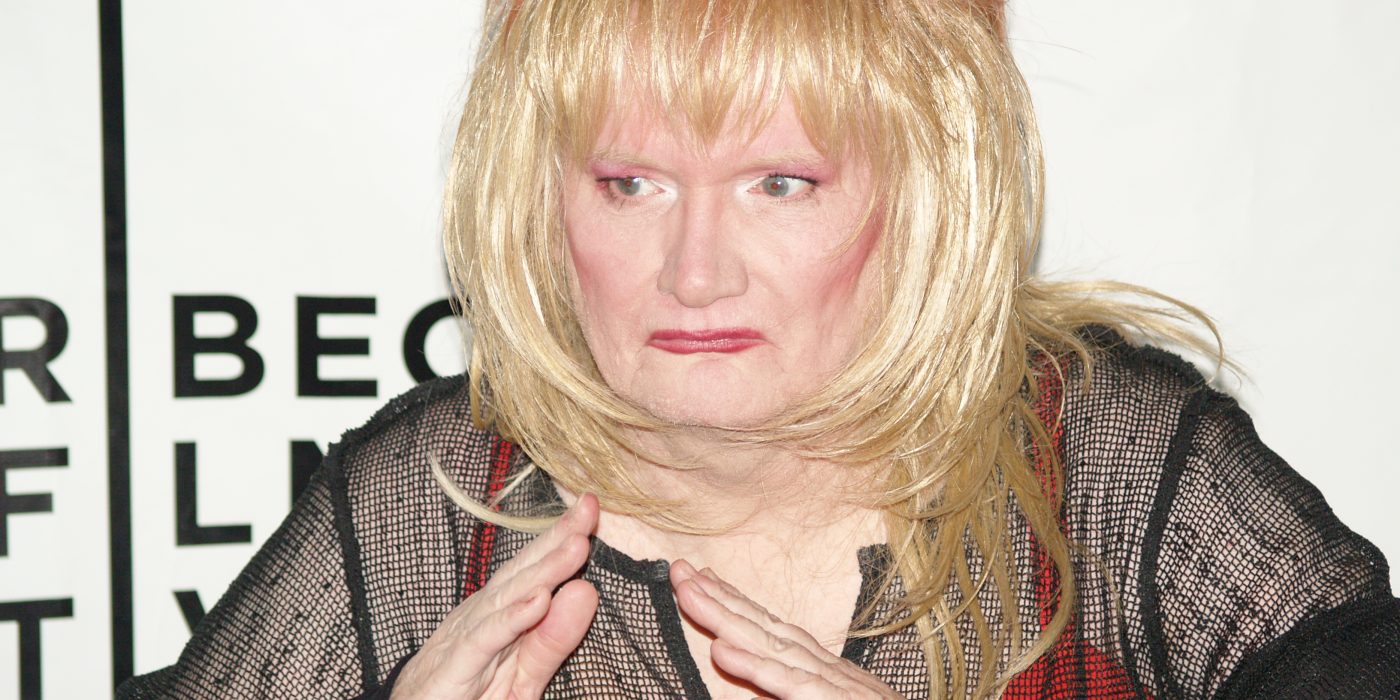
Moby made an offhand comment in The Guardian this weekend and accidentally lit a small fire. In the paper’s Honest Playlist column, the DJ and electronic musician revealed that “Lola” by the Kinks had come up on a Spotify playlist and he could not get through it. “I thought the lyrics were gross and transphobic,” he said. He did not quote specific lines or explain in much detail. He just dropped it and moved on.
The song in question is a 1970 hit in which narrator Ray Davies falls for someone named Lola at a club in Soho. The twist is right there in the chorus: “Girls will be boys and boys will be girls / It’s a mixed up, muddled up, shook up world, except for Lola.” Davies has said explicitly that he wrote the song after meeting a drag queen. He did research with drag performers. His intent was not to mock or exclude. His intent was to write something that acknowledged and humanized an experience that mainstream pop music was completely ignoring in 1970.
Music historians have treated “Lola” as an early LGBT-inclusive pop song for exactly this reason. It was not coded or hidden. It was right there on the surface, played on Top 40 radio, in an era when that was genuinely risky. The narrator does not recoil. The narrator falls in love.
Dave Davies, Ray’s brother and lead guitarist of the Kinks, responded over the weekend. He shared a statement from Jayne County, the pioneering transgender punk singer who has been a visible figure in music since the New York underground scenes of the late 1960s. County’s statement reads, in part: “When I heard the song I was both thrilled and amazed that the Kinks would be singing a song about a trans person and wondered if anyone else had picked up on it! A song that breaks down barriers and brings a used to be, hush, hush subject to the forefront and makes it sound perfectly natural to be singing a song about a ‘girl’ named Lola! Being Trans myself this will always be a very special song to me.”
County knows more about the history of trans representation in rock music than Moby does. That much is not in dispute. Her read on “Lola” – that it was a moment of recognition and warmth in a landscape that offered almost none – carries weight that an academic argument about lyrical intent cannot quite match.
Moby is not wrong to interrogate old songs. That is a reasonable thing to do. But “gross and transphobic” is a confident verdict for a song that transgender artists and historians have pointed to as an early example of trans visibility in pop. The fact that a straight white guy in 2026 finds it “unevolved” while actual trans musicians from that era remember it as a lifeline is the more interesting story here.
This is not about canceling Moby or defending the Kinks unconditionally. It is about the difference between interrogation and erasure. Lola has meant something real to real people for 56 years. That context matters.
This debate is quite interesting to me. In Russia we have similar arguments about old folk songs which contain attitudes that are no longer acceptable. ‘Lola’ is from 1970, yes? To judge old art entirely by today’s standards is a complicated philosophical problem. But also Jayne County is someone who lived this history personally, as a trans woman and punk pioneer. Her opinion carries a weight that Moby’s, with respect, perhaps does not. I think we should read the actual lyrics carefully before condemning, and also listen to those who were there.
Ivan, your parallel to Russian folk songs is very apt, and I’d push it further. In Zimbabwe we deal constantly with this, chimurenga music was created explicitly to carry political danger inside cultural familiarity. Thomas Mapfumo was imprisoned partly because the government eventually understood what the songs were actually saying. The question of what a song “means” versus what it was “intended to mean” is not a new debate, but the difference is that songs like Lola were not coded speech, they were commercial pop product, which complicates the moral accounting considerably. I think Jayne County’s read matters most here precisely because she was living inside that world when the song was made.
whether a song is transphobic doesn’t get settled by a dj’s hot take in the guardian. jayne county’s read is the one that counts. full stop.
My uncle used to blast the Kinks on Sunday mornings, Lola included, and I can tell you nobody in our house was sitting there reading political subtext into it we just loved the story. That’s the thing about Ray Davies, the man wrote characters. Lola isn’t a statement, it’s a snapshot, a bloke in a bar who’s confused and maybe charmed and doesn’t quite know what to do with himself. Now Moby’s a thoughtful guy and I respect his honesty for naming it on his playlist, but Jayne County’s been out there fighting those fights since before most of us knew the words existed. If she says the song doesn’t offend her, that carries some serious weight. Context matters, and so does who’s doing the contextualizing.
Okay Jayne County stepping in to correct the narrative is the crossover I didn’t know I needed!! The woman LIVED that era, she knows what the song was actually doing culturally, and honestly her word carries so much more weight than Moby’s podcast take. Lola was transgressive and joyful in 1970 , highlife music in Nigeria was doing the exact same thing at the time, finding coded ways to celebrate people the mainstream wanted to erase. The Kinks were doing something similar in their own British way. This is what music IS!
Moby’s hot take era never ends apparently
Moby should have kept this to himself. Jayne County was there. He was not.
The conversation around retroactive readings of older songs is one I think about a lot in the context of how culture gets preserved and transmitted. From a production standpoint, “Lola” is a masterclass , the acoustic-electric interplay, the conversational vocal delivery , but the real craft is in how the ambiguity is built into the structure. The song doesn’t resolve the narrator’s confusion, and that choice feels intentional. You can hear it as progressive or regressive depending on what you bring to it. Jayne County’s reading is the one grounded in lived experience from that period, and that context matters more than an offhand quote in a playlist column.
The historical context here matters considerably. “Lola” came out in 1970, the same year as the STAR organization , Street Transvestite Action Revolutionaries , was founded by Marsha P. Johnson and Sylvia Rivera. Trans women were visible in counterculture spaces in ways that get erased in how we narrativize that era. Reading the song as transphobic requires reading it through a contemporary framework that strips out the specific cultural moment it was made in , which is a different kind of interpretive error than the one Moby is making. Jayne County’s perspective is exactly the corrective the record needs.
What I find more interesting than the transphobic/not-transphobic binary is how “Lola” operates sonically. The tension in the song is built structurally , the major key, the almost jaunty delivery, the way Davies sings the confusion as delight rather than distress. Industrial music taught me that you can encode ideology in texture, and that song encoded its transgression in the brightness of the production. Moby analyzing it through a 2026 lens is like running a reverb unit through a dry signal , you’re adding something that wasn’t in the original mix.
As someone who writes songs myself, I always think about the writer’s intention versus the listener’s experience , and with Lola those two things are genuinely hard to reconcile cleanly. Ray Davies wrote from curiosity and maybe even affection, that much seems true. But I think what Jayne County is offering isn’t just a correction of Moby, it’s a reminder that the people closest to these stories get to name their own experience. That’s worth more than any outsider’s reading, including mine.
What gets lost in the Moby-versus-County framing is that “Lola” arrived at a moment when diaspora communities , queer ones especially, many of them Black and brown , were actively building the language to talk about gender and desire in ways that dominant culture was still refusing to acknowledge. Jayne County lived through that and her reading carries weight that a retrospective hot take in The Guardian simply cannot match. I’d also say this: when we look at Afrobeat’s relationship to gender performance, Fela Kuti was doing things that were radical in some ways and harmful in others simultaneously. Art holds contradictions. The question Moby poses as a verdict is actually just the beginning of the conversation.
Okay but the fact that a trans pioneer like Jayne County is the one saying ‘this song isn’t the enemy’ should genuinely end the debate?? She was THERE. She lived the exact moment that song came out. The people dismissing her read are doing exactly what Moby did , deciding they know better than the communities who actually navigated that era. Also ‘Lola’ absolutely rips as a song and the chord movement in the chorus is something else, love that it can hold this whole complicated conversation.
Moby should really just stick to the day job and leave the cultural commentary to the folks who were actually there to experience it firsthand. Jayne County knows infinitely more about the real-world impact of ‘Lola’ than some DJ who’s just riffing on it decades later.
Jayne County’s perspective on ‘Lola’ carries so much more weight than Moby’s hot take. As a pioneering trans artist who was actually part of those countercultural scenes in the 70s, her take has an authenticity that an outside observer can never fully capture. It’s a good reminder to elevate the voices of those with lived experience when parsing the cultural significance of music.