 Into The Music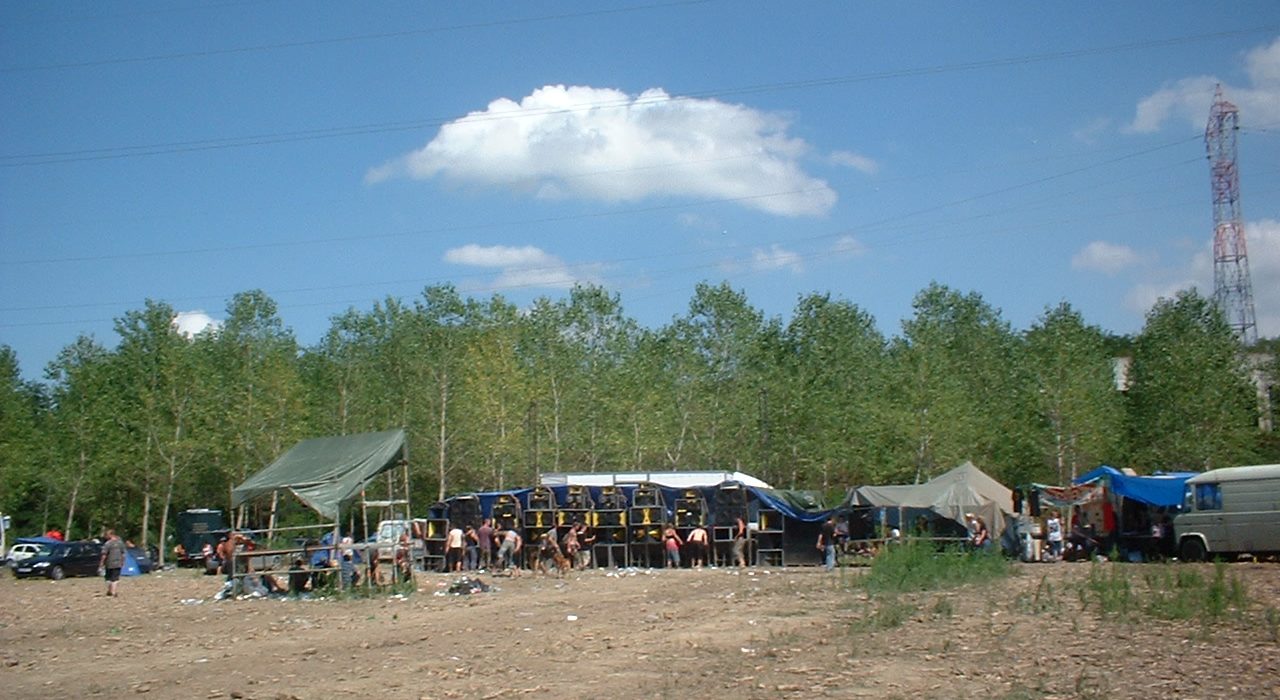
Hardtekk has a piep kick. If you have spent time on TikTok in the last six months and felt something violent and oddly satisfying happen to your nervous system, you may have already heard it without knowing the name. The piep kick is a squeaky-serrated percussion sound, compressed to the point of absurdity, followed by a snare that hits like a direct message from a jackhammer. Songs built around it are usually under two minutes. They feel like being grabbed by the collar.
The genre has deep roots in Germany and other parts of continental Europe, where it developed over decades inside a culture of local parties, fluttery dances, and very specific drug preferences. None of that context is what made it explode in 2026. What made it explode was looksmaxxing.
Looksmaxxing, for the uninitiated, is the practice of obsessive self-optimization toward a narrow and mostly fictional ideal of male physical attractiveness. It lives at the intersection of extreme fitness culture, incel-adjacent psychology, and the particular brand of self-improvement content that treats the human body as a project with a numerical score attached to it. Its language borrows from red-pill forums and dark-triad personality theory. Its aesthetic is monochromatic, blade-jawed, and devoutly irony-poisoned.
The connection between that culture and hardtekk is not accidental. Hardtekk producers figured out that the same qualities that made the music useful for rave dancefloors also made it useful for the gym, for the mirror-flexing TikTok clip, for the brief video that wants to communicate both ferocity and discipline. Song titles like “MOG OR BE MOGGED” and “MAXILLA” are not misunderstandings. They are product development. Producers built tracks specifically for this market, then built TikTok personas to distribute them, then watched the numbers climb.
YXMI, a Dutch hardtekk producer with over a million monthly listeners on Spotify, is 27 years old and finds the looksmaxxer adoption of his music genuinely funny. He names tracks after body parts. He feeds the meme economy because the meme economy feeds the streams. snxff, a Ukrainian producer who started making music in 2022 as Russia invaded Kyiv, uses the dark-triad symbol as a logo because it attracts attention, not because he has any investment in the ideology. Both of them describe an ecosystem where the aesthetic and the music are almost inseparable: the edits define the genre as much as the production does.
This is the peculiar thing about hardtekk in 2026. The music has genuine energy. It is not empty. Some of it, in the hands of the most creative producers, achieves something resembling art: a three-dimensional madhouse of hallucinatory synths and vocals arranged around drums that function as rhythmic furniture rather than just assault. The piep kick in a good track is not just brutal. It is precise. It creates space by violence.
But the culture wrapped around it is uncomfortable in ways that are difficult to disentangle from the music itself. The looksmaxxing pipeline connects hardtekk to a broader ecology of online masculinity that is, at best, deeply defensive and, at worst, actively corrosive. The irony is that most of the producers involved do not seem to be ideologically committed to any of this. They are making music for the platform that is currently responding to it. They are watching what goes viral and giving people more of it.
What happens next is genuinely unclear. Hardtekk is not the first genre to get captured by a subculture it did not choose. Brazilian phonk went through a similar trajectory before the algorithm moved on. The music existed before the looksmaxxing adoption, and it will likely exist after. The question is whether it can separate from the imagery long enough for people to hear it as something other than a soundtrack to jawline obsession. Some of it deserves that chance. The piep kick, stripped of everything that surrounds it, sounds like the beginning of something rather than the end.