 Into The Music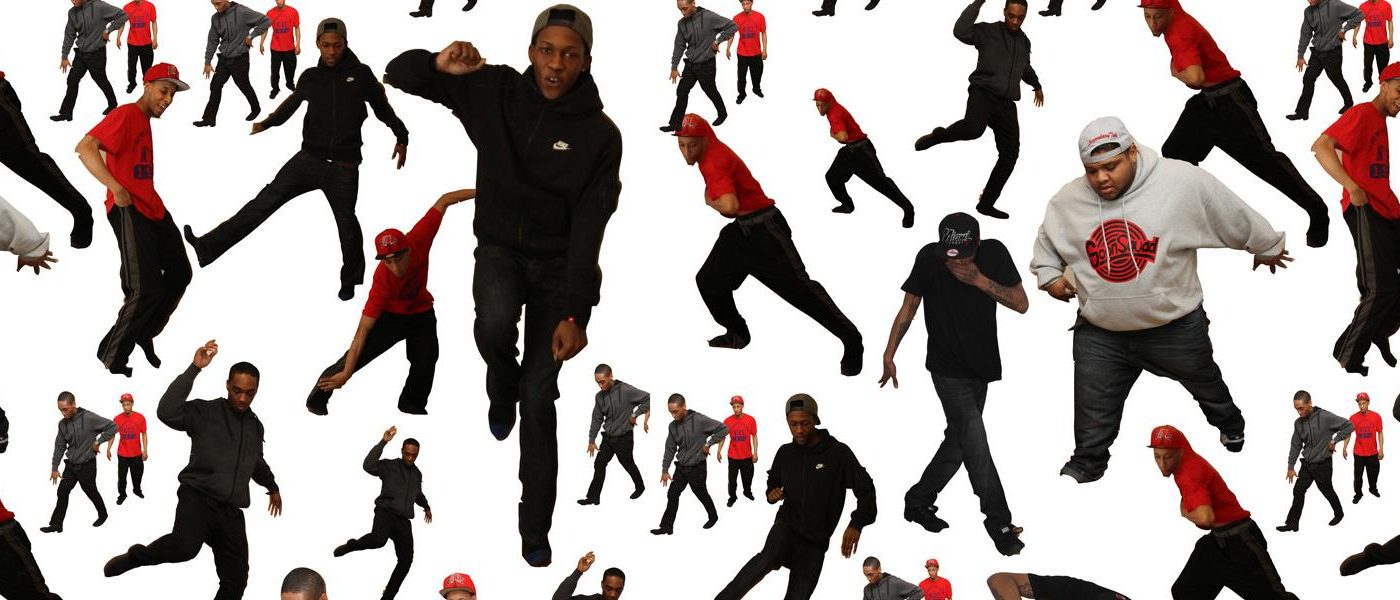
Footwork did not ask to be discovered. It emerged from Chicago’s South Side in the late 1990s as an evolution of ghetto house, built for battle: two dancers in a circle, crowd watching, feet moving faster than seems possible, the music underneath them running at 160 beats per minute and structured specifically to create impossible openings for movement. This was not music made for export. It was music made for a room, for a community, for a very specific function.
The discovery happened anyway. RP Boo, DJ Rashad, DJ Spinn, and the collective around them had built a sound so kinetically alien that when it finally reached the attention of European electronic music outlets and international labels around 2010 and 2011, it registered as something unprecedented. Hyperdub signed DJ Rashad. Labels in Berlin and London started paying attention. The critical apparatus caught up with something that had been running for fifteen years without it.
What made footwork unusual, outside its own context, was the combination. The tempo is brutal but the samples are gentle: slowed-down R&B hooks, chopped vocal fragments, melody embedded in what should be pure percussion. The tracks create a kind of doubling, a tenderness in the upper frequencies and a mechanical insistence below, and the tension between them is what gives the music its particular feeling. It is not aggressive in the way that other fast genres are aggressive. It is more like an argument being made very quickly.
DJ Rashad died in 2014. He was 34 years old. His death was a rupture for the scene, the loss of its most visible ambassador at exactly the moment the music was reaching the widest audience it had ever found. The records he made, particularly Double Cup from 2013, became the primary reference point for anyone trying to understand what footwork actually was. They still are.
The community kept working. RP Boo continued. DJ Spinn continued. Younger producers in Chicago and elsewhere have kept building on the form, adapting it, sometimes distorting it almost beyond recognition. There are footwork-influenced tracks in contemporary club music, in the work of producers who may have never set foot in one of the South Side battles that generated the whole thing.
The influence question is worth sitting with. Footwork’s fingerprints are on a significant portion of adventurous electronic music from the last decade: the polyrhythmic approach to rhythm, the use of vocal samples not as melody but as texture, the willingness to use speed as a compositional tool rather than just an intensity marker. Producers who have never called themselves footwork producers are making music that could not exist without it.
This is how Chicago has historically worked. The city invents genres in South and West Side communities, those genres get exported and distorted and celebrated in other contexts, and the communities that generated them continue on, largely without the credit and frequently without the money. Footwork had the same trajectory. What separates it from some of its predecessors is that the original recordings, particularly Rashad’s, have remained canonical rather than just influential. The distance between what inspired the derivative works and those original works is obvious if you listen to them in sequence. The originals are better. They were always better. That the rest of the world eventually agreed is not nothing, even if the timing was wrong and the benefit went to the wrong people, as it usually does.