 Into The Music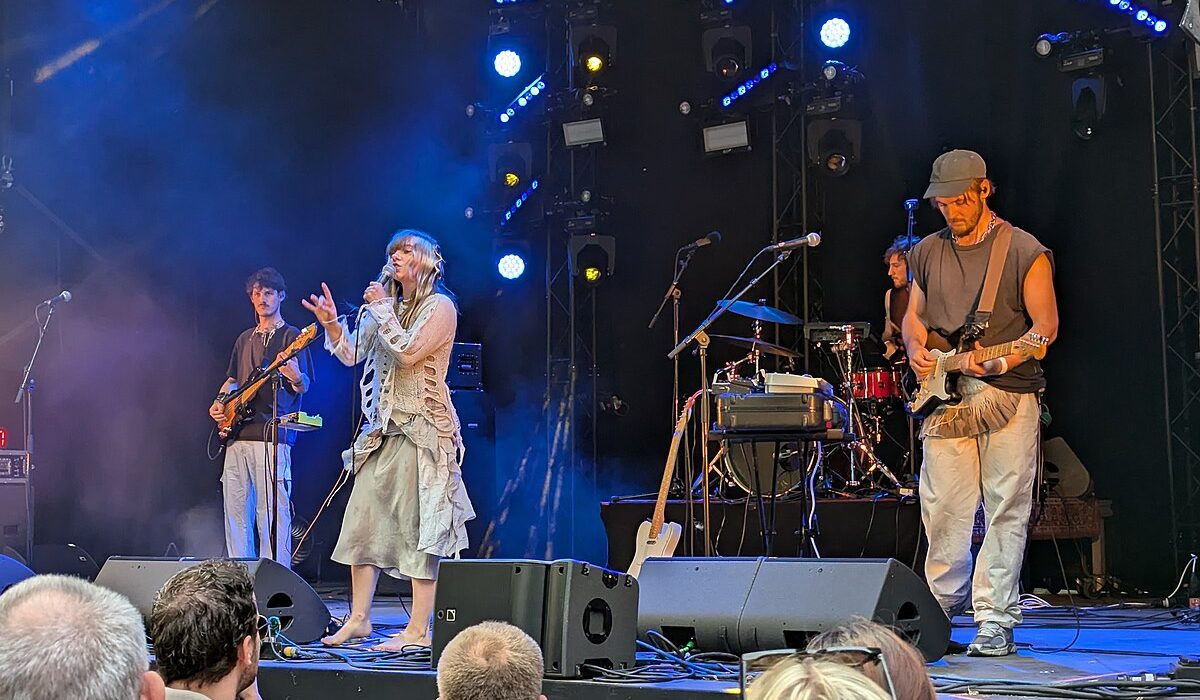
Dream pop is one of those genre labels that sounds like it should be imprecise but actually describes something quite specific. It names a set of aesthetic priorities that have been consistent since the late 1980s: processed guitar textures, vocals treated as atmosphere as much as melody, tempos that drift rather than drive, and a general preference for mood over event. What makes it interesting is how those priorities have survived intact across nearly four decades while the artists working within them have come from wildly different traditions.
The genre has its roots in the post-punk experimentation of bands like the Cocteau Twins, who built a sound around Robin Guthrie’s guitar effects and Elizabeth Fraser’s voice as a kind of instrument that existed somewhere between language and pure tone. 4AD Records, the UK label that released most of their catalog, was ground zero for a specific aesthetic that filtered through later artists across multiple continents. Beach House, Low, Beach Boys-influenced shoegaze acts, all of them have some genealogical relationship to what the Cocteau Twins and their contemporaries established.
The connection to shoegaze is real but not total. Shoegaze tends to bury vocals in guitar density and push toward climax, even if that climax arrives slowly. Dream pop is often quieter, more horizontal. The songs don’t necessarily build. They unfold. The emotional impact comes from immersion rather than crescendo. That distinction matters when you’re trying to understand why Beach House doesn’t sound like My Bloody Valentine, even though both are frequently shelved in adjacent sections of whatever the contemporary equivalent of a record shop is.
Beach House is probably the most visible contemporary act working in the tradition. Victoria Legrand and Alex Scally have been making records since 2006 that are so consistent in their approach and quality that it can be easy to underestimate how hard that consistency is to maintain. Their records are not all the same. Teen Dream, Bloom, Depression Cherry, 7, each has its own texture and weight. But they are all Beach House in a way that is immediately recognizable, which means they have figured out what they are doing and kept doing it without calcifying.
What’s notable about the genre’s current moment is how many younger artists are arriving at dream pop from directions that have nothing to do with its 4AD origins. There are artists coming from bedroom pop who end up here. There are artists from folk and country traditions who slow down and blur the edges and land somewhere that looks more like dream pop than anything else. The genre is absorbing influences rather than being absorbed by them, which suggests it has enough internal coherence to function as an actual home rather than a way station.
Night Tapes, the British-Estonian project, represent what the next wave of dream pop looks like: more electronic in their production approach, more willing to let ambient textures sit for longer periods, but still fundamentally oriented around the same priorities of mood and atmosphere that defined the genre thirty years ago. Their 2025 festival appearances have drawn comparisons to Beach House and Cocteau Twins without sounding derivative of either.
The appeal of dream pop, ultimately, is about escape that doesn’t lie to you about being escape. The music is immersive, but it doesn’t confuse immersion with resolution. You can listen to a Beach House record for an hour and feel like you’ve been somewhere else, and then the record ends and you’re back where you started, but not unchanged. That’s a specific and not particularly common thing for music to do. Most genres are trying to make you feel something more direct. Dream pop makes you feel something that’s harder to name, and that turns out to be enough for a lot of people, across a surprisingly wide range of life circumstances and decades of listening.
Dream pop is interesting precisely because it refuses the structural demands that define most serious rock , there’s no tension-release arc the way Thom Yorke obsesses over, no anthemic build the way Arcade Fire weaponizes. What it does instead is sustain a mood indefinitely, which is actually harder than it sounds. The aesthetic priorities mentioned in the excerpt are doing a lot of work , restraint as a compositional choice, not a limitation.
Kurt’s point about it refusing tension-release is interesting but I’d flip the framing , that’s not a bug, that’s the whole architecture. Dream pop isn’t rejecting structure, it’s substituting one kind of payoff for another. Instead of a melodic resolution you’re working toward, you get a textural saturation. The question is whether the artist is deliberately engineering that saturation or just letting tracks run long and calling it vibe. The good ones know the difference.
There’s something about dream pop that always brings me back to dub, even though on the surface they couldn’t sound more different. That willingness to let space breathe, to treat reverb not as an effect but as a structural element , Lee Scratch Perry was doing that in Kingston in the early 70s, long before any British band pointed a guitar at the floor. Whether the dream pop architects drew from that lineage or arrived there independently, I honestly don’t know, but the family resemblance is real. That description of somewhere you can’t quite name , that’s exactly what great dub does too.
I came to dream pop from a very different direction , you grow up with polka and folk and everything has a defined shape, a clear downbeat, a beginning and end. Dream pop was actually the first music that made me feel like the song could just drift and that was FINE, it didn’t need to resolve neatly. Cocteau Twins especially. My sister thought I’d lost my mind but honestly it felt like discovering a whole new way music could exist. Still does!
Dream pop is fascinating to think about in relation to the concept album tradition, because it essentially inverts the logic. A prog concept album uses narrative architecture , side one sets up a tension, side two resolves it, the listener is carried through a designed journey like a theatrical work. Dream pop refuses that architecture entirely. The “somewhere you can’t quite name” in the headline is exactly right: you’re not being taken somewhere, you’re being dissolved into a state. What’s interesting to me is that some artists , I’m thinking early Ride, and definitely Slowdive’s Souvlaki , managed to hold both impulses at once, the immersive and the structurally intentional. That tension is what makes the best dream pop feel substantial rather than just atmospheric wallpaper.