 Into The Music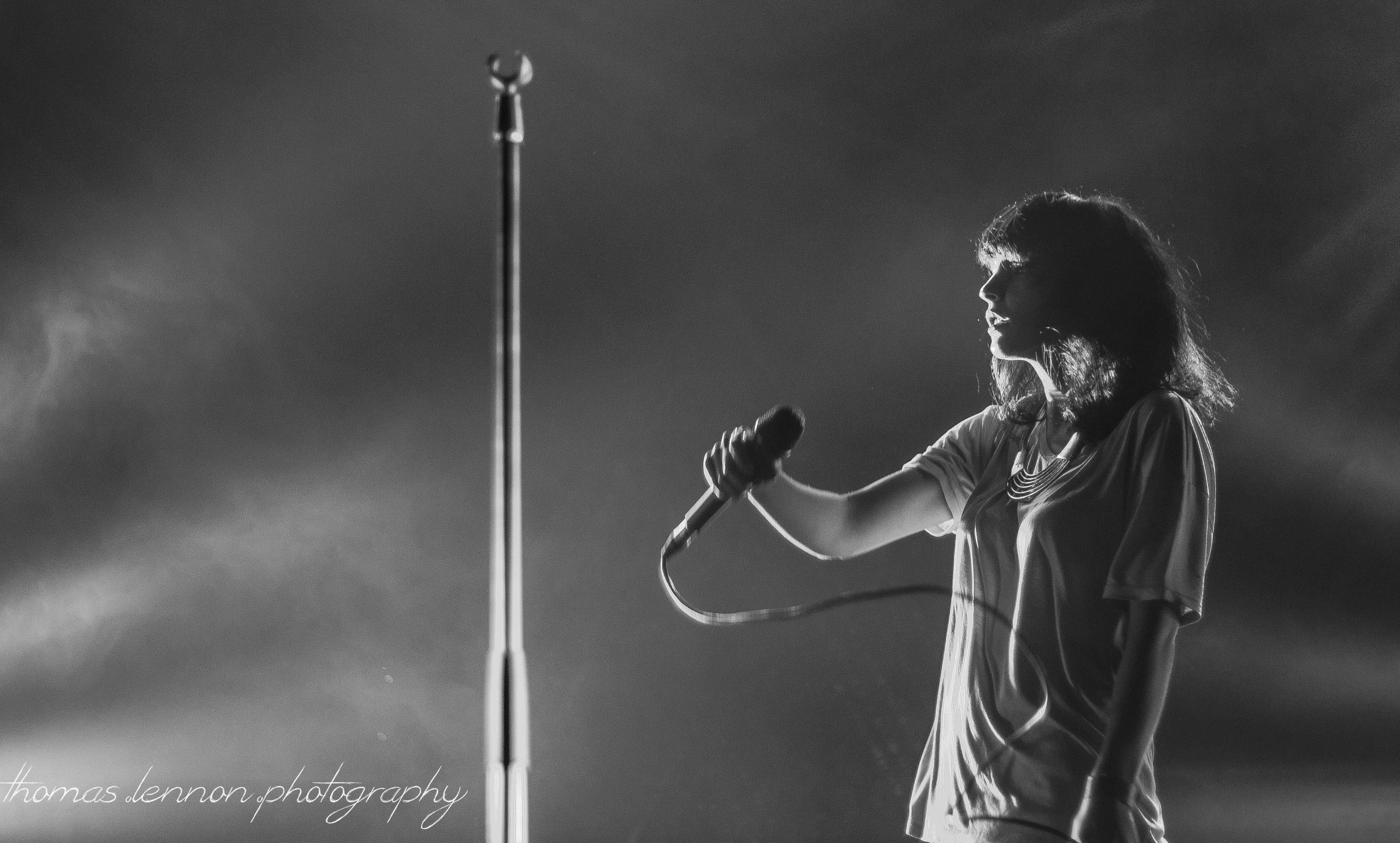
CHVRCHES have always been a band that sounds like they are bracing for something. There is tension in everything they make, even the songs that are unmistakably radio-ready, a quality that sets them apart from the other synth-pop acts who emerged in the early 2010s and promptly smoothed themselves into soft-focus playlists. Lauren Mayberry’s voice carries a specific kind of controlled anxiety. Iain Cook and Martin Doherty’s productions are bright on the surface and unsettling underneath. It is a combination that should not work as well as it does.
The Glasgow trio formed in 2011 and released their debut The Bones of What You Believe in 2013, an album that landed with an immediacy that felt like it had been waiting years to arrive. Singles like “The Mother We Share” and “Recover” were precise and relentless in a way that distinguished them from their synth-pop contemporaries. The production was polished but not clean in the way that scrubs character out. It had edges. It sounded like something made by people who cared deeply about both feeling and craft, which is rarer than it should be.
Every Open Eye in 2015 doubled down on the accessibility and landed bigger commercially. Some critics found it overproduced. They were not entirely wrong, but the songwriting was strong enough that it held together. “Leave a Trace” and “Never Ending Circles” are genuinely excellent pop songs. The album made CHVRCHES one of the defining acts of the decade’s mid-point indie-meets-pop moment.
The subsequent records, Love Is Dead in 2018 and Screen Violence in 2021, traced a path toward harder, darker territory. Screen Violence in particular felt like the band shaking off some of the commercial pressure and writing for themselves, leaning into gothic textures and, on the Robert Smith collaboration “He Said She Said,” something genuinely unexpected. It was their most adventurous record, and the reaction was warmer than any of them might have predicted.
Which brings us to now. At Robert Smith’s Teenage Cancer Trust shows at the Royal Albert Hall this week, CHVRCHES debuted a new song called “Conman,” and by all accounts it was heavier than anything they have done before. Doherty told NME: “It’s going to surprise people, and I hope it’s going to delight them and rip some faces off.” That is not the kind of language you use to describe synth-pop. That is the language of a band that has decided to go somewhere it has not been.
What CHVRCHES have consistently gotten right, across five albums and various stylistic detours, is the importance of Mayberry at the center. She is a genuinely compelling vocalist and an increasingly confident public voice on questions the music industry would often prefer artists to leave alone. Her willingness to speak directly about harassment, online misogyny, and the structural failures of the industry has made her a more interesting figure than her pop output alone would suggest. When that voice is pointed at heavier music, the results are unpredictable in the best way.
Whatever the next record turns out to be, CHVRCHES have earned enough credibility and proven enough range to make the anticipation feel real. The version of this band that made “The Mother We Share” in 2013 and the version debuting a face-ripper at the Royal Albert Hall in 2026 are recognizably the same band. That continuity through change is harder to pull off than it looks, and they keep pulling it off.