 Into The Music
Afrobeats did not ask for permission to go global. It just went. Over the past decade, the music coming out of Lagos and Accra and London’s Nigerian diaspora has moved from underground cult status to headlining Coachella to soundtrack of the decade, and it did so on its own terms without ever softening its edges to make Western markets more comfortable.
The origin story is worth telling clearly, because it gets muddled a lot. Afrobeats, the contemporary genre, is not the same as Afrobeat, the politically charged genre Fela Kuti invented in the 1970s. They share an inheritance, a certain rhythmic DNA, a rootedness in West African musical tradition, but they are different things. Contemporary Afrobeats is a fusion product: Yoruba music traditions meeting American R&B, dancehall from the Caribbean, a little bit of everything that Nigerian urban culture absorbed and processed in the 1990s and 2000s. The “s” at the end matters.
What makes the genre work at a fundamental level is the rhythm. The percussion patterns in Afrobeats are syncopated in a way that feels elastic, like the music is breathing rather than marching. There is space in it. Melodies float over the top of complex rhythmic structures without getting tangled in them. Producers like Shizzi and P2J understood that the international audience was not going to come to the music. The music was going to have to come to them, and it could do that without abandoning what made it distinct.
Wizkid was the first to break through in a way that Western media could not ignore. His collaboration with Drake on “One Dance” in 2016 was the pivot point, not because it was his best work, but because it was the moment the mainstream had to acknowledge that something was happening. Burna Boy followed on a different trajectory, more confrontational, more willing to put the politics of African identity front and center. His 2019 album African Giant and the Grammy-winning Twice as Tall in 2020 were not crossover bids. They were statements about what African music deserved on its own merits.
Tems changed things again. Her voice has a quality that is hard to categorize, somewhere between classic soul and something that does not have a category yet, and her ability to move between pure Afrobeats production and more stripped-down settings without losing what makes her distinctive is exceptional. Her 2023 debut album Born in the Wild landed on enough year-end lists to confirm that she was not a feature act. She was the main event.
The diaspora dimension is central to understanding how the genre developed and where it is heading. A huge percentage of the music is being made and consumed in London, in Atlanta, in Toronto, by people who are navigating between two cultures simultaneously. That navigation shows up in the music. Afrobeats is not a museum piece of a West African tradition. It is what happens when that tradition is alive and moving through a globalized world.
Where it goes next is genuinely hard to predict. The mainstream absorption of Afrobeats into pop production is well underway. Beyonce made Renaissance in obvious conversation with it. Half the current pop production playbook uses rhythmic ideas that originated there. But the original artists and the original audiences have maintained a relationship with the music that is resistant to simple co-option. That tension, between assimilation and distinctiveness, is what the next decade of Afrobeats is probably going to be working out.
It will be worth paying attention.

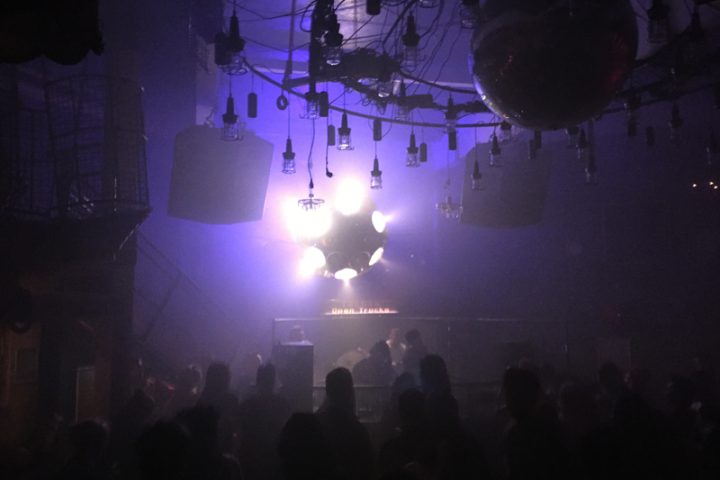

I’ve been fortunate to catch Burna Boy and Wizkid live on the European festival circuit over the past few years, and what’s difficult to convey in any article is how differently Afrobeats functions in a live setting compared to the studio recordings. The rhythmic layering that reads as almost casual on a stream becomes this overwhelming, physical thing when you’re standing in front of a proper PA. The argument that this is ‘global pop’ undersells how specifically African the groove architecture remains even as the surface aesthetics adapt to international markets.
I remember the first time an Afrobeats song came on at a family cookout and my aunt , who only listens to old school soul , just stood up and started moving without even asking what it was. That’s the thing this article gets right: it didn’t ask permission. It just reached into you. I grew up on 90s R&B and I can hear all the conversation happening between those sounds , it’s like music that knows its whole family tree and isn’t intimidated by any of it.