 Into The Music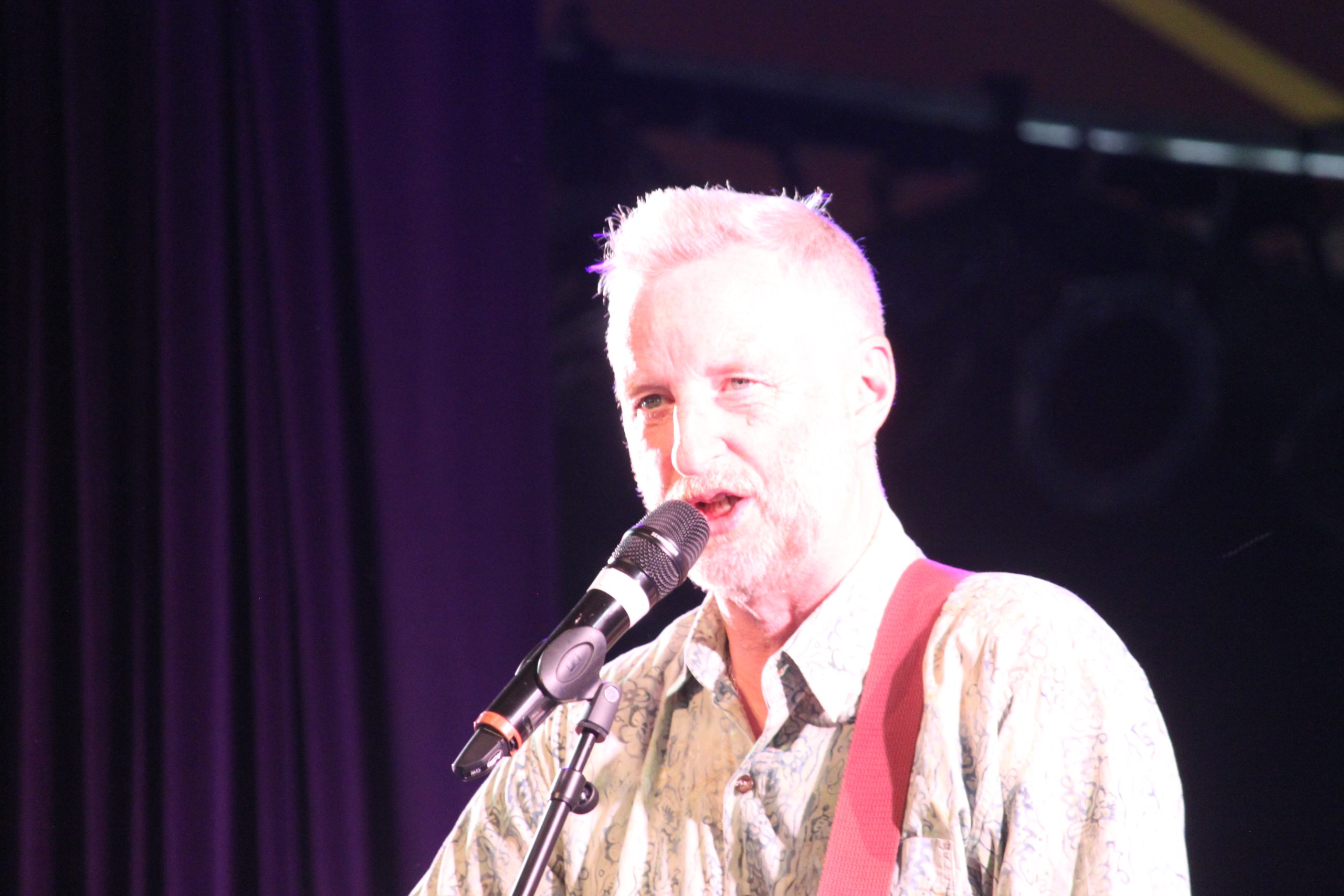
Billy Bragg has never pretended to be anything other than what he is. That refusal to pretend is, in its own way, a kind of artistic achievement, rarer than it sounds in a business that rewards the careful management of public image.
He grew up in Barking, Essex, in the 1960s and 70s, the kind of working-class English upbringing that shaped everything: his politics, his sound, his relationship with his audience. He bought his first guitar after a stint in the British Army, left the Army after three months, and started busking. That’s the biography in abbreviated form, and it already tells you most of what you need to know about how he operates. He gets in. He gets on with it. He doesn’t overthink the path.
His debut, “Life’s a Riot with Spy Vs Spy” in 1983, was five songs recorded in an afternoon for almost nothing, released on his own label. Just him and a guitar, direct to tape, no ornamentation. It sold on the strength of what it was, which was a man saying exactly what he thought in a way that made you feel like you’d been waiting to hear someone say it. That template, minimalist arrangement, honest lyric, unapologetic politics, has never really changed.
What Bragg figured out early and has never abandoned is that politics in music does not have to mean sloganeering. His best songs work because the emotion arrives first and the argument follows it. “A New England” is a love song about disappointment that happens to carry a worldview. “Levi Stubbs’ Tears” is a short story about domestic abuse and survival that trusts the listener to understand everything it doesn’t say out loud. These are not protest songs in the traditional sense. They’re songs about how people live in circumstances shaped by forces they didn’t choose.
His political instincts have made him easy to caricature as a relic of a certain kind of British leftism, and that caricature has followed him for decades. It misses what’s actually interesting about him, which is that he has stayed willing to be wrong, to change his mind, to show up at the next argument with different questions. He wrote extensively about English identity in “The Progressive Patriot” in 2006, trying to reclaim the idea of national pride from the right. He didn’t resolve the tension. He never claimed to. The attempt was the point.
He spent much of the 1990s collaborating with Wilco to record and complete Woody Guthrie’s unfinished songs for the “Mermaid Avenue” albums. Those records are remarkable documents, not just for the music but for what they reveal about Bragg as a collaborator. He’s not precious about his own voice when someone else’s material demands something different from him. He serves the song. That’s harder than it sounds for someone with as strong a persona as his.
Live, Bragg has always been something specific. Not a spectacle but a conversation. He talks between songs. He disagrees with people in the audience and then plays them something that proves his point. He has been doing this, more or less continuously, since the early 1980s, and the energy that comes off his shows is not nostalgia energy. It’s something more immediate than that. He plays like the issues still matter because, in his view, they still do.
His recent commentary on the far-right movements reshaping British and American politics fits the arc exactly. He shows up. He says what he thinks. He plays the show. Whether or not it changes anything, the consistency itself is a kind of statement. Forty-plus years of the same basic argument, made with the same basic instrument, for audiences who keep showing up to hear it.
That’s not nothing. In an era of constant repositioning and strategic silence, it’s actually quite a lot.