 Into The Music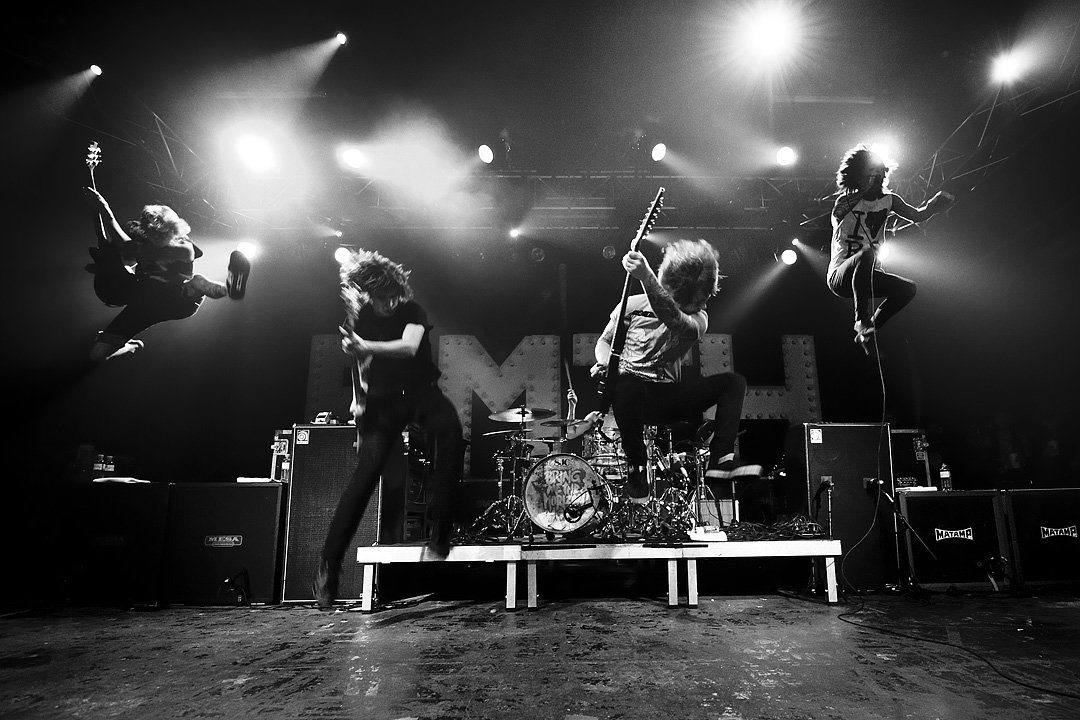
Bring Me The Horizon started as a deathcore band from Sheffield that nobody outside of a small online scene took seriously, and then they became one of the biggest rock acts on the planet without ever quite fitting into any single definition of what a rock act should be. The distance between those two points is one of the more fascinating trajectories in recent music, and the story is still being written.
The band formed in 2004 when vocalist Oliver Sykes, guitarist Lee Malia, bassist Matt Kean, drummer Matt Nicholls, and guitarist Jona Weinhofen were teenagers in South Yorkshire with a specific and rather extreme taste in music. Their early releases leaned hard into extreme metal territory, the kind of music that attracts devoted fans and bewildered everyone else. Those records were not for everyone, and the band seemed fine with that.
The shift started with “Sempiternal” in 2013. The deathcore aggression was still there, but so was something else: melody, texture, electronics, a willingness to sit in a chorus long enough for it to land. Critics who had written them off as a genre exercise suddenly had to reconsider. “Sempiternal” went platinum and changed the conversation about what the band was capable of.
“That’s the Spirit” in 2015 pushed further in the accessible direction and caught fire commercially in a way few rock records had managed in that era. The backlash from original fans was predictable and largely irrelevant. The band had found an audience that extended far beyond any one genre, and they were more interested in what they could do next than in protecting what they had been before.
The “Post Human” series, launched in 2020 with “Survival Horror,” has been the most ambitious phase of their career. The albums draw on pop, electronic production, and metal in combinations that should not work but often do, largely because Sykes and keyboardist Jordan Fish have developed a language that is distinctly their own. The production is dense and heavy but the songs underneath are built to be felt in arenas, which is exactly where they end up being played.
The São Paulo live film, L.I.V.E. In São Paulo, released to cinemas in March 2026 and coming to streaming in April, is their latest attempt to push what they can do with a live performance. Filmed at Allianz Parque Stadium in front of 50,000 fans, it uses multi-camera footage, drone shots, and fan-submitted video to create something that is more than a standard concert film. Whether it fully succeeds is a fair debate, but the ambition is not in question.
What makes Bring Me The Horizon worth paying attention to in 2026 is not nostalgia for where they came from and not simple admiration for how far they have come. It is the fact that they remain genuinely unpredictable. A band that has been through their kind of transformation and achieved their level of commercial success usually settles into a comfortable groove. They have not done that yet. Whatever comes next after the “Post Human” series closes out is going to be interesting.