 Into The Music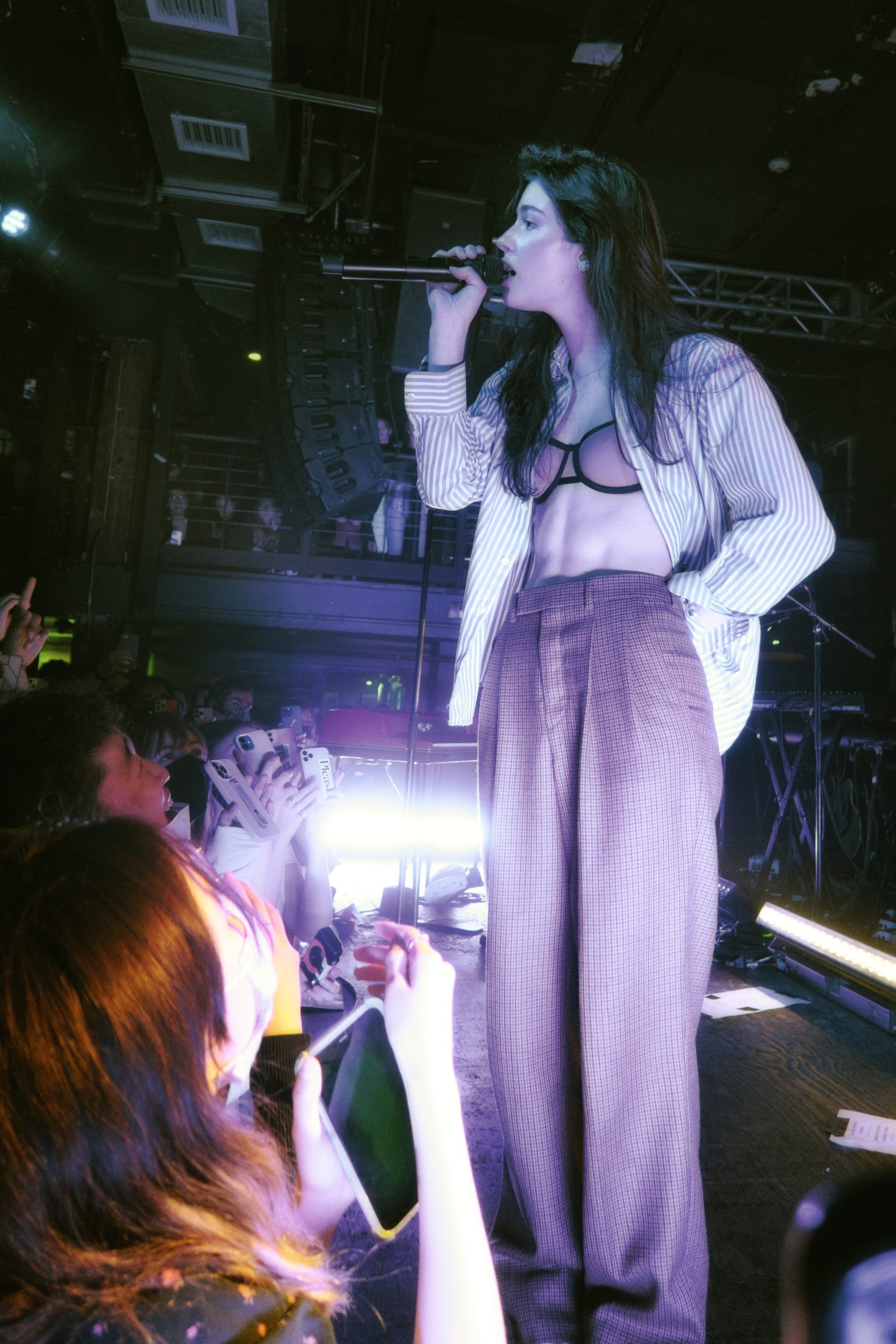
Gracie Abrams arrived in music with the kind of quiet confidence that people tend to misread as tentative. She was twenty years old, writing songs about guilt and heartbreak and the specific loneliness of young adulthood, and people wanted to categorize her as bedroom pop, as a Taylor Swift adjacent phenomenon, as a nepo baby working the system. None of those frames fit, and the past three years have made that increasingly clear.
Abrams was born in 1999, the daughter of director J.J. Abrams and producer Katie McGrath. She started writing songs at eight. She left Barnard College after a year to pursue music seriously, which is the kind of decision that looks obvious in retrospect and terrifying in the moment. Her debut single “Mean It” appeared in 2019 on Interscope, and the EPs that followed, Minor in 2020 and This Is What It Feels Like in 2021, established the core of what she does: guitar-forward indie pop with lyrics that sit close to the bone, a voice that sounds like it’s telling you something it hadn’t planned to.
The wider recognition came in 2022 and 2023, when she opened for Olivia Rodrigo and then spent significant time on the Taylor Swift Eras Tour. This is when casual listeners picked up on her existence, but it was also when some of the more dismissive coverage reached its peak, with the implication that her profile was manufactured or borrowed. The music didn’t support that reading. Good Riddance, her debut album from February 2023, is a precise and genuinely personal record about loss and self-discovery, and it earned a Grammy nomination for Best New Artist on its own terms.
The follow-up, The Secret of Us, dropped in June 2024 and showed a widened ambition. The production opened up. The sound got more expansive. The single “That’s So True” from the deluxe edition became her biggest commercial moment, reaching number one in multiple countries. The song is a bit of a departure from her usual restraint, hooky in a way that feels effortless, and its success demonstrated that she doesn’t need to stay in any one sonic lane to be herself.
What sets Abrams apart in a crowded field of young singer-songwriters is the specificity of her emotional intelligence. Her songs don’t reach for universality by being vague. They reach for it by being precise about particular, recognizable feelings. The guilt in “I Love You, I’m Sorry,” the longing in “Risk,” the specific sadness of “Close to You” , these don’t feel like songwriter exercises. They feel like documentation.
She is also notably uninterested in building a celebrity persona that overshadows the work. In an era when the music industry runs on content, Abrams maintains a certain stillness, which is probably why her live performances tend to hit hard. There is no separation between who she is onstage and what the songs are about.
In early 2026, she made her acting debut in an A24 film. Whether that’s a pivot or a detour remains to be seen. The music, in the meantime, continues to speak for itself.