 Into The Music
Muse have always operated in a register that should not work but persistently does. The collision of arena rock ambition, prog complexity, sci-fi paranoia, and the kind of melodic excess that would embarrass most other bands in guitar music: by every reasonable standard this should be a mess. Instead it is a body of work that has sold out stadiums across multiple continents for twenty-five years, spawned a fanbase so committed they queued overnight for intimate venue shows, and produced at least three albums that will still be argued about in music criticism decades from now.
The Devon trio of Matt Bellamy, Chris Wolstenholme, and Dominic Howard formed in Teignmouth in the early 1990s, went through the expected early-years indignity of getting dropped and restarting, and then made Origin of Symmetry in 2001. That album changed what British rock could sound like. The Hendrix-via-Queen guitar playing, the falsetto that went places nobody in guitar music was going, the operatic dynamics: it announced a band that was going to do things their own way regardless of whether anyone followed.
People followed. By Absolution in 2003, Muse were filling arenas. By Black Holes and Revelations in 2006, they were headlining major festivals. The Resistance in 2009 included a three-part symphony and charted at number one in twelve countries. The scale kept expanding because the ambition kept expanding, and somehow the two things stayed in proportion.
The backlash came, of course. Critical opinion on Muse has always been divided between the people who find their maximalism thrilling and the people who find it ridiculous. The correct answer is that it is both, and that the ridiculousness is often the point. Bellamy’s lyrical obsessions, political conspiracy, romantic fatalism, the heat death of civilization, delivered with total sincerity, are not a failure of irony. They are a choice to treat music as a vehicle for the largest possible feelings. Most rock bands are too cautious to do that anymore.
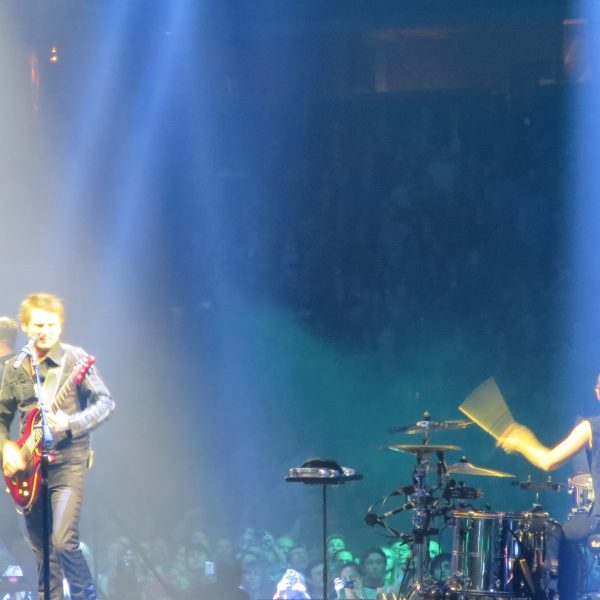
Their April 3rd show at Brixton Academy, their first at that venue in twenty-five years, kicked off the era for their tenth album The Wow! Signal. New songs “Cryogen” and “Be With You” debuted alongside catalog cuts that hit a crowd that had been waiting for this exact setlist. Bellamy teased a full UK arena tour for November. The machine keeps moving.
What distinguishes Muse in 2026 from most of their contemporaries is that the sense of stakes still feels real. They have not become a legacy act going through motions. Each record is a genuine attempt to make the biggest, most overwhelming Muse record possible, and that aspiration, earnest and slightly deranged as it is, is exactly why people still queue overnight to get to the front row.