 Into The Music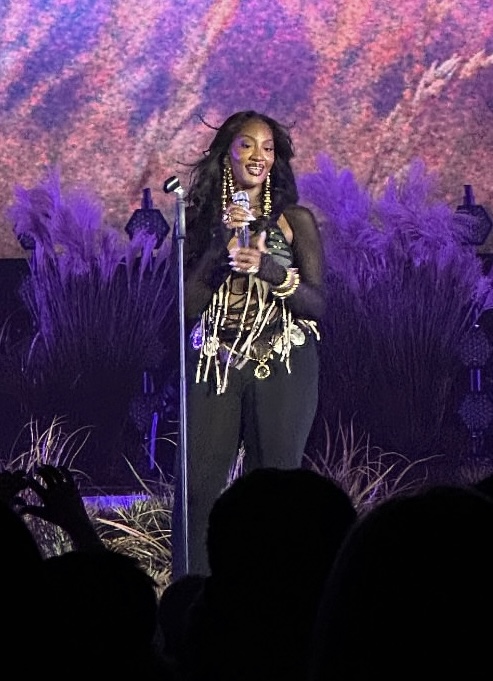
When Tems performed “What You Need” on The Tonight Show last week, she stood in front of a fringe curtain with a full band behind her and sang with the kind of stillness that most performers only discover after decades of work. She is 29 years old. She has been doing this professionally for less than a decade. The composure is not studied. It is just who she is.
Temilade Openiyi grew up in Lagos, Nigeria, raised largely by her mother after her father’s death when she was a teenager. She studied business at university, quit before finishing, and started writing songs in her bedroom. Her earliest recordings, posted online around 2018, were raw and strange, a voice that didn’t sound like anyone around it operating in a genre that was still finding its shape. Afrobeats at that moment was exploding outward from Nigeria toward the rest of the world, and within that explosion was a quieter substream, sometimes called Afro-soul or Afro-fusion, that was less about the propulsive rhythm track and more about the voice itself. Tems landed squarely in that space.
The breakout came in 2020, when she featured on Wizkid’s “Essence.” The song was originally a moderate Nigerian success that became, during the pandemic lockdowns, a global phenomenon. People discovered it on TikTok and Instagram and everywhere else, and Tems’ voice, that dark and smoky alto floating over the beat, was what most of them latched onto. When a remix featuring Beyonce landed in 2021, the song went into the stratosphere.
From that point, Tems moved with uncommon patience. She released EPs rather than rushing a debut album. She guested on Drake’s “Fountains,” appeared on Beyonce’s Renaissance, and contributed “No Woman No Cry” to the Black Panther: Wakanda Forever soundtrack, for which she won a Grammy in 2023. Each collaboration was strategic without feeling mercenary. She was moving through the industry on her own terms, building toward something rather than grabbing every opportunity in reach.
Her debut album, Born in the Wild, arrived in 2024 and confirmed what her EPs had been building toward: a full artistic statement, rooted in Afro-soul, reaching into gospel, R&B, and pop. The single “Love Me JeJe” won her Best African Music Performance at the 2025 Grammy Awards. The follow-up EP, Love Is a Kingdom, dropped late last year and was almost entirely self-written and self-produced, a signal that she is not interested in handing creative control to anyone.
What makes Tems genuinely interesting rather than just impressive is the texture of her voice and what she does with it. She rarely oversings. Where a lesser artist would pile runs onto a hook, Tems tends to underplay, letting the weight of a note do the work rather than ornating it to death. It gives her music a stillness at its center that makes the moments of full-throated power land harder when they arrive.
She is also one of the few artists successfully bridging the Afrobeats diaspora and Western pop audiences without compromising the music’s roots. The beats sound like Lagos. The emotion sounds universal. That is a harder trick than it looks, and she makes it look easy.
The Fallon performance this week was a reminder that she is still in an early chapter. A voice like that, attached to an artist with this much creative ambition, is going to be making interesting records for a very long time.