 Into The Music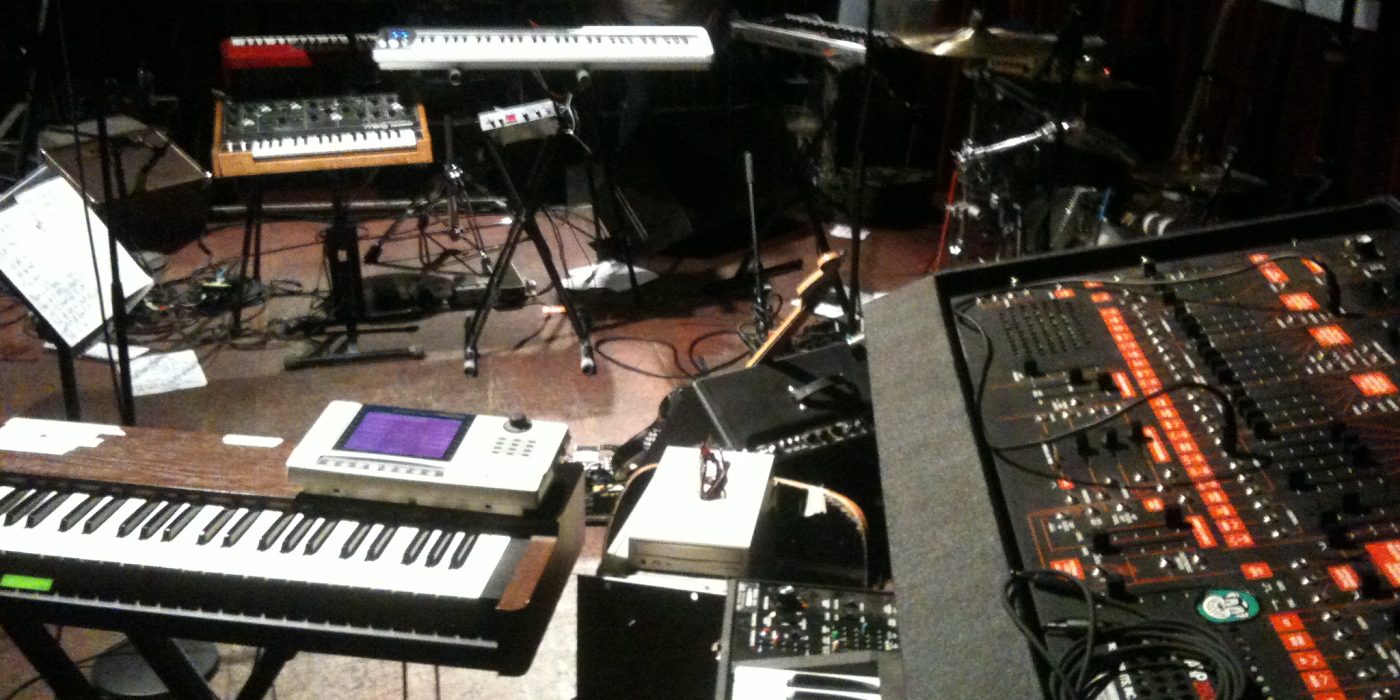
Synth-pop turned fifty this year, depending on how you date it. If you start the clock at Kraftwerk’s Autobahn in 1974, you’re already past it. If you start it at Gary Numan’s “Are ‘Friends’ Electric?” in 1979, you’ve got a few years yet. But the early 1980s were when the genre consolidated into something recognizable as its own thing, when synthesizers stopped being unusual instruments used for effect and became the primary voice of an entire wing of popular music.
What’s worth noting, half a century in, is how thoroughly synth-pop rewired what pop music could be and how little credit it gets for that rewiring.
The genre arrived in a specific cultural moment. Punk had blown up the old rock hierarchy and then rapidly institutionalized itself into its own new hierarchy. What came after punk, especially in the UK, was a generation of musicians who had absorbed its DIY energy but were uninterested in guitars as the necessary instrument of rebellion. The synthesizer was cheaper, stranger, and required no traditional musicianship. You could build entire worlds out of oscillators and sequencers in a way that a three-piece rock band simply couldn’t replicate. That was the point.
Depeche Mode came out of Basildon, Essex, in 1980, four teenagers making cold electronic music that shouldn’t have worked as emotional communication but somehow did from the very beginning. Vince Clarke, who wrote most of their debut album before leaving to form Yazoo and later Erasure, understood something important: that the detachment of the machines could make the human voice sound more exposed by contrast, not less. Alison Moyet’s voice over Clarke’s synthesizers in Yazoo is still one of the more extraordinary pairings in pop music history precisely because it shouldn’t work and it completely does.
The Human League split in two in 1980, which is a piece of music industry chaos that accidentally produced two important acts. The remaining members recruited two young women from a Sheffield nightclub and recorded Dare (1981), one of the era’s defining albums. “Don’t You Want Me” became inescapable. What made it interesting was its structure: a narrative told from two perspectives, each accusing the other of a different version of the same relationship. That kind of formal ambition was hiding inside a song that sounded like pure pop.
New Order emerged from the wreckage of Joy Division in 1980 and spent the early part of the decade fusing the electronic textures of synth-pop with the rhythmic pulse of Chicago house in a way that helped create club music as we now understand it. “Blue Monday” (1983) is frequently cited as the best-selling 12-inch single of all time. It sounds like it was assembled from the future by people who were still partly operating in the past, and that tension is what makes it still feel alive.
Across the Atlantic, the influence landed differently. Gary Numan had his American crossover moment, but synth-pop in the US tended to be absorbed into other formats: new wave, art pop, the kind of MTV-friendly sheen that briefly dominated the early 1980s mainstream. The Eurythmics, technically British, made their biggest impression on American audiences and embodied the genre’s capacity for theatrical self-invention. Annie Lennox’s voice over Dave Stewart’s production was simultaneously clinical and desperate in a way that suited the decade’s particular blend of surface cool and underlying anxiety.
Today, you hear synth-pop everywhere without always recognizing it. Robyn’s Sexistential, released this week, is in direct conversation with that lineage. So is virtually every pop producer working with synthesized textures, which is to say almost every pop producer working right now. The genre never died. It just became the water pop music swims in.
Vince Clarke, who helped start this whole machine in 1980, announced a new analog synth covers project just this past week. Some things keep going because they were right in the first place.