 Into The Music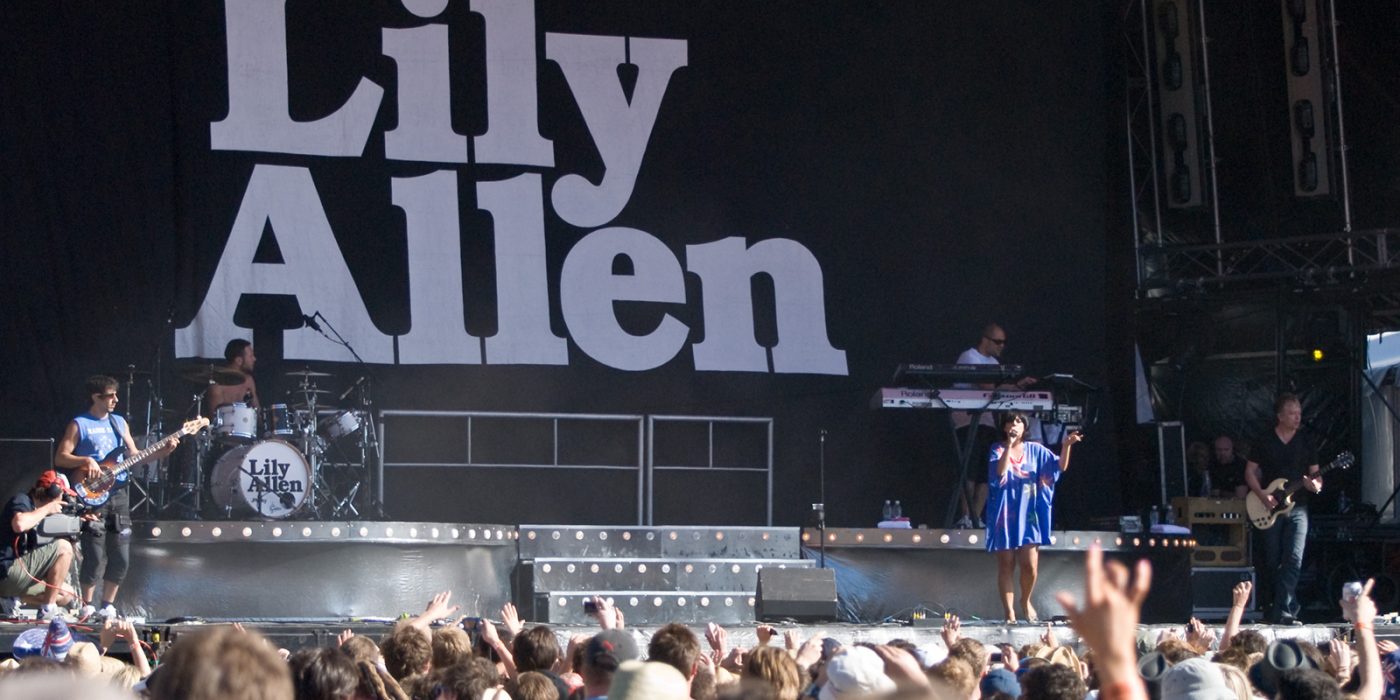
Lily Allen announced this week that her West End Girl tour is expanding into North American arenas, with a run beginning at Madison Square Garden in September and closing at the Kia Forum in Los Angeles. The venues are enormous. The fact that she is filling them is the result of a career trajectory that, if you go back and look at it, has been more consistent and more purposeful than it has been given credit for.
She showed up in 2006 with Alright, Still, and the tone was immediately clear: sharp, funny, working-class London, not particularly interested in being liked by people who were not prepared to meet her where she was. “Smile” was a breakup song with a ska beat and a chorus that described setting your ex’s house on fire. “LDN” was a satire of urban optimism dressed up as a love song. The whole album operated with a particular kind of wit that did not really exist in British pop at that moment, and people responded to it immediately.
What followed was a decade and a half of being wildly underestimated. It Can Be Only You was a mainstream pop pivot that got dismissed in real time. Sheezus got described as a capitulation. The writing on those albums is substantially better than their reputations suggest, which is the kind of thing that only becomes visible in retrospect, once the discourse has moved on and you can hear the songs without the noise around them.
She stepped back from music for several years after 2018. The reasons she gave publicly were personal and entirely her own to share on whatever timeline she chose. When she came back with No Shame in 2018, the critical reappraisal was already beginning. The album was autobiographical in ways that reframed the earlier work, not as a pop star trying on different personalities, but as someone who had been writing from a consistent interior position all along and had only gotten more direct about it over time.
West End Girl, her 2025 album, arrived as the final confirmation that the reappraisal was warranted. The album is musically sophisticated in a way that does not announce itself, all texture and restraint where the early records were sharp elbows and bravado. It is the work of someone who has figured out how to turn full life experience into something that does not need to perform its own weight. The artwork, a portrait by Spanish painter Nieves González, recently entered the collection of London’s National Portrait Gallery. That is not nothing.
The arena tour is the visible outcome, but it is really just the current moment in a longer story. Allen has spent nearly twenty years making music that was easier to dismiss than to actually hear, and the audience that is now packing Madison Square Garden to see her is the audience that heard it anyway. They have been there for a while. The arenas are just the venue finally catching up to the fact.
There is also something worth noting about the cultural moment this is happening in. Pop music from the mid-2000s has been undergoing a sustained reassessment, and Allen’s work sits at the center of that, because her records were doing things that other artists were not doing at the time. The specificity of her observations, the class consciousness running underneath the clever surface, the willingness to be unlikeable in ways that male artists of the same era were never asked to account for. All of it reads differently now than it did then, and that re-reading is part of what is selling out arenas in September.
She earned this. It just took the rest of the room a little while to notice.