 Into The Music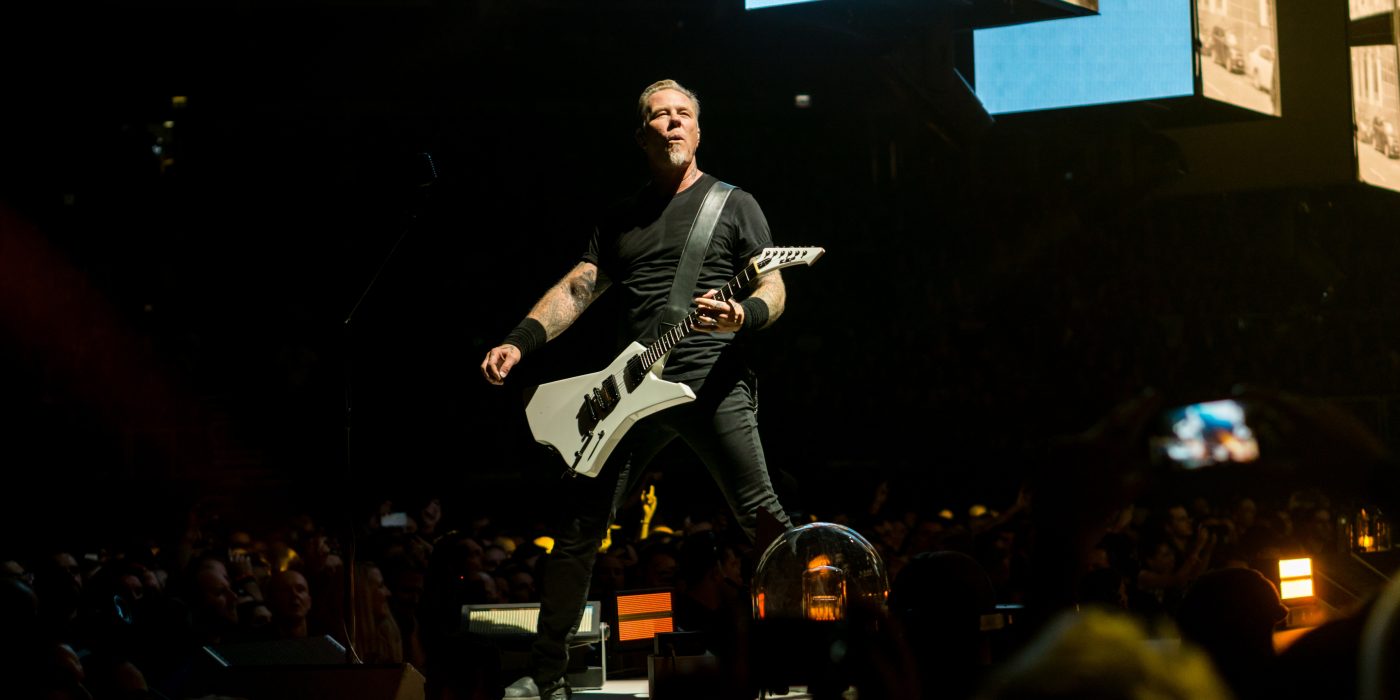
The Sphere in Las Vegas was built to host U2, and then it hosted everyone else. Phish played there. Dead and Company. Anyma. And now Metallica, whose “Life Burns Faster” residency starting in October 2026 will run at least fourteen nights, possibly more. The question worth asking is not whether this is impressive, it obviously is. The question is what it means for what live music actually is.
To understand the Sphere’s significance you have to understand what it is replacing. For most of rock’s history, the standard for a major touring production was pyrotechnics, screens, lighting rigs, and stage engineering. Pink Floyd’s “The Wall” shows in 1980 and 1981 were the outer limit of what an arena production could attempt. Then came the stadium era, the Voodoo Lollipop screens, the elaborate stage sets that U2 and the Rolling Stones turned into architectural achievements. Each generation of production pushed against the constraints of the venue itself.
The Sphere removes most of those constraints. Its interior surface is a 160,000 square foot LED display with a resolution that makes conventional screens look like 1990s television. The spatial audio system has 164,000 speakers. The seating is designed around immersion rather than sightlines in the conventional sense. When you are inside a Sphere show, the venue itself is the medium.
Metallica is a logical fit for this in ways that are not immediately obvious. They are not a band that has historically prioritized visual spectacle. Their value has always been about the music, the tightness of the performance, the volume, the collective experience of being in a room where a band is playing that hard. The “S&M2” concert film showed they understood how to work within a grand production without losing what made them who they are. The Sphere is a much larger version of that challenge.
What Lars Ulrich said when the residency was announced matters here. He talked about seeing U2 at the Sphere in 2023 and immediately wanting to figure out how Metallica could use the technology to do something that could not be done anywhere else. That is the right instinct. The Sphere only justifies its existence when artists treat it as a creative instrument rather than a backdrop. When it works as backdrop, it is the world’s most expensive special effect. When it works as instrument, it is something genuinely new.
The economic reality of the Sphere also cannot be ignored. Ticket prices for Sphere residencies are substantially higher than standard arena shows. The intimacy of the venue, which holds about 18,000 people, means fewer tickets available at higher prices. This is live music moving further in the direction of the premium experience, a trend that has been building since the early 2000s but is now accelerating faster than at any point in history. The residency model itself is part of that. Instead of taking a production on the road, you bring the audience to a fixed location. Las Vegas is already wired for that kind of pilgrim logic.
Whether this represents the future of live music or a very expensive side street is genuinely unclear. Most artists cannot afford the Sphere. Most audiences cannot afford the Sphere. But the technology being developed for these productions will filter down in the same way that lighting and screen tech from stadium tours eventually showed up in mid-size club tours. The Sphere may be the laboratory where the next version of what live music looks like gets invented, even if only a handful of artists ever perform there.
Metallica at the Sphere is news because Metallica is Metallica. But the larger story is what happens when a band with fifty years of accumulated audience trust walks into a room designed to overwhelm the senses and tries to make something that still feels like a Metallica show. If they pull it off, and there is reason to think they will, the conversation about what a concert can be will shift again. That conversation has been shifting for a long time. It is not stopping now.