Into The Music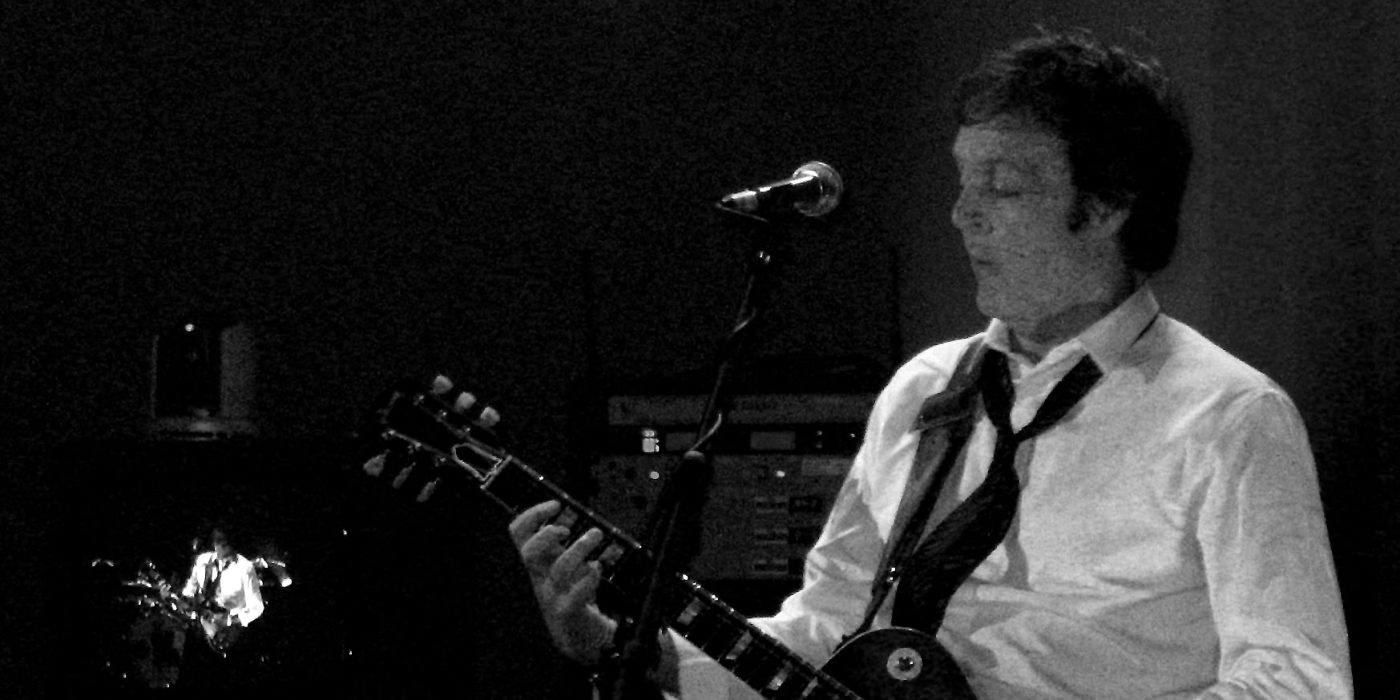
Paul McCartney announced a new album this week, and the announcement itself is worth sitting with before we even get to the music. The Boys of Dungeon Lane, made with producer Andrew Watt and due May 29 on MPL/Capitol, is framed as an autobiographical record about McCartney’s childhood in post-war Liverpool. The lead single is “Days We Left Behind,” and it is gentler than almost anything McCartney has released in recent memory. It is also unmistakably him.
At 83, Paul McCartney is doing something very few artists of his age or stature bother to do. He is not releasing a covers album. He is not recycling old themes. He is writing new songs from a place of genuine reflection, and he is framing them around the most formative experiences of his life in a way that feels earned rather than nostalgic in the shallow sense.
The album title comes from a lyric in “Days We Left Behind,” and the emotional geography is Liverpool, specifically the working-class neighborhood of Speke and the streets around Forthlin Road, where McCartney grew up. He has talked about his friend John Lennon appearing in the song. For someone who has spent sixty-plus years being asked about his relationship with Lennon, McCartney addressing it in this way, through the lens of childhood memory and the streets they both knew, feels different from the interviews and the documentaries. It feels personal in a way that documentation cannot replicate.
The production choice matters too. Andrew Watt has become one of the most in-demand producers in mainstream rock over the last several years, working with Ozzy Osbourne, Pearl Jam’s Eddie Vedder, and others. He is good at making older artists sound present rather than preserved. McCartney’s last proper studio album, McCartney III from 2020, was recorded entirely by McCartney alone during the pandemic lockdowns, and while it had its moments, it could feel hermetic. Bringing in Watt suggests McCartney wanted something with more energy and collaboration behind it.
The Boys of Dungeon Lane sits in an interesting tradition of late-career records that are explicitly about the past without being purely backward-looking. Bob Dylan’s Shadow Kingdom came from a similar place of retrospection. Neil Young has made records in his seventies and eighties that use autobiography as a compositional tool rather than a crutch. McCartney, who has always been more interested in melody than in the kind of literary introspection that defines Dylan’s best work, is approaching it differently, through the emotional texture of specific places and specific people rather than through narrative.
The title track covers fourteen songs, which is substantial for a McCartney solo record. That runtime suggests he had a lot to say, and the rollout is unhurried. The album is not out until May 29. The single was not dropped with a barrage of platform content. It arrived and let itself be heard.
What makes The Boys of Dungeon Lane worth paying attention to before we have heard most of it is the combination of context and intent. McCartney is one of the two or three most famous musicians who has ever lived, and he is still writing and releasing new work with genuine purpose. He is not touring behind a back catalog. He is making new art about who he is and where he came from. That impulse, at any age, is the thing that separates artists from entertainers. McCartney has always been both. On the evidence of “Days We Left Behind,” he is leaning into the former in a way that feels meaningful.
May 29 is not far away. Pay attention.