 Into The Music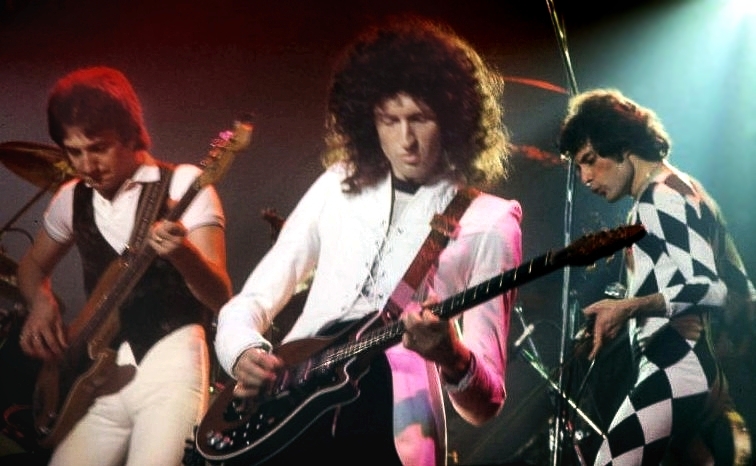
The reissue industrial complex has a complicated relationship with legacy. At its worst, it is an exercise in monetizing nostalgia, a label and an estate cashing in on the archive without adding anything to the conversation. At its best, it does something harder: it reopens the conversation entirely. Queen’s newly released Queen II Collector’s Edition, which arrived this week in a range of formats including a five-disc box set, a 2026 vinyl mix, and an expanded CD edition, is firmly in the second category, and it is worth understanding why.
Queen II was the band’s second album, released in 1974, and it has occupied an unusual position in the Queen catalog ever since. It is not the entry point. A Night at the Opera and Bohemian Rhapsody are the entry points. It is not the underrated gem that casual fans eventually discover, because enough people already know and love it. What it is, more accurately, is the record where Queen stopped being a band and became something else: an aesthetic project with an almost absurd ambition about what rock music could contain.
The album is split into two conceptual halves, the White Side and the Black Side, and the range within those sides is remarkable for a record from that era. “Seven Seas of Rhye” is a tight, radio-ready single. “The March of the Black Queen” is an eight-minute piece that sounds like it was constructed from materials no one had agreed were compatible. “Ogre Battle” is straight-ahead hard rock. “Nevermore” is a brief, devastating ballad. The sequencing is not random. The album was designed to be experienced as a continuous piece, and that design holds up fifty-two years later.
The 2026 mix, overseen by Justin Shirley-Smith, Joshua J Macrae, and Kris Fredriksson with executive production from Brian May and Roger Taylor, does not attempt to modernize the record. This is the right decision and it is more disciplined than it sounds. The temptation with a legacy mix is to clean things up, to add definition, to make the low end sit differently against contemporary speakers. A bad mix job makes a fifty-year-old album sound like a fifty-year-old album that has been told to act younger. This one does not do that. It makes the album sound like itself, but with greater depth and separation than the original mixes allowed.
The unreleased material in the box set is where the edition earns its most serious claim on attention. “Not For Sale (Polar Bear)” is an outtake from the sessions that was never finished for the original release, and hearing it in context reveals something about where the album’s ambitions came from. The bones of the song have the same structural extravagance as the rest of the record. This was not a band experimenting. It was a band already committed to a vision that most of their contemporaries would not catch up to for years.
The BBC sessions included in the collection are essential for a different reason. They show the band translating this material to a live context almost immediately after recording it, and the performances are startling. Freddie Mercury at the BBC in 1974 is a different proposition from Freddie Mercury at Wembley in 1986. The scale is smaller, the production is rawer, and the singing is, if anything, more precise. The later megastar performances are iconic. These are just extraordinary.
The 112-page book that accompanies the box set includes handwritten lyrics, unseen photographs, and archival material from the sessions. This is where reissues often disappoint by including material that does not add to the listening experience, but the Queen II edition avoids that trap. The handwritten lyrics in particular reveal the compositional process: crossed-out lines, arrows pointing to different sections, notes about arrangement decisions that ended up in the finished recording. Watching Freddie Mercury’s handwriting work through a verse of “The March of the Black Queen” is one of those small things that makes the final version feel newly earned.
What the Queen II reissue finally and clearly establishes is the argument that this record should be understood as the foundation of everything that followed, not as a stepping stone toward it. The ambition on display here was not something the band grew into. They arrived with it. The albums that followed found ways to refine and deliver that ambition to wider audiences, but the architecture was already present in 1974. Fifty-two years on, with the new mix, the outtakes, and the archival material all in hand, that argument is much easier to make.