 Into The Music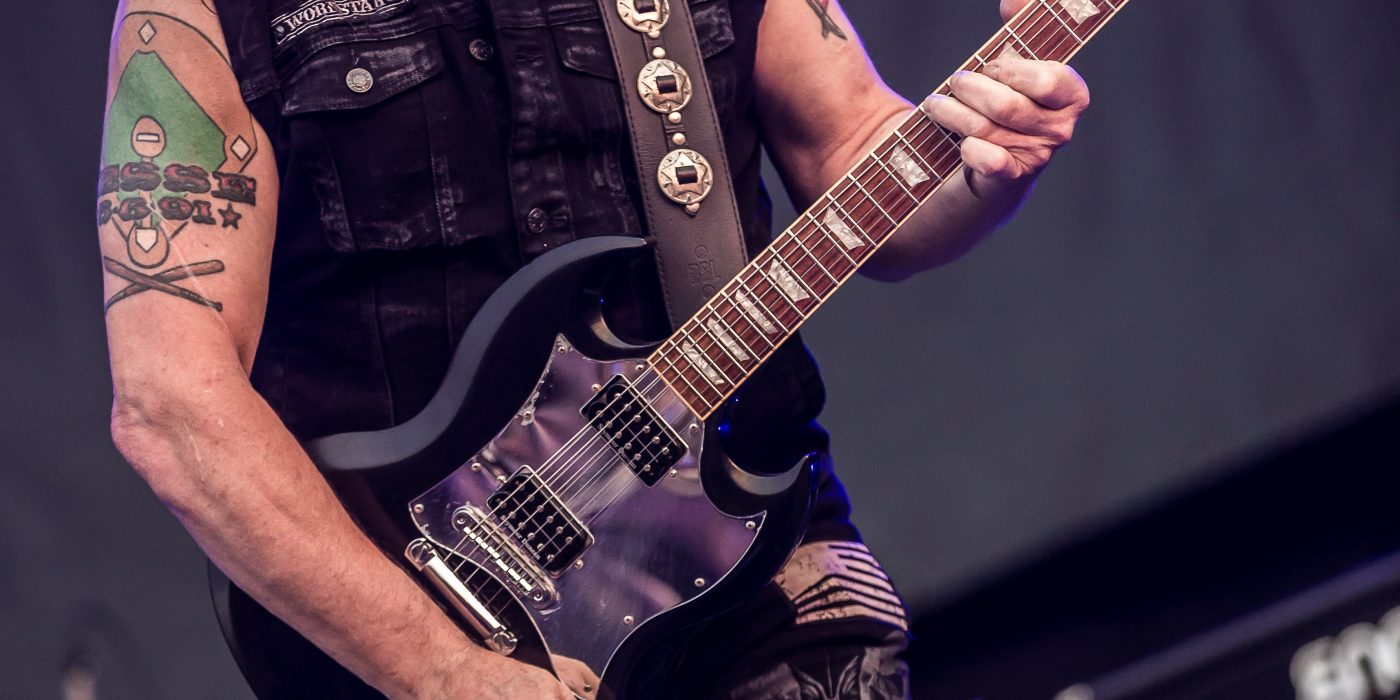
Ross “The Boss” Friedman died on March 27 at age 72, after a battle with ALS that he had disclosed publicly just two months earlier. He was known for two things that most people think of as opposites: he was a founding member of The Dictators, the New York proto-punk band who helped invent a whole strain of American rock and roll before anyone had a name for it, and he was also a founding member of Manowar, the heavy metal band whose entire ideology was built on excess, power, volume, and the sincere conviction that weakness was the only thing worth fighting against.
That combination tells you something important. Not about him specifically, but about where punk and metal came from and why the border between them was always thinner than the marketing suggested.
The Dictators formed in New York City in 1973. At that point, punk as a recognizable movement did not yet exist, at least not in the American consciousness. The Stooges and the New York Dolls had been pointing in a direction, but the Dictators arrived with something more aggressive and more self-aware, a sound that combined the muscle of hard rock with the sneer of people who did not feel like they were being invited to the party. Their 1975 debut, Go Girl Crazy!, was reviewed poorly at the time and recognized later as one of the records that helped build the foundation the Ramones would run across.
Friedman was the guitar player who made that sound work. He understood riffs the way other people understand sentences, as units of meaning that could be compressed or extended but needed to land hard or they did not land at all. His playing with the Dictators was not virtuosic in the technical sense. It was surgical. Everything was there for a reason and the reason was always momentum.
By 1980 he had left to co-found Manowar, and the shift in context was radical. Where the Dictators were sardonic and streetwise, Manowar were mythological and operatic. Their entire aesthetic was built around a kind of maximalist masculine fantasy that invited both sincere devotion and ironic appreciation in equal measure. But the guitar work was different, not in quality but in register. Manowar asked for thunder and Friedman delivered it. He played with them until 1989, then moved on to his own band and various other projects, never quite settling into one lane.
The two bands look like contradictions but they are not. They are evidence of a musician who understood that genre is a container, not a constraint. The Dictators needed a certain kind of aggression delivered with a knowing grin. Manowar needed something more earnest and enormous. Friedman adjusted. He did not compromise in either direction. He just brought what each project needed and gave it completely.
His ALS diagnosis came in early February, only weeks before his death. When he announced it, he acknowledged not being able to play guitar anymore, which in context reads as a particular kind of loss. For someone whose entire life was organized around what the instrument could do, the inability to hold it must have been its own grief alongside the physical one. The response from the metal community was immediate and genuine. People who had spent decades in a genre that sometimes performs indifference to sentiment turned out to feel things. That too says something.
The metal world loses a certain kind of figure with some regularity and does not always stop to think about what it is losing. With Friedman the situation is unusual because his legacy runs through two separate genre histories at once. Ask punk historians and they will tell you about the Dictators. Ask metal historians and they will tell you about Manowar. Most people only know one half of the story.
The full story is better. It is about a guitarist from the Bronx who helped build something in New York in the early seventies that the music world is still living inside, even when it does not know it. The Dictators did not become famous. They became foundational, which is not the same thing but in some ways is more durable. And Friedman played on both sides of that legacy without ever having to reconcile them, because from where he was sitting, there was nothing to reconcile.