 Into The Music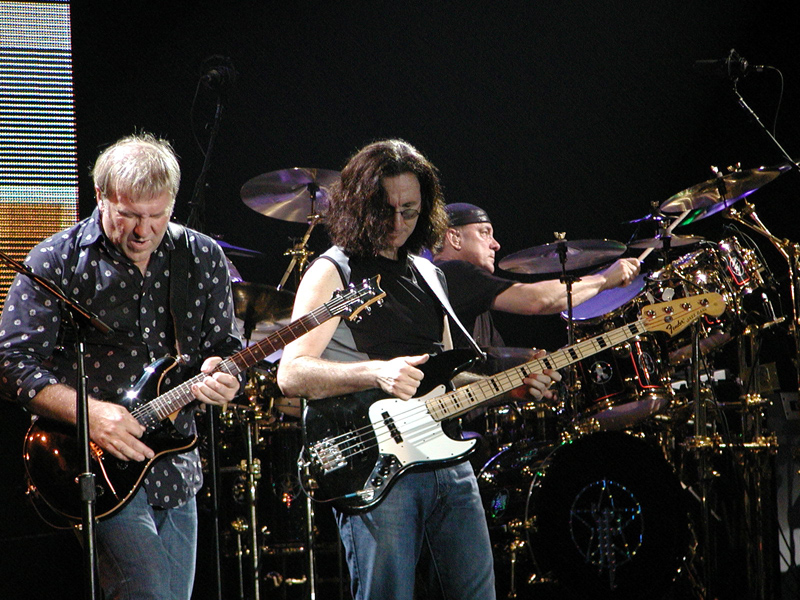
When Geddy Lee and Alex Lifeson walked out at the Juno Awards in Hamilton, Ontario Sunday night, they did something they had not done in over a decade. They played as Rush. Behind the kit sat Anika Nilles, a German-born drummer who spent years as Jeff Beck’s live percussionist and who now holds one of the most scrutinized positions in rock music. How that moment landed, and what it means, is worth sitting with longer than the news cycle typically allows.
The last time Rush played a proper concert was August 1, 2015, at the Forum in Los Angeles, the final night of the R40 tour. Neil Peart had already decided that was the end. His declining health made touring impossible, and a musician of Peart’s particular gifts, one whose entire artistic identity was inseparable from physical precision, was never going to accept a diminished version of what he had built. He died in January 2020, three and a half years after that Forum show, and took with him any possibility of a conventional reunion.
The question of what Rush was without Peart was therefore not abstract. It was the actual question Lee and Lifeson had to answer before they could make any decision about continuing. For years, they did not answer it. They made solo records, played together under their own names at tribute concerts for Gordon Lightfoot and Taylor Hawkins, stayed in touch with the Rush catalog without reopening the wound of using the name.
The decision to play as Rush again, and to use the name for the Fifty Something tour announced this summer, represents a philosophical position about bands and their identities. Lee and Lifeson are saying, implicitly, that Rush is not identical with its three-piece lineup, that the music and the name belong to the surviving members and can continue without betraying what the band was. That is a defensible position. It is also a contestable one.
Rock history is full of bands that continued after the loss of crucial members, with results that range from successful to tragic. The common thread in the successful cases is that the new configuration finds its own legitimacy rather than trying to replicate what existed before. The surviving members of Led Zeppelin have never reconvened as Led Zeppelin because Robert Plant decided that nothing would be served by it. Queen with Adam Lambert works because Lambert brings something original to the material rather than attempting a Freddie Mercury impression.
What Nilles brings to Rush is different from what Peart brought, and that is probably the right approach. She is technically extraordinary, a player with her own deep discography and her own approach to rhythm that does not begin and end with worshipping at the altar of Peart’s catalog. She will inevitably be compared to Peart because the music demands it, but watching her play “Finding My Way” at the Junos, the choice of the band’s very first song with its very first drummer, felt like a deliberate statement about starting fresh rather than replicating the past.
Lee looked genuinely energized. Lifeson, who has spent portions of the past decade dealing with serious health issues of his own, looked like a man who had remembered why he spent fifty years doing this. The footage from Hamilton is brief, but it carries something that is hard to manufacture, which is the specific quality of people who have been through enormous things together and have decided, against considerable emotional weight, to keep going.
The tour that begins in June, now expanded to 58 dates including four nights at Toronto’s Scotiabank Arena, will be the real test. Night after night, the question the audience will be asking is whether this is Rush or a tribute act fronted by two of the original members. Lee and Lifeson have done everything they can to set up the conditions under which the answer might be Rush. Whether it lands that way will depend on something they cannot control, which is whether the music, played in these new circumstances by this new configuration, finds its own reason for existing rather than just its reason for existing in relation to what came before.
The video footage of Peart playing behind them at the Junos was the most revealing detail of the evening. It was not trying to pretend he was there. It was acknowledging that he was gone, that the gap he left is real, and that Lee and Lifeson have decided to play forward into that gap rather than let it close the story. That is probably the only honest version of how this could work. Whether it is enough will become clear over the course of fifty-eight nights this summer.