 Into The Music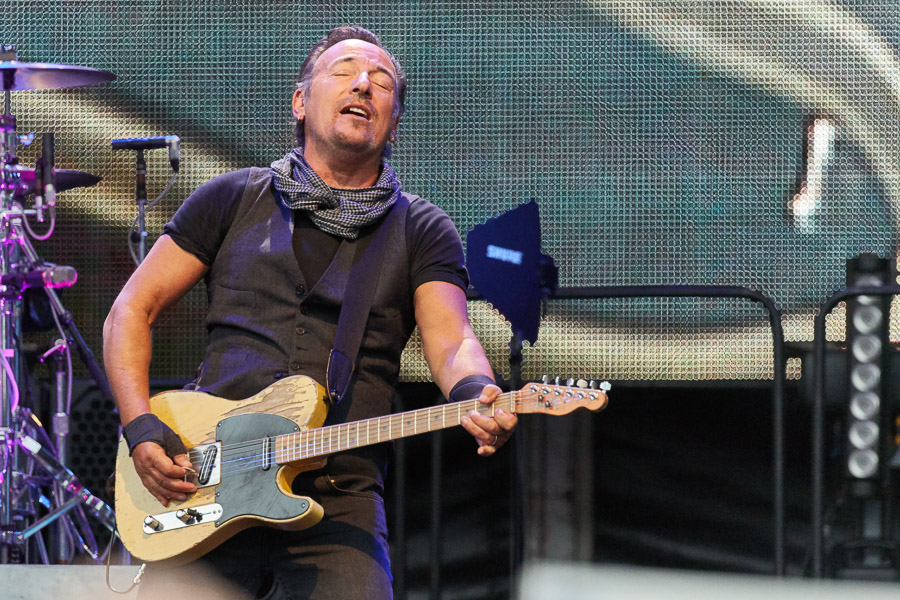
On Saturday, March 28, Bruce Springsteen is set to perform at a No Kings rally in Minnesota. This is a small fact that tells a big story.
Springsteen has been doing this for a long time, showing up at political events, lending his name and his voice to causes, performing at rallies and fundraisers and benefit concerts going back decades. At this point it is not news in the conventional sense. It is more like weather. Springsteen performs at important moments. That is who he is.
But the No Kings movement represents something worth examining more carefully, because the artists who have shown up for it, and the ones who have stayed conspicuously quiet, tell us something about where American music culture currently finds itself and what it thinks it is for.
The tradition of American music as political speech runs so deep it is sometimes invisible. Woody Guthrie writing “This Land Is Your Land” as a corrective to Irving Berlin. Pete Seeger getting blacklisted for it. Bob Dylan at the 1963 March on Washington. Nina Simone making “Mississippi Goddam” and describing it as her first civil rights song, written in fury after the 16th Street Baptist Church bombing. Neil Young recording “Ohio” four days after the Kent State shootings. These are not peripheral moments in the history of American music. They are central to it.
What shifts, era by era, is the question of cost. There were real consequences to Seeger’s politics, to Simone’s outspokenness, to the Dixie Chicks’ 2003 comments about the Iraq War. The Dixie Chicks won Grammys for the album they made in the aftermath of that controversy, but they also watched radio stations drop them en masse and received death threats. The cost calculation for speaking up has never been zero.
This is where the current moment gets interesting. The No Kings rallies have drawn a specific kind of artist: older acts with established fanbases, legacy artists who have less to lose commercially, and a cluster of younger independent musicians who have decided that the risk is worth taking. What has been notably absent is the mainstream pop center, the artists with the largest streaming numbers and the most to lose with certain demographics.
That gap is itself a statement, even if it is a statement made through absence.
Springsteen stepping into that gap is not surprising, but it is meaningful. He has spent fifty years building a particular identity around working-class America, around the complexity of patriotism, around the idea that loving your country means being willing to argue with it. Performing at a No Kings rally in 2026 is consistent with that identity in a way that is almost structurally inevitable.
The more interesting question is what happens to artists who are not Bruce Springsteen. Who are trying to figure out, in real time, whether political engagement is artistically honest or strategically catastrophic or, most likely, some unstable mixture of both.
The answer most of them seem to be arriving at is: it depends on who your audience already is. An artist whose audience skews progressive is taking a smaller risk than an artist whose fanbase is genuinely split. This is not cynicism. It is just how cultural economies work, and pretending otherwise does not make the calculation disappear.
What Springsteen’s presence at events like this does, regardless of the immediate political context, is keep alive a certain idea of what American rock and roll is supposed to be. Not entertainment as escape, but entertainment as engagement. Music as a form of saying something about the world rather than music as a way of avoiding the world.
Whether that tradition survives as a meaningful force in the streaming era, when music is increasingly consumed as background and artists are increasingly incentivized to avoid controversy, is an open question. The fact that Springsteen keeps showing up to answer it on his own terms is not nothing. It might be the whole argument.