 Into The Music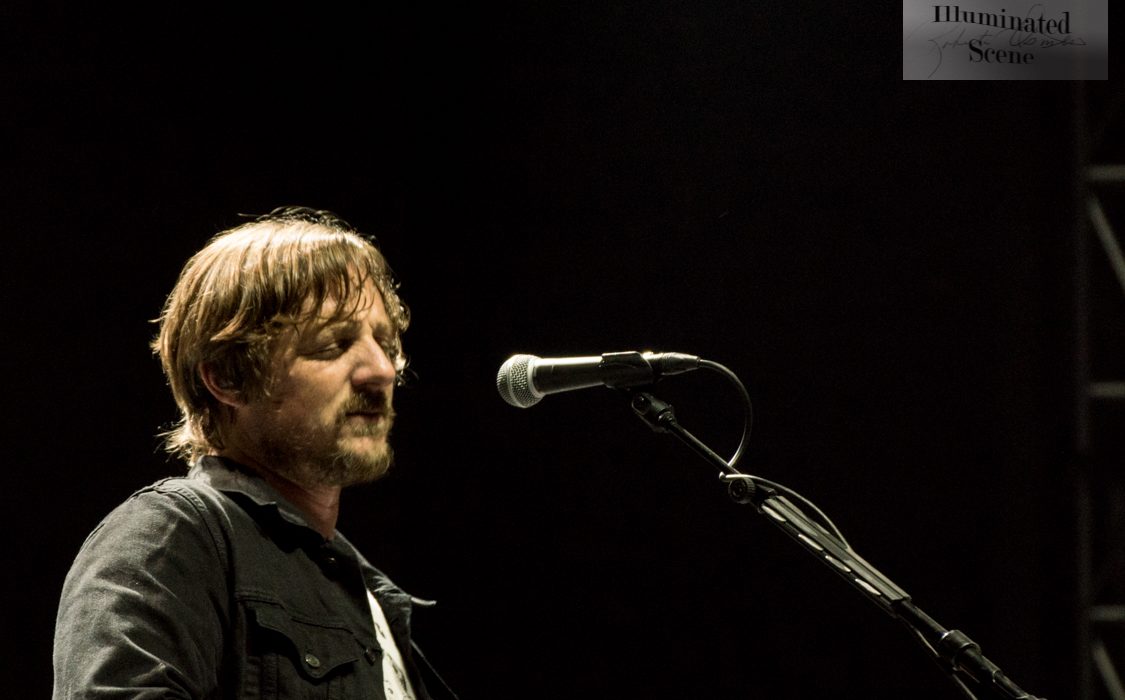
Sturgill Simpson’s restlessness has always been the most interesting thing about him. He arrived in country music in the early 2010s with a voice so good it made critics reach for comparisons to Waylon Jennings, which should have been a straightforward path to Nashville success. Instead he turned left at every junction. He went cosmic on Metamodern Sounds in Country Music. He went hard rock on A Sailor’s Guide to Earth. He made a punk album and a manga film and then announced he was done with the Sturgill Simpson name entirely.
What followed was Johnny Blue Skies, which is both an alter ego and a kind of permission slip. The first album under that name, Passage du Desir, arrived in late 2024 and leaned hard into French chanson and world-music textures, the kind of record that confirmed this wasn’t a marketing rebrand but a genuine creative rupture. Simpson wasn’t retreating into something safer. He was using the new name to go somewhere the old one couldn’t follow.
Mutiny After Midnight, the second Johnny Blue Skies album, arrived in March 2026 on physical formats first, digital shortly after. It debuted at No. 3 on the Billboard 200, which is a genuinely strange chart position for an artist who seems actively allergic to mainstream positioning. The numbers say something that Simpson’s public persona obscures: people are paying attention. The music just makes it hard to figure out what category to put that attention in.
The album is built around what Simpson has described as groove and “disco-hedonism,” which is not a phrase most people associate with the man who sang “Turtles All the Way Down.” But it makes sense if you’ve been watching his trajectory. The protest angle, which Simpson has leaned into in interviews, is embedded in the pleasure principle. The music insists on dancing when the world wants you anxious. That’s a political act dressed up as a party.
What makes Simpson’s shape-shifting compelling rather than merely erratic is that he takes each of these moves completely seriously. He doesn’t dip into a genre as pastiche or homage. He goes in far enough that the influence becomes unrecognizable, absorbed and transformed until it sounds like something new. The country traditionalism of his early records wasn’t him playing a role. Neither is the disco-inflected funk of Mutiny After Midnight. Both are authentic and both are surprising, which is a genuinely rare combination.
The Mutiny for the Masses Tour kicks off in September in Austin, running through October at venues including the Santa Barbara Bowl, the United Center, and Barclays Center. The scale of those rooms is another data point in the ongoing puzzle of what kind of artist Sturgill Simpson, or Johnny Blue Skies, actually is. Not country enough for country radio, not indie enough for indie press, not pop enough for pop positioning, and somehow drawing arena crowds anyway.
The alter ego serves a purpose beyond the creative. It gives him room to fail publicly without the weight of a decade’s worth of expectation following every decision. Johnny Blue Skies can make a disco protest record and it reads as a new direction rather than a betrayal. The name is a container for experimentation, and the experimentation is genuinely paying off.
The deeper question his career asks is whether the model itself is the message. Simpson has spent his career demonstrating that an artist with a strong enough creative vision can keep finding audiences without fitting any particular format. The sales say it works. The music says he’s not done yet. Whatever he calls himself, that combination is worth watching.