 Into The Music
Lee Scratch Perry died in August 2021 at the age of 85, leaving behind one of the most unpredictable and productive careers in the history of recorded music. He had been recording until near the end. Spatial, No Problem, recorded with German electronic duo Mouse on Mars in Berlin in December 2019, arrives June 5 via Domino, and based on the lead single Rockcurry, it is not an afterthought. It is the genuine article.
Perry’s story does not fit neatly into any conventional narrative. He was a producer before he was known as an artist. He built the Black Ark studio in his Kingston backyard and used it to define the sound of dub as a production philosophy rather than just a genre. He worked with Bob Marley and the Wailers before they were internationally famous, and then he burned down his own studio in 1979 and walked away from it all. He spent the following decades being simultaneously celebrated and dismissed, making music that confused as many people as it delighted, wearing increasingly elaborate outfits, and saying things that sounded like nonsense until they did not.
The Making of Spatial, No Problem
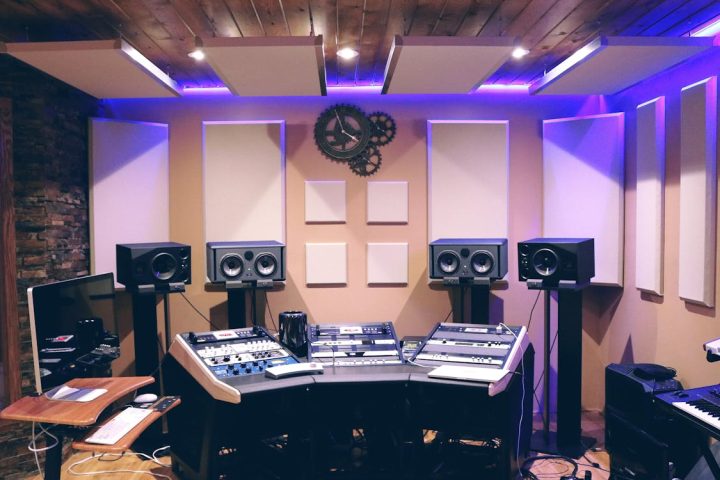
The Mouse on Mars sessions happened at their Paraverse Studio in Berlin. Jan St. Werner, one half of the duo, described the process plainly: we hardly spoke about what we were doing, we met and got going. Perry was 83 years old. He laughed a lot. They cooked fish soup and papayas.
The album title came from a conversation about spatial audio. Perry, who had spent 50 years manipulating sound in three-dimensional space long before the technology existed to properly describe what he was doing, heard the phrase and responded: Spatial. No problem. That is the album title. That is the whole aesthetic in three words.
The Dub Legacy
To understand what Perry meant to recorded music, you have to go back to a basic fact that is still not universally understood: dub invented remix culture. Before Perry and contemporaries like King Tubby were stripping reggae tracks down to their structural bones, emphasizing bass and drum, flooding the mix with reverb and delay, and treating the recording studio itself as an instrument, the idea that a record was a fixed object was taken for granted. Perry did not take anything for granted.
The Black Ark period, roughly 1973 to 1979, produced records that still sound strange today. The Super Apes. Return of the Super Ape. Roast Fish Collie Weed and Corn Bread. These are not documents of their time. They are documents of a method, and the method was this: the studio is a place where anything can happen if you are willing to let it.
Brian Eno famously described the studio as a compositional tool around the same time Perry was demonstrating it with more directness and less theorizing. There is a direct line from Perry’s approach to hip-hop production, to ambient music, to electronic music, to every producer who has ever understood that a mix is a creative act rather than a technical one.
The Late Period
Perry’s post-Black Ark career is long, strange, and largely misunderstood. He moved to Switzerland. He made records that were deliberately difficult. He became a kind of cosmic figure, dressing in outfits covered in mirrors and bottle caps, covering himself in phrases written in marker. Critics alternated between treating him as a living legend and wondering if he had lost the plot entirely.
The truth is more complicated. Perry never lost the plot because his plot was never linear to begin with. He made records in the 2000s and 2010s that contained genuine inspiration alongside deliberate chaos. Collaborations with Beastie Boys, with Adrian Sherwood, with Mad Professor, with the Orb. Each one drew something different from him. Mouse on Mars, with their background in electronic experimentation and their genuine reverence for what Perry had already done, were a logical fit.
Spatial, No Problem as Final Statement
Releasing a posthumous album is always a risk. The wrong posthumous album can reduce a legacy. The right one can clarify it. Based on Rockcurry, the lead single, Spatial, No Problem falls into the right category. The track is unhurried, odd, full of Perry’s voice doing things that cannot be described as conventional singing but that carry unmistakable weight. Mouse on Mars provide textures that feel appropriately strange without overwhelming their collaborator.
There is also the Barbican exhibition planned for June 5 through 13, presenting the album in spatial audio at The Pit. The irony of a man who recorded in a cramped backyard studio in Kingston having his final album presented in high-tech spatial audio at one of London’s most prestigious arts venues is exactly the kind of contradiction that defined Perry’s entire life. He would have appreciated it. He probably would have laughed.
The full album lands June 5. It has been worth the wait.