Into The Music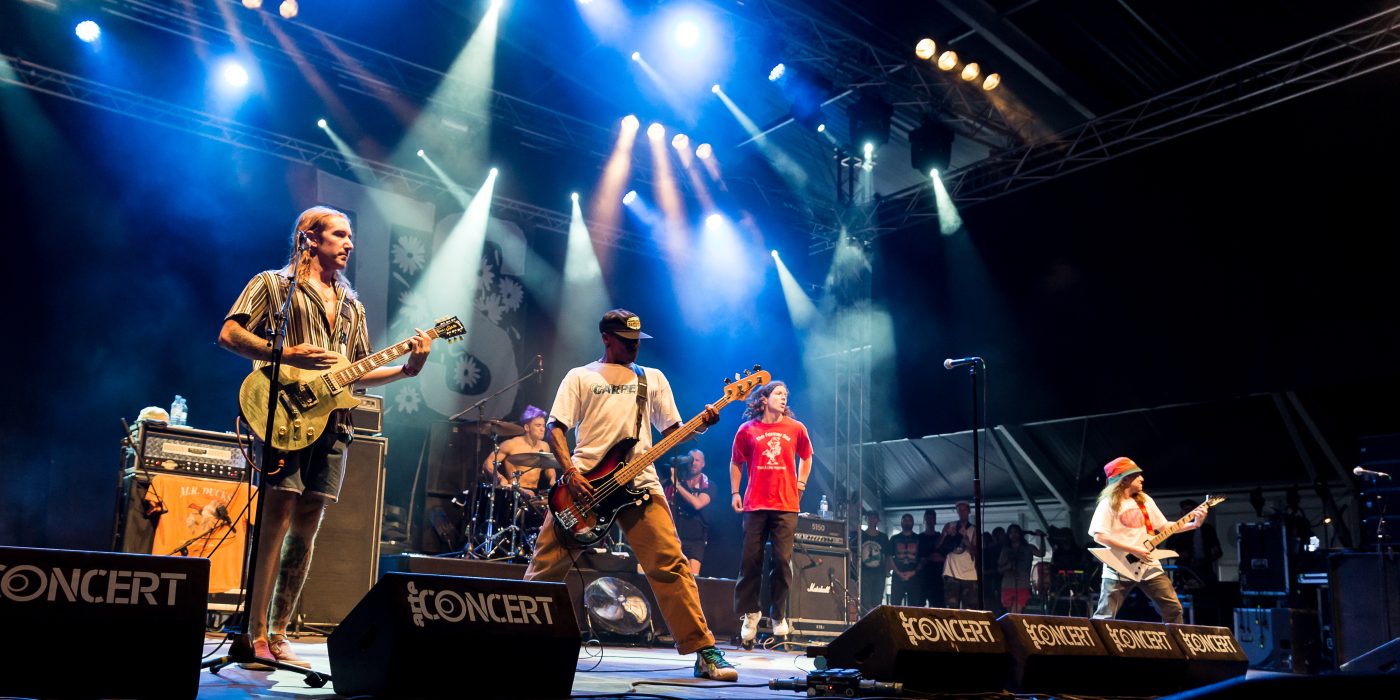
When Turnstile took the stage at Tecate Pa’l Norte this past weekend in Monterrey and opened with “Never Enough” to a moshing crowd at the festival’s second stage, it was a moment that would have seemed implausible ten years ago. Hardcore punk bands did not headline international music festivals. They played basements and small clubs and DIY venues, and that was the deal. The music was built for those spaces. The culture depended on them.
Something shifted, and Turnstile is the band that most clearly marks where the shift happened.
The Baltimore group formed around 2010 and spent most of their first decade doing exactly what hardcore bands do: building a following through relentless touring, releasing records on small labels, staying close to a community of fans who found in the music something they needed. Their early albums, Nonstop Feeling in 2015 and Time and Space in 2018, were well-regarded within hardcore without crossing into broader consciousness. They were a scene band in the best sense: trusted, consistent, genuinely committed to what they were doing.
Then came Glow On in 2021, and the rules changed.
The record was, structurally, a hardcore album. Brendan Yates screamed, the riffs were heavy, the songs were short and physically demanding. But the production opened things up in ways that hardcore had rarely allowed itself. There were melodic interludes that sounded more like 90s alternative rock than anything from the pit. There were moments of genuine pop instinct, hooks that arrived unexpectedly and stuck around. The energy was still hardcore but the frame had expanded, and it turned out there was a large audience waiting for exactly that combination.
Glow On won a Grammy for Best Metal Performance. That sentence still sounds slightly impossible, and maybe that is the point. Turnstile did not win because they changed what they were doing. They won because what they were doing turned out to be something other people could hear when the production gave them space to.
The deeper question is what this means for hardcore as a culture. The genre has always had a fraught relationship with its own visibility. Authenticity in hardcore is partly constructed around smallness, around the idea that the music exists outside commercial consideration, that the people who love it found it rather than being marketed to. When a hardcore band becomes large enough to play festival second stages in Mexico, what happens to that relationship?
The honest answer is that different people within the scene answer this differently, and they always have. There has been a version of this argument for every hardcore band that ever got big. Minor Threat, Bad Brains, Black Flag: the moment any of them crossed into wider awareness, there were people in the scene prepared to call it a betrayal. The accusation is always the same and it is always at least partly wrong.
What Turnstile has demonstrated is that the music itself was never as fragile as the mythology around it suggested. The energy of a hardcore show does not require obscurity to function. It requires commitment, physicality, and the belief that what is happening on the stage is genuinely at stake. Those things are still present in a Turnstile set at a Mexican festival. The crowd still moshed. The band still played like they had something to prove.
The Tecate Pa’l Norte slot is not a sign that hardcore has sold out. It is a sign that the boundary was never where the gatekeepers thought it was. Turnstile found the place where intensity and accessibility intersect, and they crossed it without apologizing. That is not a betrayal of hardcore. That is what hardcore has always promised, even when the culture around it told you otherwise.
There are now younger hardcore bands looking at what Turnstile did and trying to understand how it happened. Some of them will try to replicate the formula and miss the point. The formula was never the formula. The formula was believing in the music with enough conviction that other people could feel it from twenty feet away in a festival crowd. That is not something you can reverse-engineer. You either have it or you do not.
Turnstile has it. That is why they are still there, and still worth watching.