 Into The Music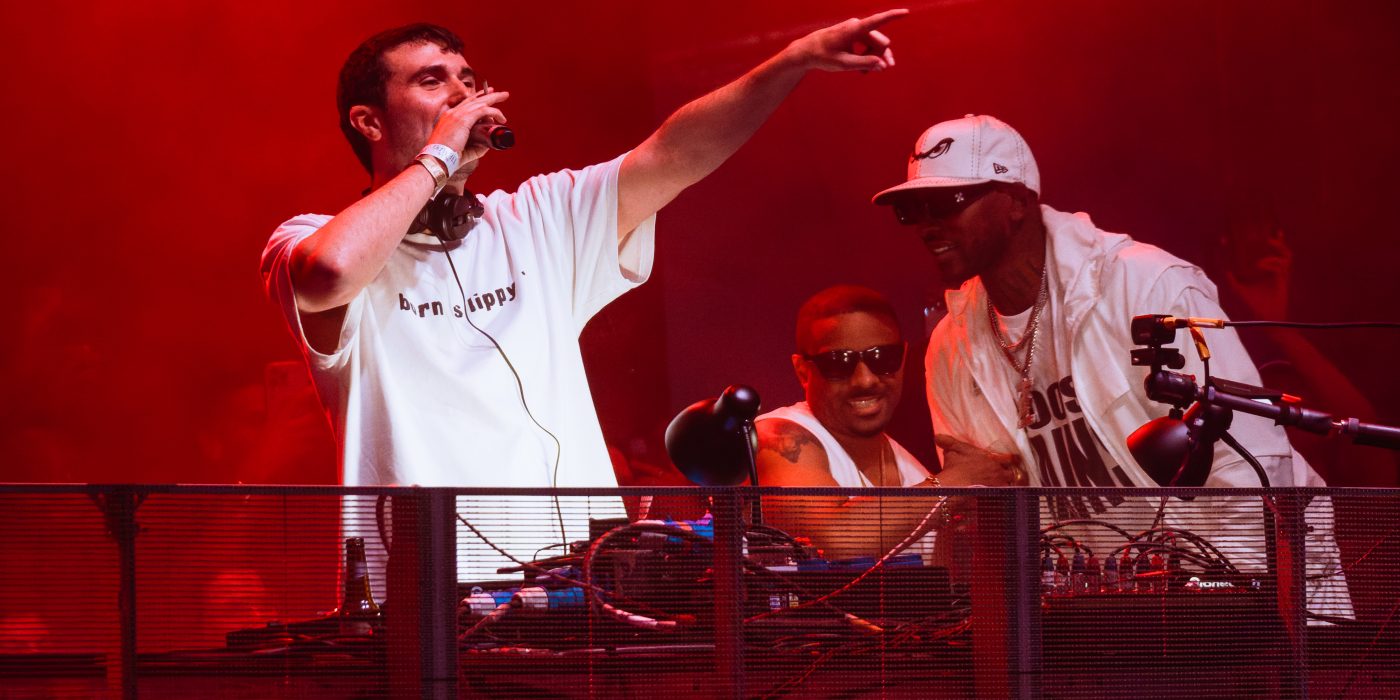
There is a moment in Thomas Bangalter and Fred again..’s filmed DJ set at Alexandra Palace, now circulating widely, where the crowd and the music become genuinely indistinguishable from each other. You cannot tell where one ends and the other begins. The audience is not watching a performance so much as they are inside it, which is what the best electronic music has always promised and rarely delivered at this scale.
The full set has been released online, and it is worth sitting with for more reasons than the music itself. What Bangalter and Fred again.. are doing together, and what their collaboration says about where electronic music is right now, is a more interesting subject than any individual track on the setlist.
Start with what makes the pairing unusual. Thomas Bangalter is one half of Daft Punk, a man whose identity in the culture is almost entirely attached to the idea of the producer who disappears behind the work. Fred again.. is almost the opposite: the figure whose music is explicitly autobiographical, built from voice memos and text messages and real people’s real emotions, fed back into club culture at a volume that makes the personal enormous. Their aesthetics should conflict. They do not.
What they share is an understanding of music as architecture. You do not just listen to Bangalter or Fred again.., you move through what they build. The Alexandra Palace set is two hours of that kind of architecture, and the transitions between sections are where it is most impressive. A sequence from the first hour dissolves into something that sounds like early rave and then into something that sounds like 2022 and then back again, and none of it feels like a history lesson. It feels like now.
Fred again..’s solo work has been consistently good enough that the critical praise heaped on him never quite seemed like hype. Albums like Actual Life and its sequels established a template for what emotional electronic music could do: take real-world audio, real people talking and crying and laughing, and transform it into something that plays at the scale of a field. His work made people feel seen in a room full of strangers, which is a specific and difficult trick.
Bangalter retired from Daft Punk in 2021 and released a solo orchestral album in 2023 that was pointedly not a dance record. He seemed to be moving toward something quieter. The Alexandra Palace set suggests that the move was never away from electronic music entirely, just away from the spectacle. Playing without helmets, without robots, without the mythos, is its own kind of statement. He is just a person who makes good music. It turns out that is more than enough.
The release of the filmed set matters because it gives people access to something that has mostly existed as a rumor, as a secondhand account of what it felt like to be in that room. Now you can assess it yourself. The answer, for most people who have spent time with it, is that it holds up. The energy is real. The crowd response is earned. The two men behind the decks are doing something that requires skill and instinct in roughly equal measure, and the combination works.
Electronic music has a long history of sets that were legendary in person and disappointing on film. The Alexandra Palace performance is one of the exceptions. The gap between being there and watching it is smaller than usual, which might be the highest possible compliment for a live dance music recording.
Daft Punk ended without warning. Fred again.. emerged without much warning either, from a production background so deep in the music industry that his public profile was almost nonexistent. The fact that they ended up in the same room, playing to ten thousand people at one of London’s best venues, is the kind of convergence that feels meaningful even if it is hard to articulate exactly why. Some collaborations make sense on paper. Some make sense only in the room. This one made sense in both places, and now the room is available to everyone.