 Into The Music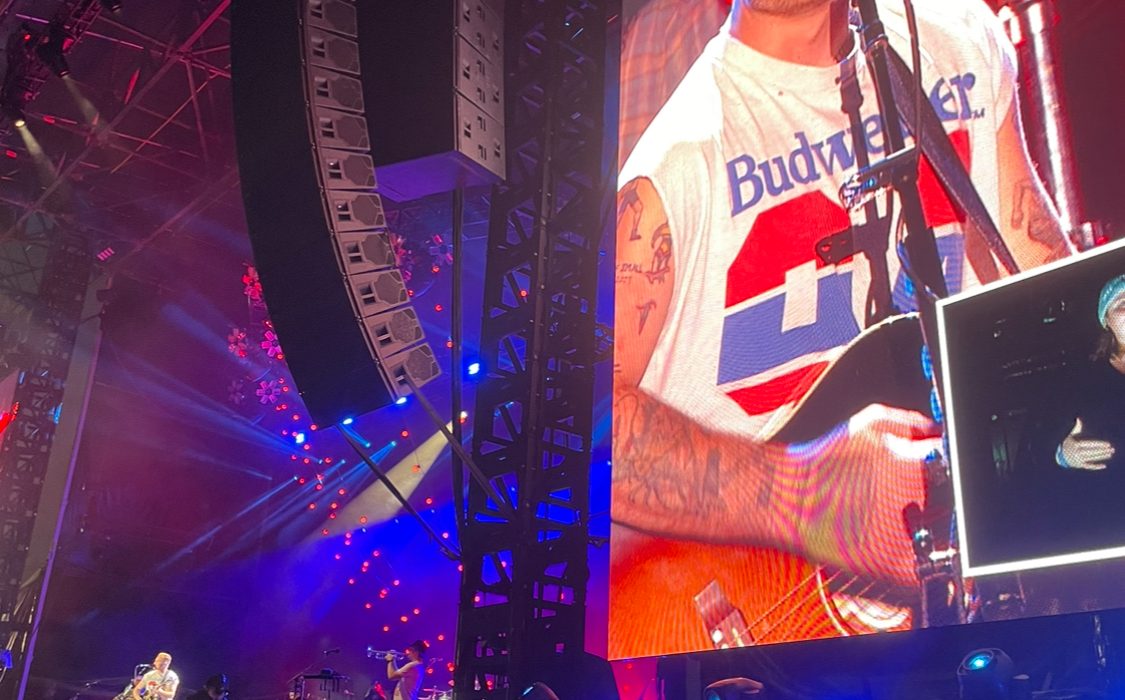
Zach Bryan released “With Heaven On Top” in January 2026 and it debuted at number one on the Billboard 200. He is currently on a stadium tour supporting it. None of this is particularly surprising anymore. What is worth examining is how quickly and how completely a certain kind of country music has absorbed the logic of the album-cycle blockbuster, and what that means for the genre’s relationship with intimacy, which is supposed to be one of its core values.
Bryan’s story is well-documented at this point. He recorded his first songs on a phone while serving in the Navy. The lo-fi aesthetic was initially a byproduct of circumstance and became a deliberate choice when it turned out to be part of what audiences responded to. There is an authenticity argument embedded in that sound, the idea that rough production signals honest feeling. Bryan has grown considerably as a producer since those early recordings, but the rawness remains, even on a 25-song album designed to fill stadiums.
“With Heaven On Top” is reportedly his final release with a major label. That framing matters. Bryan has been positioning himself as someone who doesn’t need the machinery, which is itself a very specific kind of positioning. Independent artists who speak that language have been generating enormous commercial success for at least a decade. The anti-industry stance has become its own industry. That observation isn’t a dismissal. Bryan’s music earns its audience. But the framing deserves scrutiny.
Country music has always had a complicated relationship with scale. The genre grew up in honky-tonks and on the radio, in contexts where the illusion of personal address was part of the contract. You were supposed to feel like the song was written for you, specifically, about something that happened to you specifically. That intimacy is hard to maintain when the venue holds eighty thousand people and the stage is the size of a small aircraft carrier.
Bryan is not the first artist to face this problem. Garth Brooks figured out stadium country in the nineties by turning the scale itself into the spectacle, making the enormity part of the experience rather than a contradiction of it. Taylor Swift solved the same problem through theatrical elaboration. Bryan’s approach is different. He keeps the production deliberately modest, comparatively, and relies on the crowd’s familiarity with the songs to do the emotional work the staging can’t.
This works because his audience is genuinely devoted in a way that isn’t primarily driven by aesthetics. The people in the seats know the lyrics. They came because these songs mean something to them. The music found them through streaming and social media and word of mouth, all of which are intimate delivery mechanisms even when the scale is enormous. The stadium is the last stop on a journey that started in someone’s car or kitchen or headphones.
The question is whether that kind of devotion is sustainable at this scale, or whether scale eventually changes what the music is allowed to be. Stadium acts tend to calcify. The setlist becomes the setlist. The rough edges get smoothed out. The songs that don’t translate to a large room stop getting played. Bryan is at the beginning of that arc right now, with enough goodwill and enough quality in the catalog to avoid calcification for a while. But the tour design, the album length, the label departure framing, these are all choices that move in a direction.
What Bryan represents is something specific: the convergence of internet-native sincerity with old-school country scale. That’s a new thing. Whether the combination is stable over a long career is a genuinely interesting question, and right now nobody knows the answer, including him.