 Into The Music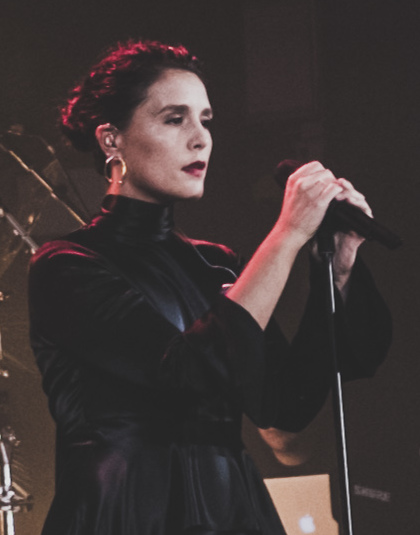
London flooded its streets on Saturday for what organizers are calling the largest demonstration against the far right in British history, and music was front and center. The Together Against the Far Right march drew tens of thousands from Park Lane to Trafalgar Square, with a lineup of artists turning a political demonstration into something that felt like a festival, if a festival had a genuine sense of urgency running underneath every note.
Jessie Ware headlined the music stage at Trafalgar Square, performing a set that balanced her disco-pop instincts with the charged atmosphere of the afternoon. Joy Crookes, Katy B, Self Esteem, and UB40 all played, while Hot Chip provided DJ sets between acts. On the speakers’ stage, Billy Bragg did what Billy Bragg has done for four decades, making the case that music and politics are not separate endeavors but the same conversation happening at different volumes.
The Together Alliance, which organized the event, has described it as a response to growing far-right organizing across the United Kingdom, and the attendance figures bear out the scale of public concern. The mood, by most accounts, was defiant rather than despairing. That distinction matters.
What’s striking about this lineup is that it crosses generational lines without much friction. Ware’s crowd and Bragg’s crowd are not the same crowd, and yet Saturday brought them into the same square for the same reason. UB40, whose entire sound is rooted in multicultural British identity, arriving at an anti-far-right march is not a surprise, but their presence lands differently in 2026 than it would have in 1985. The context has changed. The stakes have not.
Self Esteem, whose 2024 record continued her streak of writing pop music with actual stakes, has been outspoken about far-right politics in her public appearances, and this felt like a natural extension of that. Joy Crookes, a Bangladeshi-Irish artist from South London, brings her own form of witness to these events, and her appearance was notable for what it represents beyond the music.
Katy B, whose career began in the underground rave scene, has increasingly stepped into public political life in recent years, and her presence on a stage like this reflects the broadening of what it means to be a pop artist in Britain right now. The expectation that pop artists stay in their lane, talk only about love, and leave the politics to others feels genuinely quaint in 2026.
What today’s event makes clear is that the live music world has not retreated from engagement. The opposite is happening. Artists across the spectrum are deciding that silence is a position, and they would rather not hold it. Whether that translates into lasting political organization or whether it functions primarily as a release valve is a question that events like today cannot answer. But the image of Trafalgar Square full of people, music playing, is not nothing. It is, in fact, quite a lot.
No word yet on whether any recordings of the performances will be released, but given the historic scale of the day, it would be surprising if nothing surfaced.
Music and marching together , this is something my grandmother would have recognized, honestly. Back in Poland, songs were how people found each other in a crowd before anyone had a microphone. Seeing it happen on the streets of London gives me this feeling like the tradition never really broke, it just kept moving. What a day that must have been.
When people raise their voices together like that, something happens that can’t be faked. Gospel taught me that , you can feel the difference between a crowd singing and a congregation singing. This sounds like the second one. Music has always been the language communities reach for when words aren’t enough.