 Into The Music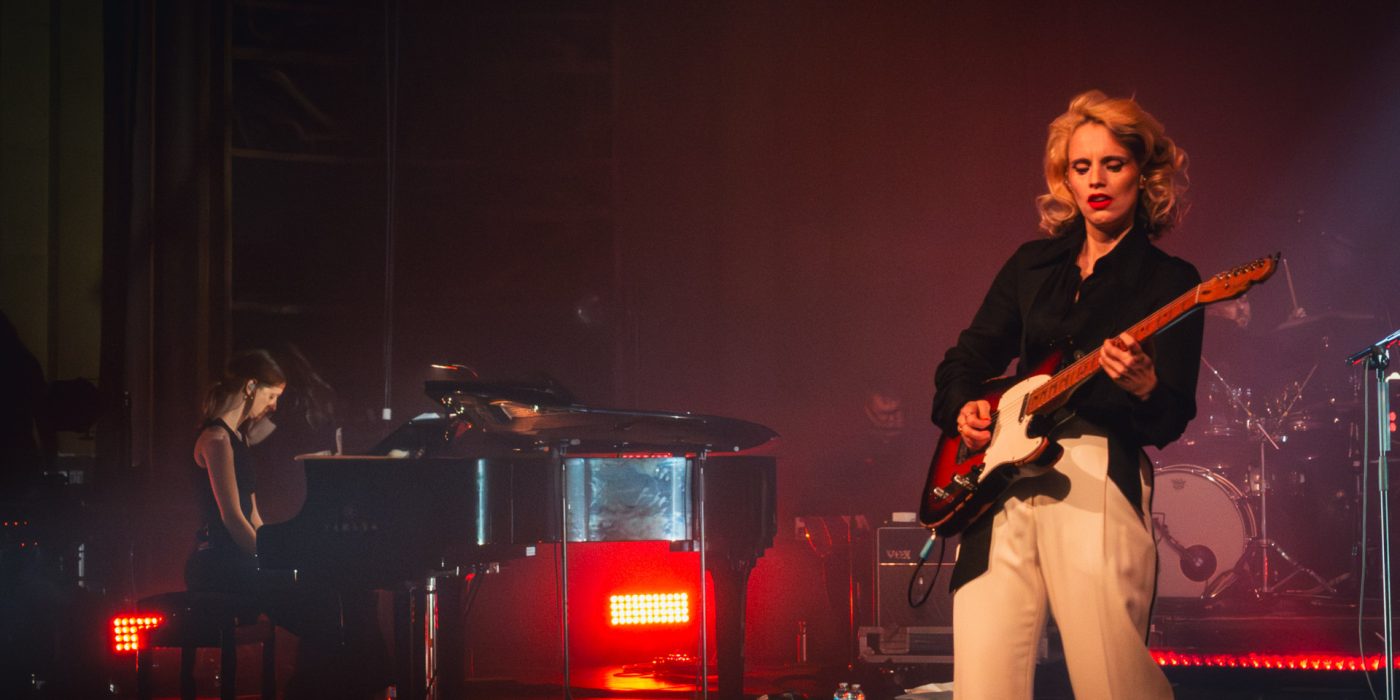
Anna Calvi has spent most of her career in the business of making guitar music feel genuinely cinematic, and on this new EP, she turns that instinct into something almost uncomfortably precise. Four tracks. Four collaborators. Each one pulled into her world rather than the other way around. The result is one of the strongest things she has released in years, and it is only the beginning of what she describes as a planned trilogy.
The EP opens with “God’s Lonely Man,” featuring Iggy Pop, and it lands like a declaration of intent. It is glam and psychedelic and driving, with Calvi’s guitar carving out something sharp and uneasy while Pop’s baritone occupies the low end. Their voices do not blend so much as collide, which is exactly the right call. This is not a celebrity duet designed to flatter anyone. It is a confrontation.
From there, things get stranger. “I See a Darkness” with Perfume Genius takes the Bonnie Prince Billy song and wrings something deeply intimate out of it. The track is softer than its neighbors but no less loaded, and Mike Hadreas brings a specific kind of emotional weight that Calvi leans into rather than counterbalancing. You could argue it is the quietest song on the EP and the most devastating.
Laurie Anderson appears on a version of Kraftwerk’s “Computer Love” that rethinks the original as something ghostly and suspended. Anderson’s spoken delivery is entirely at home in this context, which should surprise no one who has followed her work, but Calvi earns the pairing by not trying to make it strange for strangeness sake. The arrangement just is what it is, and it is eerie without trying to be.
The title track closes things out with Matt Berninger, and this is where the EP reaches what feels like its emotional peak. Originally written for a film, “Is This All There Is?” is a wide-open, anthemic piece about loneliness and the particular courage required to keep going anyway. Calvi’s voice soars. Berninger’s grounds it. It is a genuinely classic duet construction, and it works.
What holds all four tracks together is Calvi’s insistence that the EP have a point of view. This is not a collaboration exercise or a guest-list exercise. The four artists she has chosen here are all people who occupy specific corners of music history, and by putting them in conversation with her own aesthetic, she creates something that feels both personal and outward-facing at the same time. Parenthood and identity are reportedly the themes driving the trilogy, and even without that context, this EP feels like someone who has changed her perspective on what music is for.
The only reasonable complaint is that four tracks is over before it starts. Which is probably the point. The next installment cannot come soon enough.