 Into The Music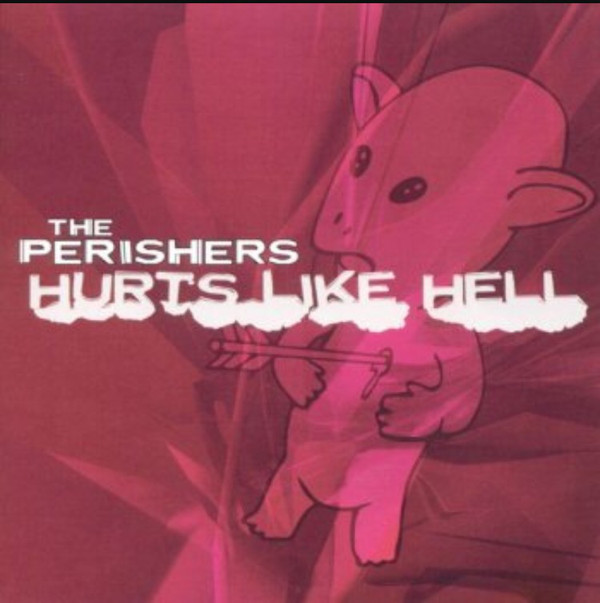
Charlotte Cornfield’s sixth album arrived this week and it lands with a kind of earned confidence that only comes from having nothing left to prove to yourself. “Hurts Like Hell” is not a pivot or a reinvention. It is a deepening, the work of a songwriter who has spent fifteen years building something specific and has now found collaborators worthy of the architecture she has been constructing alone.
The backstory matters here, because Cornfield lets it matter. Since 2023’s “Could Have Done Anything,” her life has shifted considerably. She became a mother. She signed to Merge Records. She invited a room full of people into her recording process for the first time in a career defined by working solo. Philip Weinrobe, who has produced Big Thief, is at the board. Feist, Buck Meek, El Kempner of Palehound, and Bridget Kearney of Lake Street Dive all appear. For a songwriter who once seemed to prize solitude as an aesthetic principle, this is a significant change of address.
And yet “Hurts Like Hell” does not sound like a compromise. It sounds like someone who finally allowed themselves to be surrounded and discovered the room was bigger than they thought.
The pedal steel, handled throughout by Adam Brisbin, gives the album its unmistakable texture. This is Cornfield’s twangiest record, which is saying something for a Toronto songwriter who has always occupied a slant country-adjacent space without fully committing to any one genre. Here, the commitment is real. The country inflections are not decorative. They do structural work, giving songs room to breathe and ache in ways that her more compressed indie folk productions never quite allowed.
The title track is the clearest argument for why this shift works. Meek’s backing vocal adds a second gravitational pull to the melody, and the chorus lands with the kind of inevitability that sounds simple and absolutely is not. It sits alongside the best country-crossover songwriting of recent years without owing anything obvious to it.
Cornfield’s greatest evolution on this record is as a lyricist. Her previous albums were intimate to the point of voyeurism, crammed with personal details so specific they sometimes felt like reading someone’s journal over their shoulder. Here, she pulls outward. She writes characters outside her own current experience. “Lost Leader” sketches a burned-out musician holding court at a party, charming young fans who do not yet know enough to leave. “Long Game” reaches back into the scrappiness of early adulthood, the dirty floors and borrowed pizzas, with enough distance to render it affectionately rather than mournfully.
None of this is bloodless. Cornfield’s wit, her stumbling rhyme schemes, her habit of landing images sideways rather than straight on, all of it survives the expanded frame. The wider view just gives the details more room to resonate.
There is a quiet radicalism in making a record like this after becoming a parent. So much art made in the wake of major life change collapses into autobiography or sentiment. “Hurts Like Hell” does neither. It is curious about the world outside Cornfield’s own story in a way that feels like a real shift in orientation, not a PR narrative. The collaborators are part of that. The warmth of the record is part of that. The sense that something genuinely new is possible at album six is the best part of that.
This is one of the most satisfying records of the year so far, and it gets better with each listen. Cornfield has earned the room she is now standing in.