 Into The Music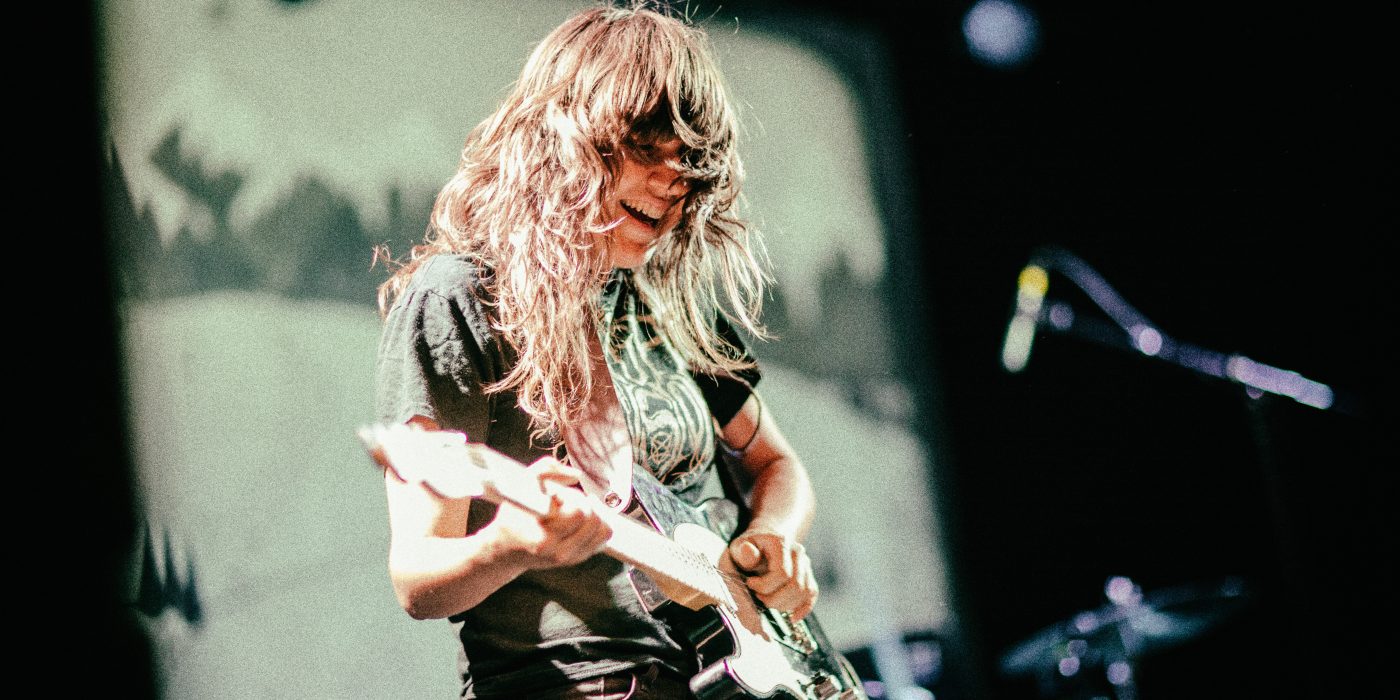
Courtney Barnett has always made music that feels like it’s thinking out loud. Her best work, the two-chord epics from her debut, the sharp character sketches of Tell Me How You Really Feel, carried this quality of someone working something out in real time, slightly amused by her own neuroses but not really able to stop them. Creature of Habit is fully in that tradition, and it’s also a little stuck there.
The album arrives after a period of deliberate change. Barnett moved from Melbourne to Los Angeles, went to therapy, got into pottery, developed a Georgia O’Keeffe obsession, and spent time at a Joshua Tree sublet writing songs while questioning whether she wanted to keep making music at all. Creature of Habit is the sound of someone trying to break a pattern while documenting how hard that is. Which is interesting territory. The frustration is whether the record ever really escapes what it’s describing.
Working with producer John Congleton, Barnett trades the meat-and-potatoes indie rock of her early records for something flatter and more claustrophobic. The drums clang. The guitars blow out in ways that aren’t always flattering. “Stay in Your Lane,” the lead single, rides a blown-raspberry bassline into a song about taking one step forward and two steps back, which is at least conceptually honest. “Same” wanders toward ominous new wave synths in its second half, and that arrival is genuinely unexpected. “Great Advice” starts feeling airless within the first minute, cowbell hits and garish claps compounding a sense of going nowhere fast.
But the album has its moments of quiet reward. “Mantis” finds Barnett frustrated about living on autopilot, her vocals dry and deadpan over Andrew Sloane’s insistent bassline. “I got my head sorted, sort of / I keep going just because,” she sings, emphasis very much on the “sort of.” “Sugar Plum” lands a dose of self-deprecating humor inside an otherwise restless tune, Barnett apologizing but noting that “those words don’t come easy to me / So I’m looking for a little leniency.” “Site Unseen” features harmonies from Waxahatchee that add a warmth the rest of the record largely withholds, and breezy acoustic guitars and pedal steel make her intentions to change feel almost achievable.
The issue is Congleton’s production choices working against the material in too many places. Barnett’s best songs have always benefited from a certain directness, a production clarity that lets her words land. When the sonic texture itself becomes the obstacle, as it does on several tracks here, the gap between what Barnett is trying to say and what you actually hear grows wider than it should.
There’s something genuinely interesting buried in Creature of Habit: a record about the difficulty of change that refuses to offer the satisfaction of change as its narrative arc. Barnett isn’t packaging her growth into a tidy comeback. She’s documenting what the attempt actually feels like, which is frequently circular and uncertain and kind of exhausting. That honesty is admirable. It also makes for an album that sits slightly at arm’s length from the listener, never quite letting you in all the way.
Fans who fell hard for her debut will probably find enough here to hold onto. The fingerprints are recognizable: the circular guitar progressions, the wry self-examination, the sense of a very smart person still not entirely sure what to do with themselves. Creature of Habit doesn’t announce a new chapter. It lives, honestly, inside the in-between.