 Into The Music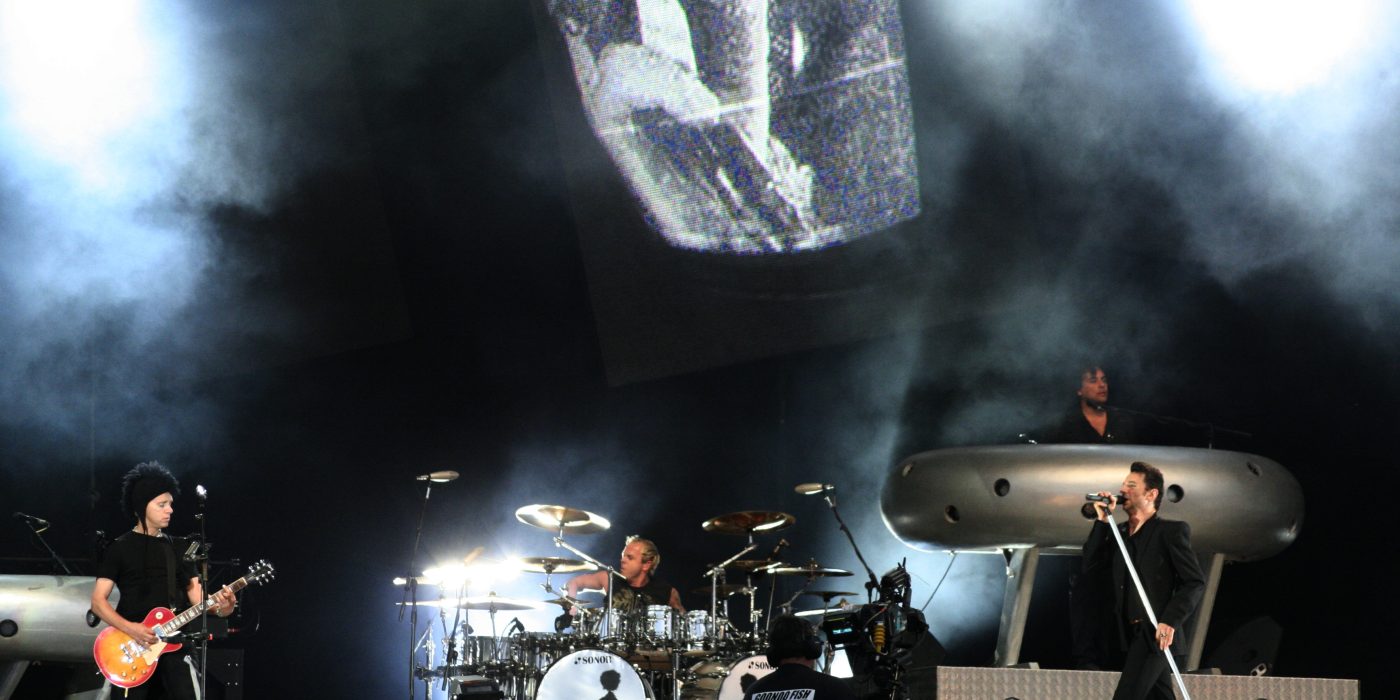
Synth-pop is one of those genres that is always being declared over and always showing up somewhere new. The form is simple enough to be portable: synthesizers as the primary instrument, usually with an emphasis on melody over texture, a beat that owes more to drum machines than to live playing, and vocals that tend toward the precise rather than the raw. What that deceptively simple formula produces has ranged from disposable chart candy to some of the most emotionally durable music the last fifty years has made.
The genre crystallized in the late 1970s and early 1980s, emerging from the same post-punk moment that produced so much else. The technology was new and expensive and exciting, and the bands that got there early, Depeche Mode, Kraftwerk, Human League, Soft Cell, Orchestral Manoeuvres in the Dark, were working with instruments that nobody fully understood yet. That uncertainty shows up in the music. The early records have a handmade quality that later synth-pop, with more processing power and more established genre conventions, often lacks. There is something in the early OMD recordings, the way the synthesizers breathe and bump against each other, that sounds genuinely exploratory rather than executed.
What the genre proved almost immediately was that synthesizers were not a barrier to emotional directness. The prevailing assumption in rock circles was that electronic instruments were cold and calculating, fine for academic experiments but not capable of conveying anything human. Synth-pop demolished that argument almost as soon as it got going. “Don’t You Want Me” by Human League is as emotionally legible as any power ballad. “Tainted Love” by Soft Cell runs on feeling. The machines are doing the work, and the work is warm.
The commercial peak ran roughly from 1981 to 1988, with significant overlap with the new wave umbrella and the MTV era, which turned the genre’s visual sensibility into an asset. These were bands that thought about how they looked and moved, and the medium rewarded that. Erasure, Depeche Mode’s increasingly massive stadium-filling phase, Pet Shop Boys, Yazoo, these acts were building audiences of millions while rock critics were still trying to figure out whether to take any of it seriously.
What carried the genre past its commercial peak was the capacity to absorb influence from almost anywhere. Electronic body music, house, techno, ambient, industrial, all of these borrowed from synth-pop and fed back into it. By the 1990s the borders were blurry enough that “synth-pop” as a term was more useful as a historical marker than as a precise genre description. Portishead and Massive Attack were not synth-pop but they would not have existed without it. Tori Amos was not synth-pop but the keyboard-centered emotional directness of her work is legible as part of the same lineage.
The genre has had a genuine recent revival, with new artists working explicitly in the tradition alongside the continued activity of original acts. Vince Clarke, who was there at the beginning with Depeche Mode and then Yazoo and then Erasure, is still releasing music in 2026. Erasure’s Neon in 2020 was not a nostalgic record; it was a record by people who understood the form they’d helped build and were still curious about it. That curiosity is what keeps the genre generative.
What synth-pop gave pop music broadly is a model for how to make feeling-forward music without requiring virtuosity on traditional instruments, and how to use technology as a carrier of emotion rather than a demonstration of it. Those are not small gifts. The genre earned its place in the canon by being consistently better than the people who dismissed it ever gave it credit for.
Synth-pop never died it just went underground and then Gen Z found it again. Peaked with Depeche Mode, still alive, job done.
The headline phrase , “machines sound like feelings” , is doing a lot of work and I think it’s worth unpacking. Synth-pop didn’t just apply technology to emotion; it fundamentally changed what kinds of feelings could be expressed in pop music. The cold, detached, slightly alienated affect that characterizes a lot of the canon was a response to a specific postwar, post-industrial cultural moment in Britain and Germany. The machines weren’t neutral vessels , they carried a worldview.
What I keep thinking about with synth-pop is how many of those early productions were made with gear that cost a fortune and required real technical knowledge , and yet the recordings have this skeletal minimalism that sounds almost accidental. The Minimoog, the Roland Jupiter-8, the LinnDrum , serious studio hardware, and artists like Gary Numan were stripping everything back to find the emptiness in the sound. That’s a very deliberate choice that gets undersold.