 Into The Music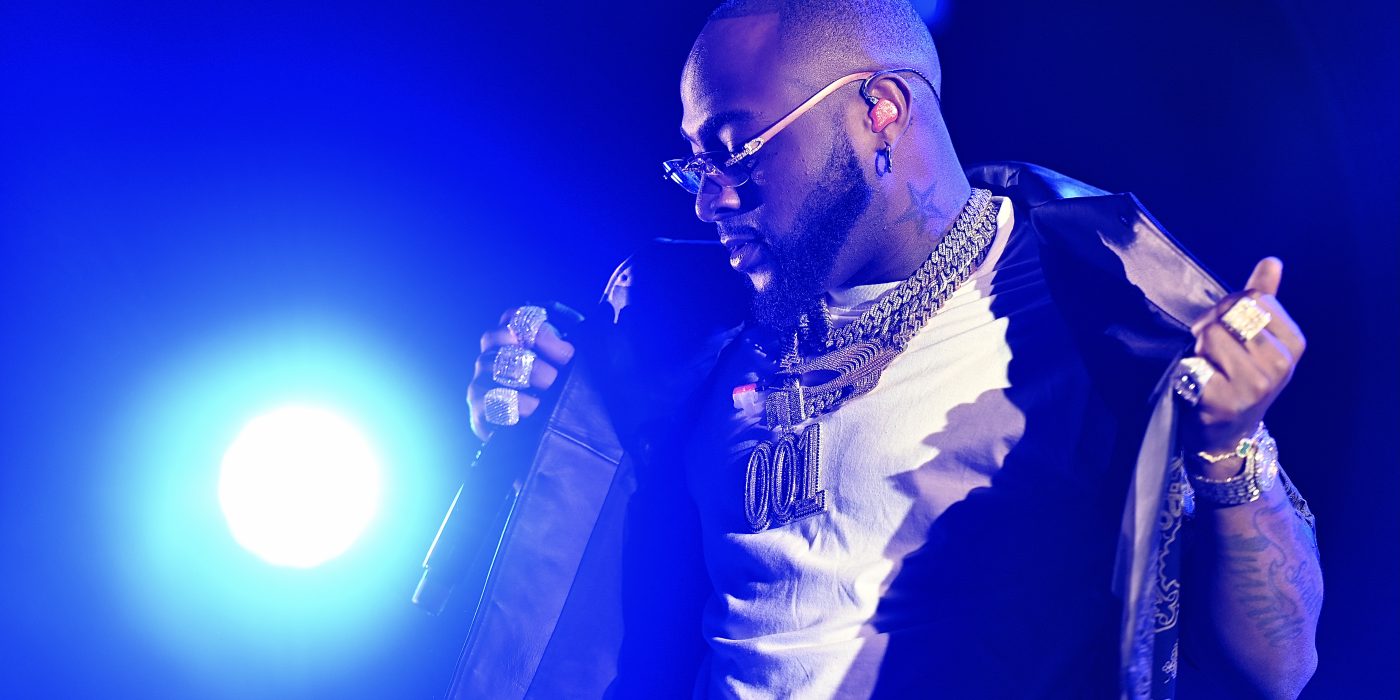
Tems performed “What You Need” on The Tonight Show Thursday night, another data point in an ongoing story about Afrobeats and where it lives now. She stood in front of Fallon’s cameras looking completely at home, which is itself a kind of measure of how far and fast the genre has traveled in the past decade.
Ten years ago, Afrobeats was something that required explanation in most Western music coverage. Today it doesn’t. That shift happened quickly and with a force that surprised even some of the people driving it, and it’s worth understanding why.
The term Afrobeats, plural, is frequently confused with Afrobeat, the singular, which refers specifically to the genre Fela Kuti developed in Nigeria in the late 1960s and 1970s. Fela’s Afrobeat was political, groove-driven, and rooted in traditional Yoruba music crossed with jazz and funk. It was also explicitly confrontational, a weapon aimed at corrupt governments and social oppression. It was not, generally speaking, designed for stadium pop crossover.
Afrobeats is something else. It emerged out of the Nigerian music scene in the late 2000s and early 2010s, shaped by artists like Wizkid, Davido, and Burna Boy, and it absorbed influences that its predecessor explicitly rejected: dancehall, hip-hop, electronic production, and Western pop song structures. It kept the rhythmic sophistication and the warmth but ditched the ideological weight. Or rather, it found different things to carry.
Wizkid’s 2020 album Made in Lagos is probably the moment that marked the genre’s global arrival for mainstream Western audiences. The collaboration with Drake on “One Dance” a few years earlier had already cracked the door open, but Made in Lagos kicked it off its hinges. Burna Boy won a Grammy in 2021 and then another, making him the genre’s most internationally credentialed figure. Tems featured on Drake’s “Fountains,” appeared in the closing credits of Black Panther: Wakanda Forever, and has since built a solo profile that makes her one of the most interesting voices in contemporary R&B by any genre designation.
The crossover isn’t frictionless. There’s a legitimate conversation about what gets lost when regional sounds get absorbed into global pop. Afrobeats that lands on Western playlists is frequently the smoothest, most accessible version of itself. The stranger, more local, more specifically Nigerian material often doesn’t travel as far. The genre is big enough now to contain both, but the version that gets promoted internationally tends to be the one that travels easiest.
There’s also the question of categorization. Streaming platforms and award shows have historically been clumsy about where to put Afrobeats, often lumping it into vague “world music” buckets alongside everything else that doesn’t fit neatly into rock, pop, country, or hip-hop. The Recording Academy added a dedicated Afrobeats category in 2023, which helped, though the conversation about what that category should actually contain is ongoing.
What’s clear is that the genre’s expansion isn’t slowing down. Artists like Asake, Ayra Starr, and Rema are pushing it in new directions, absorbing influences from the same global pop ecosystem that the original Afrobeats wave influenced. The sound is mutating the way living sounds do, taking on new shapes without losing the rhythmic core that makes it immediately identifiable.
Tems on Fallon is just one appearance. But it’s the kind of appearance that would have been genuinely surprising five years ago and barely registers as news today. That’s the whole story, right there.
I have been waiting for someone to write this plainly. I taught music for many years in Accra and later in Atlanta, and one of the most frustrating things I encountered was students who had been taught to treat African popular music as somehow derivative , as if Afrobeats were imitating something rather than expressing something that had been alive for generations. Fela Kuti was not a trend. Hugh Masekela was not a trend. Tems performing on The Tonight Show is not a cultural moment of arrival , it is simply visibility finally catching up with a tradition of excellence that never needed the validation to begin with.
The “trend” framing has always been a way of saying something without saying it directly. Nobody called grunge a trend while it was selling out arenas. Nobody called EDM a trend when it was everywhere. But Afrobeats gets the trend label while simultaneously being one of the dominant sounds on the planet. The Tems Tonight Show performance was excellent but honestly that’s not even the point , the question is why certain music gets framed as a moment instead of just, you know, music that a lot of people love.
Xavier, exactement. ‘Trend’ is always the word used by people who need an exit strategy for when something stops being convenient to praise.
There is something operatic about this particular cultural argument , the recurring drama of a dominant culture encountering something it didn’t create, benefiting from it, then having the audacity to grant or withhold legitimacy. Verdi understood this dynamic when he staged Aida , the imperial gaze consuming what it simultaneously exoticizes. The article is right to point to Tems performing on The Tonight Show as a data point, but the story is bigger than any single performance. Afrobeats carries an entire cosmology of rhythm and voice that predates the very industry now scrambling to categorize it. The question isn’t whether it’s a trend. The question is whether American music media has the vocabulary to receive it properly.
Man, THIS. Afrobeats is not a trend, it’s a HEARTBEAT. Same way funk wasn’t a trend , it was the pulse underneath everything else. You wanna talk about what built modern pop music? Start with the polyrhythms coming out of West Africa and don’t stop. Fela Kuti wasn’t building something for a moment, he was laying foundation. Burna Boy isn’t riding a wave, he’s extending a tradition. The groove NEVER stopped. Some people just weren’t listening.
Vince, the heartbeat metaphor is exactly right and I don’t think it’s just poetic. Music that carries a culture’s pulse literally regulates people, it co-regulates whole communities. That’s what you’re hearing when Afrobeats moves a room. It’s not a trend, it’s a nervous system.
I’ll grant that the trend framing is lazy and wrong, fine. But I’d push back on the idea that longevity alone proves legitimacy. Prog rock was called a trend in 1972 and then produced some of the most structurally complex music of the century. The question isn’t whether Afrobeats is a trend, it’s whether the commercial machinery swallowing it whole will let it keep being what it actually is.
I heard Tems for the first time and my hips just started moving on their own, that is the only review you need. The rhythmic feel in Afrobeats has this same thing salsa has, it doesn’t ask your brain for permission, it just goes straight to the body. A trend doesn’t do that. A trend is in your head. This music is in your feet.