 Into The Music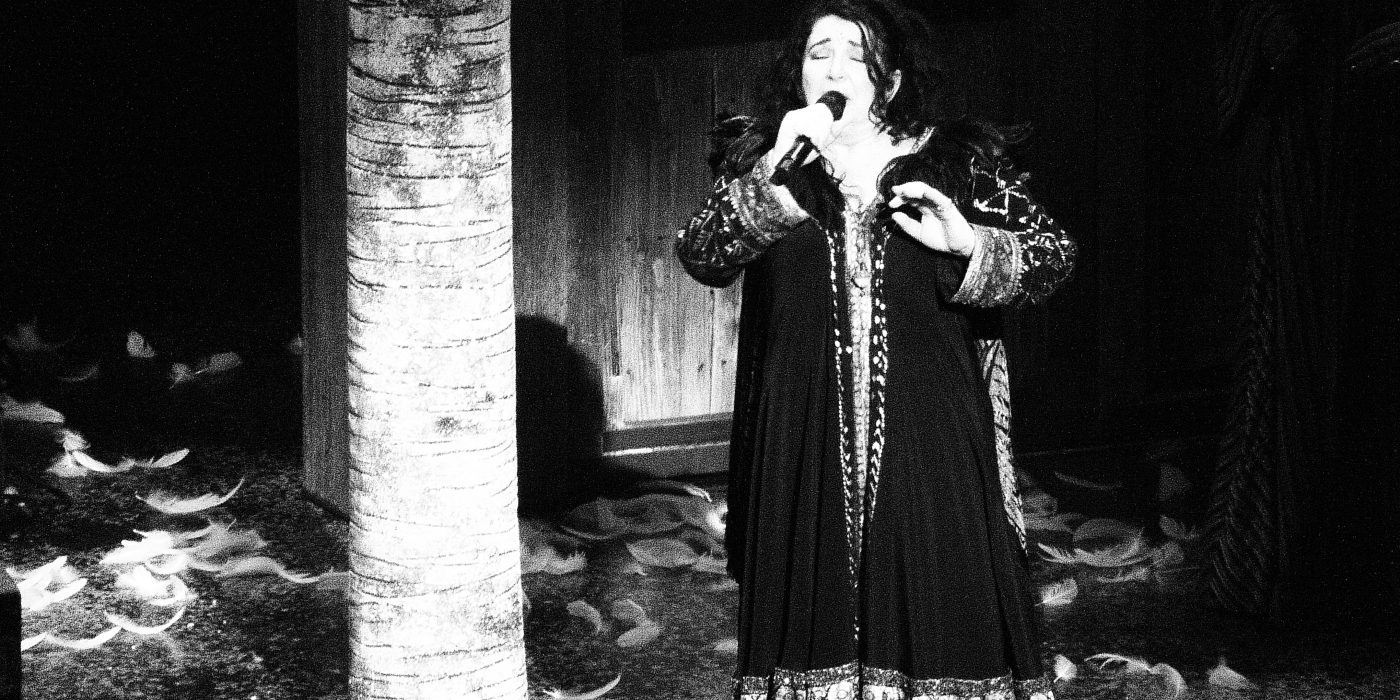
Art pop is the genre that music critics reach for when they want to describe something that refuses to fit anywhere else. It is also genuinely one of the most useful descriptors in the vocabulary of popular music, which is an unusual combination.
The term has been circulating since the mid-1960s, when British artists began taking pop’s commercial forms seriously as artistic raw material rather than as something to transcend on the way to more respectable music. Early glam carried its DNA. So did Bowie’s Ziggy Stardust period, Roxy Music’s studied artifice, the theatrical strain in everything Brian Eno touched from the outside. The defining quality was always the same: a refusal to treat pop conventions as natural rather than constructed, and a decision to play with that construction explicitly.
Kate Bush crystallized the form in the late 1970s and 1980s. The Kick Inside arrived in 1978 and immediately established what art pop could be when the emotional intelligence matched the formal sophistication: strange, operatic, uncompromising, and genuinely moving in ways that required the strangeness rather than despite it. Hounds of Love in 1985 remains a benchmark that most artists in any genre spend careers trying to approach. The Dreaming, sandwiched between them, is the album that mattered most to the people it mattered to, which is always the tell for art pop done right.
Björk arrived in the 1990s and exploded the definition outward. Debut and Post showed what happened when you brought electronic production into a framework where the human voice was the primary instrument, not in the conventional sense of lead vocals over a track but in the sense of the voice as a compositional element equal to everything around it. Homogenic was the synthesis that proved the project was coherent. Everything Björk has done since has been a continuation of that investigation, including the recent collaborations and the ongoing interrogation of what technology does to music and what music does to technology.
The genre is defined more by attitude than by sound. An art pop artist treats the conventions of pop music as objects to examine and reshape rather than rules to follow. The commerciality of pop is not rejected but is instead interrogated: why does this hook work, what does this format produce, what happens when you bend the structure until it almost breaks but does not. The best art pop has an intellectual dimension that never overrides the emotional one.
In the 2010s and into the 2020s the lineage became harder to track but no less active. St. Vincent built a body of work that is essentially the contemporary benchmark for the form, each album a distinct aesthetic proposition with its own visual and sonic identity, none of them comfortable, all of them pop enough to find an audience and strange enough to demand something from it. Rosalía’s trajectory from El Mal Querer through Motomami and now LUX represents one of the most dramatic art pop evolutions in recent memory, ending in a record with the London Symphony Orchestra that sounds like nothing anyone predicted.
Charli XCX’s position in the conversation is newer but legitimate. BRAT in 2024 took the production of hyperpop and the social dynamics of celebrity and turned them into something that was clearly thinking about itself as a cultural object. The meta-awareness was not ironic detachment. It was the point.
What all of these artists share is the conviction that pop music can bear the weight of serious artistic intention without becoming something other than pop. That conviction is the genre’s founding premise and its ongoing argument. The people who dismiss art pop as pretentious are usually objecting to the argument itself, not to any specific failure of execution. The people who find it essential are usually the ones who wanted pop to be allowed to mean more.
The genre has no clean borders and no authoritative canon. That is not a problem. It is exactly what you would expect from music that refuses to be fully categorized, which has been art pop’s project from the beginning.
Okay this is literally my whole life described in one genre!! Growing up listening to Tex-Mex and then moving to NYC and discovering Kate Bush and St. Vincent and Bjork and thinking , wait, this is the same impulse, just expressed differently. Art pop has always been about refusing to fit the box and I am HERE for that energy, always have been, always will be!!
half the art pop records from the 80s were secretly great DJ tools. nobody talks about that.
“Refuses to fit anywhere else” is the most beautiful thing a genre can be, honestly. There’s something about music that won’t be categorized that feels like it’s operating on a different frequency , the kind you feel in your sternum before you can name it. Art pop is the sound of artists trusting the listener to follow them somewhere strange.