 Into The Music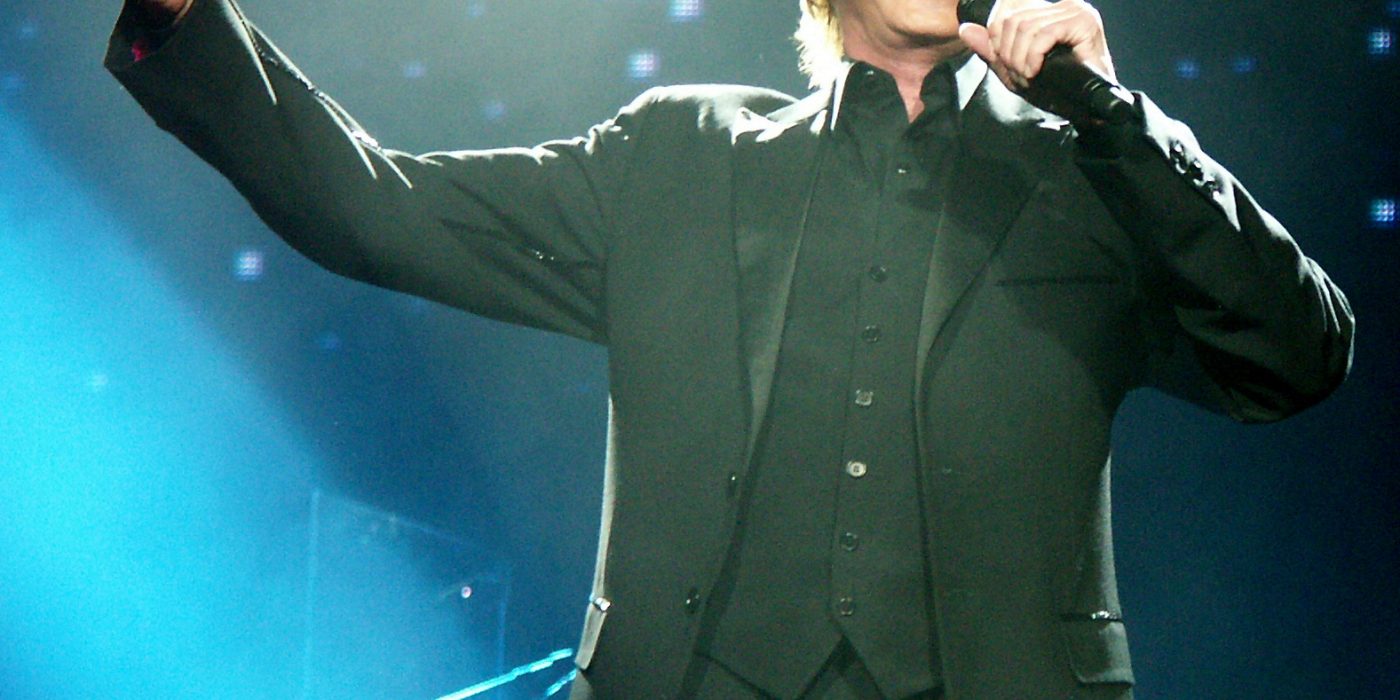
Barry Manilow is back. Not with a covers collection, not with a Christmas record, but with an actual album of mostly original songs – his first in nearly 15 years. What a Time drops June 5, and if the lead single “Sun Shine” is any indication, Manilow is leaning hard into the sound that made him inescapable in the late 1970s.
“Sun Shine” is built around a whistling break and the unmistakable scratch of a needle hitting vinyl. It has the warm, slightly giddy energy of “Daybreak,” his 1977 AM-radio fixture. Manilow co-wrote it with Gary Barlow of Take That, which is either an unlikely pairing or an extremely predictable one depending on your read of soft pop history. Either way, it works. The song is not trying to be anything other than exactly what it is.
The full album runs 13 tracks. Manilow wrote or co-wrote all but two of them. His regular collaborator John Bettis contributes to three songs. Bruce Sussman, who co-wrote “Copacabana” and “I Made It Through the Rain,” is back for two more. Dave Koz plays saxophone on “Look at Me Now.” The whole thing was produced primarily by Manilow and Michael Lloyd.
There is also “Once Before I Go,” which has already charted on the Adult Contemporary chart – extending a run that now stretches more than 51 years. That number is almost surreal. Manilow first charted on Adult Contemporary in November 1974 with “Mandy.” Most artists who debuted that year are either long retired or have not been on a chart since the Reagan administration.
The album opener was co-written by Dean Pitchford and the late Peter Allen and executive produced by Clive Davis, who has been Manilow’s mentor since the beginning. Davis’s involvement signals that this is not a low-key release being quietly slipped out. There is real intention here.
What is interesting about this announcement is not the nostalgia angle – Manilow has been leaning into nostalgia for decades. What is interesting is that he is writing again. The last mostly-original studio album was 15 Minutes in 2011. Before that it had been years of holiday albums and standards collections. A return to original songwriting at 82 says something about where his head is at.
Whether What a Time will find new listeners is an open question. The title feels intentionally pointed – a wry observation about the current cultural moment from someone who has seen several of them come and go. Manilow has always been better at reading a room than critics gave him credit for.
What a Time is out June 5.
wait Barry Manilow is still making ORIGINAL music?? I only knew him from Copacabana which my grandma plays constantly and honestly that song goes hard in a very specific way. 15 years is such a long gap though , I wonder if his sound changed or if it’s the same vibe. Either way kind of amazing that he’s still doing it at all!!
The detail worth noting here is the ‘mostly original songs’ qualifier , which is doing some work. Manilow’s commercial identity has always been built on the relationship between songwriter and interpreter, going back to his early work with Ron Dante. An album of originals at this stage is a different kind of statement than his usual output, and the 15-year gap is significant context. The question is whether his songwriting collaborators have evolved with the times or whether this is essentially a late-period nostalgia record wearing the clothes of a creative comeback. We’ll see.
Priya’s right that ‘mostly original’ is doing some heavy lifting in that description. Worth noting that for Manilow’s commercial peak , and I’m thinking about those mid-70s records specifically , the real architecture was often Marty Panzer or Scott English writing the bones, with Manilow bringing the arrangement instincts. The man genuinely knows how to shape a song for maximum emotional impact. Whether that translates to originals at 80+ years old is the actual question, but I wouldn’t bet against him.
Jerome’s right that the session musician angle is key context. Worth adding: Manilow’s catalog has an interesting streaming tail that most of his contemporaries don’t , “Mandy” and “Looks Like We Made It” still pull consistent numbers because they’ve been rediscovered through nostalgic playlists and that bittersweet-breakup algorithm rabbit hole. The question for new original material is whether those streams translate to new-release attention, or whether his algorithmic placement is entirely backward-looking. The 15-year gap makes it nearly impossible to pitch to active curators.
I’ll give Manilow this: the man can write a song that sticks. That’s rarer than people admit. But my honest feeling when I read “first album of original songs in 15 years” is that I want to know what took him so long, and not in an impatient way , more like a philosophical one. Robert Johnson made all those Vocalion recordings in two sessions, 1936 and ’37, and then he was gone, and we’ve been unwrapping what he did for ninety years since. The legacy of those performances isn’t diminished by the silence that followed. What I worry about with comeback albums from artists in their late seventies is that the music becomes an answer to mortality rather than an argument about life. The best songs don’t feel like summations. They feel like they couldn’t have been held back.
Look, I’ll be honest , my gut reaction to a Barry Manilow comeback is eye-roll territory for me. But then I think about how Cobain would have been 59 this year, and somehow Manilow still putting out records feels like the universe making a weird point. I don’t have to love it to respect that the man is still showing up and trying. More than a lot of my 90s favorites managed.
Okay but can we talk about how Manilow’s chord changes have always had this gorgeous lushness to them?? There’s a fullness in his harmonic movement that honestly reminds me of the sweeping arrangements in classic konpa , that feeling of a song that HOLDS you. 15 years is long but if the new songs have that warmth I am genuinely here for it!!
The framing of ‘first original album in 15 years’ carries a kind of operatic weight if you think about it , the long silence before the return. In the Verdi tradition, the composer who disappears and then re-emerges is almost always trying to say something they couldn’t say before. Manilow built his entire identity on songs of longing and heartache; what does a man in his 80s have to say about those same themes? That is the genuinely interesting question this album might answer, if we let it.
What’s interesting to me about Manilow returning with original material is how it positions Western pop balladry within a much older tradition of composers who maintained creative output well into their later decades. The parallel in classical Persian and Arabic maqam traditions is instructive , composers were expected to deepen, not simply repeat, over time. The real question for this record is whether the orchestration reflects genuine evolution or retreats to familiar harmonic territory. The 15-year silence could mean either depth or stagnation, and we won’t know until we hear it.
Reading this made me stop and just sit with the fact that someone who has been writing and performing since the 1970s still has songs left in him. In music therapy we talk about how creativity isn’t diminished by time, it just changes shape , the need to make something and share it doesn’t go away, it just finds new forms. An original album at this point in his career isn’t a comeback, it’s just the next thing. That’s actually beautiful.
I want to push back slightly on the framing of this as just a nostalgia play, because there’s a serious argument that Manilow’s songwriting craft has been consistently undervalued in the way most mainsteam pop songwriting gets dismissed once it stops being current. He wrote “I Write the Songs” , well, Bruce Johnston did, but the point is Manilow’s catalog has more structural sophistication than the genre snobbery acknowledges. The 15-year gap for original material is genuinely significant. There’s something brave about returning with new songs when cover albums and greatest hits tours would have been the easier, safer choice. I want to hear what he’s actually been sitting on.
There’s something I notice in my own body when I put on a Manilow ballad from that era , a kind of softening, a release in the chest. That kind of music carries a frequency most modern production doesn’t reach for anymore. An album of original songs after 15 years of silence means he has things he still needs to express. That’s sacred, honestly. The fact that he hasn’t rushed it makes me trust it more.
Oh goodness, I have to say something here. I saw Barry Manilow at the Uris Theatre in 1976 , this was before Copacabana even came out , and the whole room was just transfixed. He had this extraordinary way of building a song from almost nothing to something enormous, and the audience would just hold their breath waiting for it. My friend Linda cried twice. I still think about that show. If he has one more album in him after all these years, I will absolutely be listening on release day with a cup of tea and probably a few tears.
Barry Manilow? Really? Meh.
Interesting to see Barry Manilow, a pop/adult contemporary artist from the 1970s, putting out a new album of original songs. I wonder what kind of production and instrumentation he’ll be using – will it be in a more contemporary style, or will he stick to the lush orchestral sound of his earlier hits? I also wonder if he’ll be collaborating with any younger producers or songwriters to bring a fresh perspective. Either way, it’ll be fascinating to hear how Manilow’s signature songwriting and crooning style translates to the modern musical landscape.
There’s a whole history here that gets quietly erased whenever Manilow comes up, and I want to name it: Barry Manilow has been openly gay for years, and his fanbase , disproportionately queer, disproportionately women of a certain generation , built something real around his music at a time when that kind of safe, unambiguous emotional permission wasn’t easy to find. The dismissiveness toward Manilow has always had a faint whiff of contempt for the people who loved him. An album of original songs at this stage of his life and career feels worth taking seriously on those terms alone.
My auntie literally has every Barry Manilow album on CD and I used to make fun of her for it when I was a teenager and now I’m 28 and I kind of get it?? There’s a purity of craft in that whole era of songwriting , the melody goes somewhere, it resolves, it gives you that feeling in your chest , that reminds me of the great C-pop balladists. Faye Wong does the same thing in a completely different idiom. Great melody is great melody, I don’t care what genre it is!
What strikes me about this announcement is the peculiar cultural weight carried by the phrase ‘original songs’ , as if the work of interpretation, of inhabiting and transmitting another writer’s vision, were somehow lesser. In the oral traditions I study, the distinction barely exists: the singer who carries a poem across generations performs an act of authorship whether or not they composed the words. Manilow’s greatest recordings are interpretations. That he returns to original composition tells us something about where he feels his unfinished business lies.
Man, Barry Manilow , I know I’m supposed to be all about the funk but my auntie had Copacabana on rotation and I cannot front, that man understood a HOOK. Fifteen years is a long time to be away from original material. Curious if the new stuff leans into those old-school arrangements or if he’s gone somewhere unexpected. Either way, at this stage of a career, you’re writing from someplace real.
What strikes me about this news , and I mean this sincerely , is how it unsettles the assumption that pop artists age into irrelevance. Barry Manilow built his career on a particular kind of confessional craft: the song that arrives in your chest before your brain has a chance to resist it. That’s not a trick that expires. If you think about the Yoruba concept of ase , the power that songs carry as living things , Manilow’s biggest work has been circulating for fifty years and people still feel it at weddings, in grocery stores, in their memories. I’m genuinely curious what he has to say now, at this age, with that much accumulated living behind him.