 Into The Music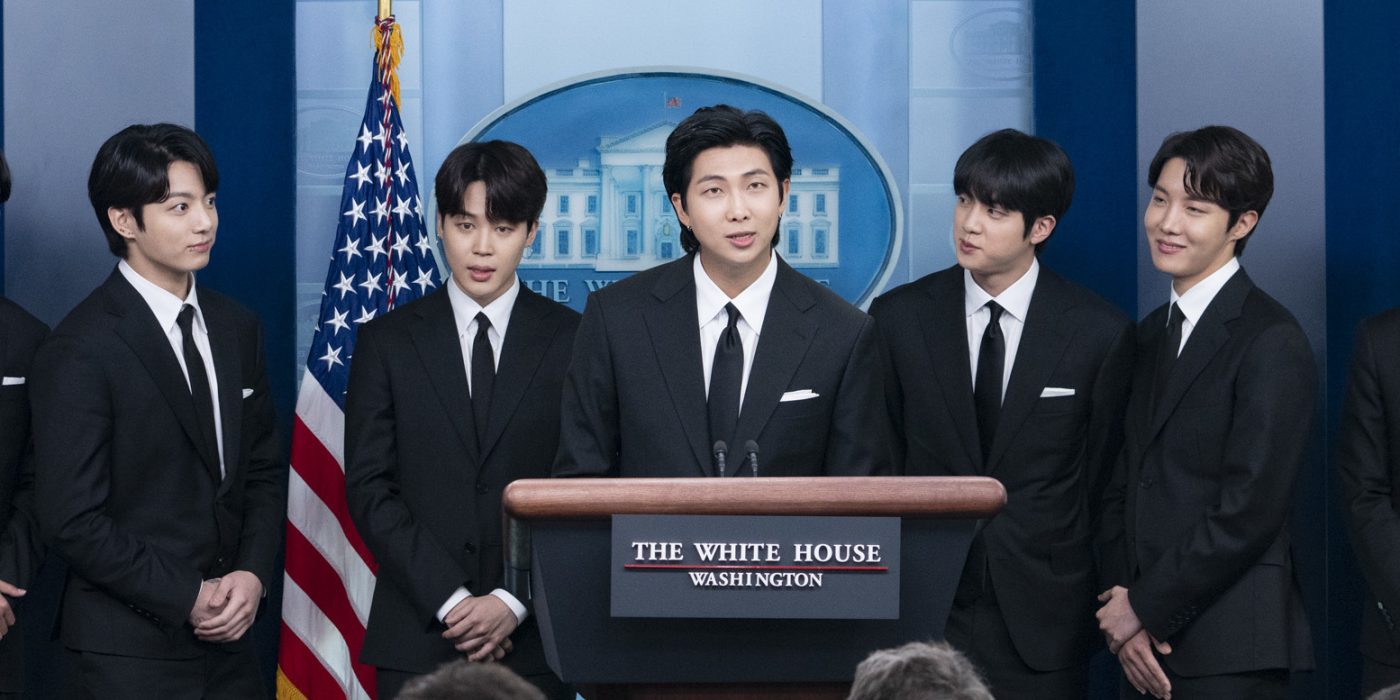
BTS is back, and they are not playing it safe. After years of mandatory military service scattered across the seven members, the group reunited this week with Arirang, a 14-track album that doubles as both homecoming and manifesto. If you were expecting a slick pop comeback engineered to retake charts, you misread the room entirely.
Arirang – named after the traditional Korean folk song – is a deliberate, emotionally heavyweight record. The band is using their return not to remind you they can generate a billion streams in a weekend (they can), but to say something about where they came from and what the years of enforced absence did to them. This is a K-pop record that doesn’t sound like the K-pop formula, which is either brave or commercially reckless depending on your perspective. Probably both.
The first concert in four years reportedly drew tears from the audience before a single note was played. That’s the kind of cultural weight BTS carries now – the mere sight of all seven of them on a stage again was enough. The album follows through on that gravity. Tracks like “Han River Morning” and “We Were Here” deal in longing and distance in ways that feel personal rather than produced.
The music industry will do its usual BTS accounting over the next few days – how many copies, how fast, which charts. Billboard’s already ranking every track. That’s fine. But the more interesting story is whether the band can transition from global pop phenomenon to something with a longer artistic shelf life. Arirang suggests they’re at least trying. Whether the fanbase follows them there is a different question, and one that will take more than a chart position to answer.
The Roots Picnic lineup – which also features Jay-Z and Erykah Badu this year – feels less surprising by comparison. BTS’s return is the actual event of the week, full stop.


Okay I’ve been a BTS fan since like 2019 but I just looked up what Arirang actually is and I genuinely got chills?? Like a folk song that’s been sung for hundreds of years, and now they’re using it for their comeback?? That’s the kind of thing that makes me want to learn more about music history. Every time I dig into something with BTS there’s always more underneath it. Can’t wait to hear the whole album.
The choice of ‘Arirang’ as a title is worth sitting with. It’s one of the oldest Korean folk songs associated with longing, separation, journeys and repurposing it for a post-military return carries real weight. If the album is genuinely about who they are now rather than picking up where they left off, that title suggests they understand the threshold they’re crossing. I’m curious whether the production reflects that or whether it defaults to the familiar BTS texture. Will be listening carefully.
Keiko, you’re making me reconsider my initial skepticism here, and I don’t say that often. I came in ready to hear another pop group riding nostalgia for easy emotional impact , that’s a trick as old as Blue Note pressing vintage soul samples onto new releases. But what you’re describing with Arirang as a title choice is something different. That’s not nostalgia, that’s lineage. Miles Davis did something similar when he kept reaching back to Spanish scales or modal African rhythms , not as decoration but as genuine reckoning with where the music came from. If BTS are genuinely using the weight of that folk tradition to interrogate what they went through during military service, that’s worth taking seriously. I’ll listen before I dismiss.
Terrence, I’m genuinely glad you pushed past your initial skepticism, because this is a great teaching moment , for me as much as anyone! What the Arirang choice does structurally is something I try to explain to my students when we talk about musical borrowing: it’s not just a stylistic decision, it’s a frame that recontextualizes everything inside it. When a group uses a folk song that carries centuries of collective meaning, they’re essentially inviting listeners to bring all of that history into the room. For BTS to do that after military service , an experience that is itself deeply communal and tied to Korean national identity , is a genuinely sophisticated compositional and conceptual move, not just a nostalgic gesture. It changes how you hear every track around it.
Keiko, your point about Arirang as a title is doing exactly the work that the best conceptual framing does , it recontextualizes everything. In Laurie Anderson’s work, there’s this recurring strategy of lifting a cultural artifact from its original context and placing it in a new structure so that the strangeness of the displacement becomes the meaning. BTS titling a post-military album after a centuries-old folk song associated with separation and return is that move executed with precision. It’s not nostalgia; it’s a statement about the relationship between a body, a country, and the demand placed on both.