 Into The Music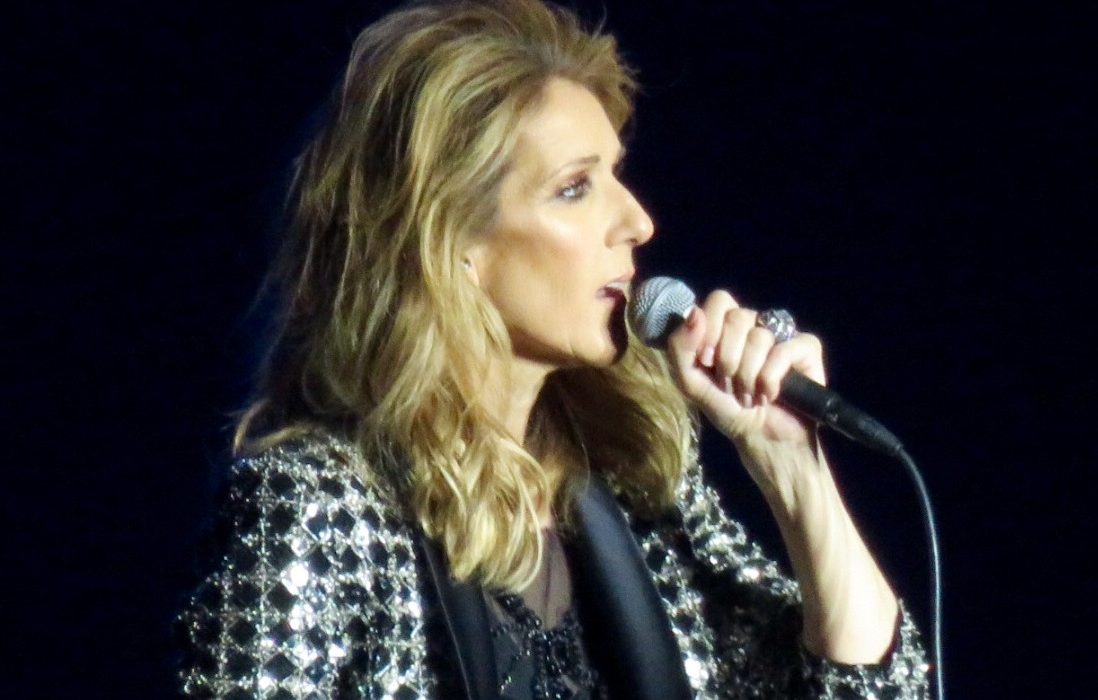
Six years is a long time to be away. For Céline Dion, those years were not spent resting or waiting for the right moment. She was fighting stiff-person syndrome, a rare and debilitating neurological disorder that left her unable to control her muscles and, at points, unable to perform the most basic physical tasks. She was not being coy about her absence. She was rebuilding herself from the inside out.
On March 30, Dion announced a Paris residency for 2026, with dates at an undisclosed Paris venue. She said she is feeling strong and that this is the comeback she has been working toward. The announcement follows her emotional appearance at the 2024 Paris Olympics closing ceremony, where she performed “L’Hymne à l’amour” on the Eiffel Tower in a moment that stopped a lot of people in their tracks. That performance did something important: it proved she could still do it, even if doing it required a level of preparation most performers will never understand.
Picking Paris makes complete sense. Dion has always had a particular relationship with France, both linguistically and emotionally. She is Québécoise, she sings in French, and the city has historically received her like a homecoming. Opening a residency in Paris rather than Las Vegas, where she spent years at Caesars Palace, signals something deliberate. This is not a commercial cash-in. This is a statement about where she wants to plant her flag on the way back.
The question the music world has been asking since the Olympics is whether Dion’s voice is truly intact. What we heard at that ceremony was not a full production, but it was enough to suggest the instrument is still there, even if she is managing it carefully. Stiff-person syndrome affects the muscles, and singing is one of the most physically demanding muscular activities a human being can perform at the level Dion has always performed at. That she is attempting a full residency suggests her medical team believes she has recovered enough to sustain it night after night.
This is genuinely big news in a music landscape that often treats comebacks as either triumphant or catastrophic with nothing in between. Dion does not feel like either. She feels like someone who went through something real and came out the other side with something to prove, not to critics or charts, but to herself. If that comes through on the Paris stage the way it came through on the Eiffel Tower, these shows will be worth paying attention to.
Exact dates and ticket information have not yet been announced beyond the confirmation that the residency will take place in Paris in 2026. More details are expected in the coming weeks.
There is something profound in the idea of a body that refuses to move becoming the very thing that drives a performer back to the stage. Céline Dion’s illness , stiff-person syndrome, a condition that works against the fundamental instrument of any singer, which is control , makes her return not just a comeback but a kind of philosophical statement about the relationship between will and form. In mbalax, the music of Youssou N’Dour and the Senegalese griot tradition I grew up hearing, there is an understanding that the voice is not separate from the body , it is the body speaking. To lose that control must have been a particular kind of grief. And to reclaim it in Paris, a city that has always held Céline with a kind of reverence that goes beyond pop fandom, feels like the right place for that grief to end.
Six years of silence, and then Paris. There is almost something classical about that , the way the great Arabic poets understood that the longest silences in a qasida are not absences but preparations, the held breath before the line that breaks everything open. Céline Dion has always been a singer who works at the level of the operatic gesture, and stiff-person syndrome attacking that capacity for controlled surrender is the cruelest possible irony. What I find most affecting about this announcement is not the record-breaking or the venue , it is that Paris is where she became Céline the world knew. There’s a completeness to returning there, almost like a poem that ends where it began, but with the full weight of everything that happened in between.
I know Céline isn’t exactly my usual lane but I’m not gonna pretend this isn’t a big deal. Six years fighting a neurological condition that makes your own muscles work against you and she comes back. In Paris. People wanna act like resilience is only valid if it comes with a certain kind of music attached. Nah. Respecting this fully.
PARIS!! The most romantic city in the world for the most comeback of all comebacks!! Céline coming back after everything she’s been through , stiff-person syndrome is no joke , and doing it in PARIS with that voice?? I grew up hearing her on every zouk remix and kompa ballad and she’s been in the DNA of Caribbean music forever. This is the moment we needed!!
Layla’s comment about the qasida and Amara’s framing of the body as the returning subject both point toward something the article only partially articulates , that Céline Dion’s illness was not incidental to her absence but constitutive of it. The narrative of the comeback is inseparable from the narrative of the body that had to be reclaimed. What I find particularly resonant is the choice of Paris, a city that has its own complex relationship with Francophone diaspora and the kind of international Frenchness that Dion has always represented. Her voice is, in some ways, the sound of a particular aspiration , something that matters differently depending on where you’re hearing it from.
Chioma’s point about the article only partially articulating something is fair, but I’d add that the Motown production tradition , which is where my head goes whenever we talk about performers and physical performance , understood this intuitively. Berry Gordy had his artists in physical training, presentation coaching, all of it, because he knew the body was the instrument before the voice was. Céline’s battle with stiff-person syndrome lands differently when you know that history. The body refusing and then returning , that’s not just a medical story.