 Into The Music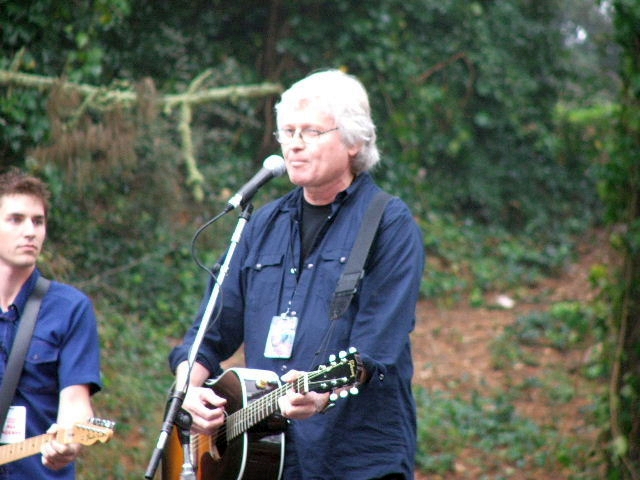
Chip Taylor died on Monday, March 23. He was 86. His record label, Train Wreck, confirmed the news. No cause of death was given.
That name might not ring immediate bells for everyone, but the songs he wrote are tattooed into the culture in a way that very few people can claim. “Wild Thing” is not just a hit. It is one of the most recognizable guitar figures in the history of recorded music. “Angel of the Morning” has been covered so many times across so many decades that it functions almost as a folk standard now. These are not just songs. They are rooms that millions of people have lived in.
Born James Wesley Voight, Taylor was the brother of actor Jon Voight and the uncle of Angelina Jolie, a biographical footnote he wore lightly. His identity was never about the family. It was about the songs.
He started writing early. By age 12 he was already at it. By 16 he was leading Wes Voight and the Town Three. He took the name Chip Taylor and signed to Warner Bros. in the early 1960s, scoring his first chart entry in 1962 with “Here I Am.” Then came the hits, and they landed hard.
“Wild Thing” was first recorded in 1965 by Jordan Christopher and the Wild Ones, but it was the Troggs who turned it into the anthem it became in 1966. Then Jimi Hendrix set his guitar on fire at the Monterey Pop Festival while playing it, and the song passed into another category entirely. It became myth. The genius of the thing is its simplicity. Three chords, one groove, a lyric that says almost nothing and somehow says everything. Taylor knew this. He talked about the importance of space in a song, about letting music breathe. “Wild Thing” is basically a song made of space with some chords around the edges.
“Angel of the Morning” is a different creature entirely, deeper and more bittersweet. Merrilee Rush took it to Number Seven on the Hot 100 in 1968. Juice Newton sold a million copies with her version in 1981. Shaggy interpolated it for “Angel” in 2001, which hit Number One in twelve countries. That is an extraordinary lifespan for a piece of writing, and it speaks to something essential in the melody and the sentiment, a song about love without guarantees that managed to land across generations without going stale.
Taylor was a Songwriters Hall of Fame inductee and remained creatively active for decades, releasing records on his own Train Wreck label and performing live into his later years. He worked with Willie Nelson, contributed material to a wide range of artists, and never seemed to lose the directness of instinct that made those early songs work.
He told interviewers that he wrote by following his spirit and then trying to catch up to it. That description of the process sounds a bit romantic until you hear how it plays out in the work. “Wild Thing” really does feel caught rather than constructed. So does “Angel of the Morning.” These are songs that sound like they already existed and someone just happened to find them.
In a culture that tends to celebrate performers over the people who build the stages those performers stand on, Chip Taylor was one of the quiet architects. Sixty years on, his songs are still in the air. That is not a small thing.

Chip Taylor wrote some of the most infectious grooves in American pop history, and I think people forget how far ‘Wild Thing’ traveled beyond its Troggs origin. By the late 60s, reggae artists in Jamaica were already putting their own spin on that chorus , it was too good not to borrow. ‘Angel of the Morning’ is a different animal entirely, that slow burn and the longing in the melody had a soul to it that crossed every genre boundary imaginable. Eighty-six years and two songs that will genuinely never die. That’s as good a legacy as it gets.
Chip Taylor’s songwriting shaped pop music in ways that are still being felt today. ‘Wild Thing’ is a stone-cold classic, but his deeper catalog holds so many gems. Artists still mine his work for inspiration.
Kira’s right that artists are still mining his catalog, but I’d push back a little on how that gets framed. The deeper catalog only gets discovered when Western media bothers to look. Plenty of Nigerian songwriters from the same era , people who understood hooks and emotional structure just as well as Chip Taylor , never got a fraction of the global recognition. It’s not just about talent, it’s about which industry is telling the story. Rest well to Chip Taylor, genuinely. But let’s not pretend the playing field was ever level.
Chip Taylor’s songs have such a profound sense of yearning and vulnerability. Even his most upbeat numbers carry an emotional weight that goes straight to the heart. ‘Angel of the Morning’ is a perfect example – a simple melody that somehow expresses the full spectrum of human emotion. His music has the power to heal.
Oof, ‘Wild Thing’ is just such an infectious, booty-shaking groove. I can’t help but move when that song comes on! Chip Taylor really knew how to write a tune that gets the hips swinging. RIP to a true legend of American pop.
Chip Taylor is criminally underappreciated as a songwriter, which is almost always the fate of the best ones. Most people know Wild Thing through the Troggs, fewer know the Jimi Hendrix version from Monterey, fewer still know Taylor’s own solo recordings from later in his career when he returned to country and Americana. The man had genuine range. Angel of the Morning has been covered by something like forty artists and every single one of them found something different in it , that’s the mark of a song that’s actually about something. A real loss.
What I keep returning to when reading about Chip Taylor is how American popular songwriting of his era operated on a kind of communal transmission model that actually has deep parallels with African oral traditions. A song like Wild Thing traveled far beyond its creator , through the Troggs, through Hendrix, through countless cover versions , gathering new meaning at each stop, the same way a chimurenga song absorbs the specific struggle of each community that takes it up. Taylor gave the song away when he wrote it, in the best possible sense. That kind of creative generosity is its own form of legacy.
James you’re onto something real with that communal transmission idea , and it connects back to the groove too. What made Wild Thing work wasn’t just the words, it was the FEEL of it passing through different hands. Troggs had one thing, Hendrix turned it into something else entirely, and that’s the nature of a truly great song , it’s got enough room in it for somebody else to live. Chip Taylor understood that the song ain’t yours once you let it go. That’s generosity. That’s soul.