 Into The Music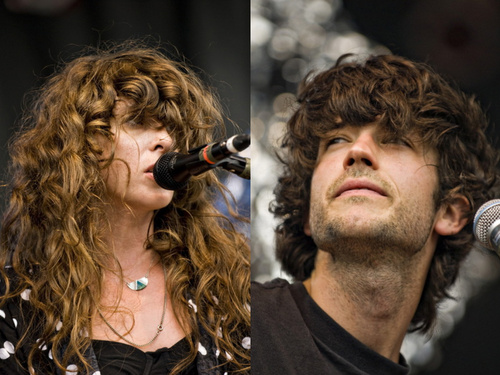
Dream pop has always existed slightly outside of whatever the main conversation in music is having. When grunge was dominating, dream pop was there, washing over the edges. When EDM was the only thing anyone wanted to talk about, dream pop kept making its gauzy, atmospheric records. It doesn’t need the spotlight. It doesn’t particularly want it. And it’s been consistently producing some of the best music of the last four decades because of that indifference.
The genre traces back to the early 1980s, when 4AD Records in the UK began releasing records from bands like the Cocteau Twins, This Mortal Coil, and Dead Can Dance that prioritized texture and atmosphere over conventional song structure. Elizabeth Fraser’s voice on Cocteau Twins records remains one of the most extraordinary instruments in pop history – technically wordless for much of the catalog, deployed as sound rather than language, achieving emotional communication through pure tonal quality.
The basic toolkit: washed-out guitars run through reverb and delay, vocals mixed to sound like they’re coming from another room, tempos that float rather than drive, a general preference for atmosphere over hook. The genre isn’t trying to grab you. It’s building an environment and waiting to see if you want to step into it.
Beach House essentially became the genre’s defining act for the 2010s, making six or seven records that refined the core dream pop aesthetic without ever significantly departing from it, and becoming more beloved with each one. Their records are critic catnip precisely because they’re so intentionally doing one thing and doing it as well as it’s possible to do. Victoria Legrand and Alex Scally are maximalists in minimalist clothing – everything is in service of the sound, and the sound is enormous.
More recent inheritors include Alvvays (dream pop meets jangle pop, usually excellent), Men I Trust (Québécois bedroom pop that sits in dream pop territory), and Avalon Emerson’s new record Written Into Changes, which approaches the genre from an electronic angle but inhabits the same emotional register.
Entry points if you’re new: Cocteau Twins’ Heaven or Las Vegas, Beach House’s Teen Dream, Mazzy Star’s So Tonight That I Might See. These are records designed to be listened to in full, preferably in the dark or the early morning. They reward patience and punish distraction. In that, they’re unlike almost everything else in popular music, which is part of the point.
Dream pop’s relationship to Cantopop is something I’ve thought about artists like Faye Wong were clearly absorbing Cocteau Twins and Slowdive in the ’90s and filtering it through Cantonese pop sensibility, and somehow it worked perfectly. The dreamy texture actually suits the tonal qualities of Cantonese. What’s interesting about the ‘never needed your attention’ framing is that it’s the opposite of how the Canto market operates, which is very attention-hungry. Maybe that’s why Wong always felt like an outsider in her own industry she was operating by dream pop logic in a spotlight industry.
I hear what this article is saying but can we talk about how much dream pop borrowed from shoegaze production without always giving credit? And then how much that whole mid-2000s bedroom pop wave lifted directly from both without most people clocking the lineage? The “didn’t need your attention” framing is a bit too precious for me, some of those artists absolutely wanted attention, they just didn’t get the mainstream shot. Different thing.
OK dream pop is beautiful and everything but every time I try to play it out people just stand there and stare at the ceiling lmaooo. I respect the 40-year survival act though! Any genre that keeps going on pure devotion has earned something real.
From a production standpoint, the dream pop lineage is fascinating because it’s one of the few genres where the reverb IS the instrument. The Motown engineers would have had thoughts about that, they were obsessive about controlling room sound, and dream pop basically inverted that entirely. Studio as atmosphere rather than studio as precision. Both valid, very different philosophies.
dream pop is just shoegaze with better PR tbh. still worth it tho
The 40-year survival story is genuinely impressive, but I notice the article’s entry points are all very Western. If you’re making this argument about genre longevity without mentioning the African influences on ambient texture, Eno literally credited Nigerian music, then the history isn’t quite complete. Dream pop’s family tree has roots that the genre press consistently forgets to name.
Adaeze, your point about the Western entry points resonates with something I think about in qawwali traditions , how the same quality of longing that Nusrat Fateh Ali Khan could summon in a single raga has been circling through music for centuries without needing a genre tag. Dream pop’s appeal to something underneath language, that shimmer and dissolve, is not a Western invention. It is something closer to a universal human hunger that different traditions have reached for in their own ways. The genre may have a name from 4AD’s press releases, but the feeling it’s chasing is as old as devotional music itself.
The ’40 years without needing attention’ angle is interesting but it also reveals something about whose attention we’re measuring. Dream pop has been central to certain European and East Asian scenes for decades , this wasn’t some cult secret, it was a thriving parallel culture. The article’s framing as ‘quiet survival’ is only true if you’re looking at US/UK mainstream metrics. When Afrobeats was doing the same thing , building a global audience without Western media coverage , nobody wrote think-pieces about its mysterious resilience. The music just went where the ears were. Dream pop did the same.
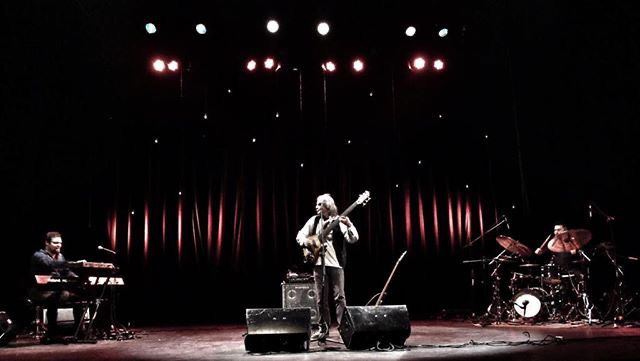
Coming at this from drums: dream pop is one of the few genres where the drummer’s job is specifically to disappear. The whole texture depends on rhythm being felt rather than heard , you’re in the reverb, not on top of it. That’s genuinely hard to do well. Most drummers want to push. Dream pop asks you to pull back until you’re basically a suggestion. The best dream pop drumming I’ve heard sits right on the edge of absence and it takes real control to live there.
Jerome, the reverb-as-instrument point is well made, and it connects directly to what happened with city pop in Japan during the same era , producers like Tatsuro Yamashita were using the studio’s acoustic properties as compositional elements, not just mixing choices. There’s a shared sensibility there about space and depth that I don’t think has been written about seriously. Dream pop came out of 4AD and city pop came out of bubble-era Tokyo but they were solving similar questions about how to make recorded music feel physical.