 Into The Music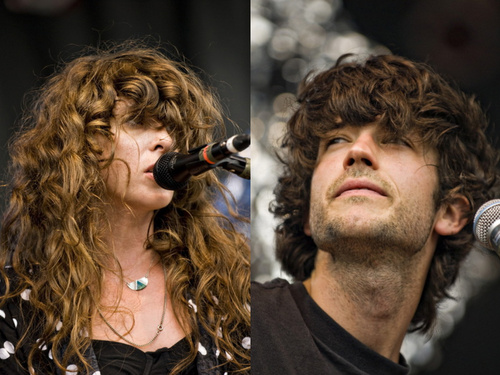
Dream pop is one of those genre names that does too much explaining and not enough describing. It tells you the mood, roughly, and it tells you the form, roughly. What it doesn’t tell you is how wide the territory actually is, or how stubbornly the music has refused to become a museum piece.
The roots go back to the 1980s, when certain UK post-punk bands started treating the guitar as a texture generator rather than a lead instrument. The Cocteau Twins are the obvious reference point, and they remain the essential one. Elizabeth Fraser’s voice alone could justify the genre’s existence. Ethereal wave, 4AD Records, a certain kind of reverb-soaked production that made everything feel like it was underwater. That’s the DNA.
What grew from it was more varied than the founding generation suggested. Slowdive in the late 80s and early 90s pushed it toward something heavier and more physical. My Bloody Valentine are technically shoegaze but the overlap with dream pop is significant enough that the distinction often collapses in practice. Both are about texture and immersion. Both use volume and reverb to create a kind of weather inside the music.
Beach House is the modern anchor. Victoria Legrand and Alex Scally have made seven records of dream pop that manage to feel consistent without being repetitive, which is not easy. Teen Dream from 2010 is where a lot of people came in. Bloom from 2012 is where the genre reached peak cultural visibility in its contemporary form. Depression Cherry from 2015 stripped the production back and proved the songs could hold without the shimmer. They keep working because they understand that the genre is about feeling, not about any particular sonic signature.
Beyond Beach House, the territory has expanded considerably. Washed Out, Cigarettes After Sex, Grouper, Soccer Mommy’s quieter material, many of the artists orbiting the Captured Tracks and 4AD rosters. The genre has absorbed influences from ambient music, from indie folk, from lo-fi production aesthetics. It keeps updating without losing whatever core quality made it distinct.
Part of what makes dream pop durable is that it doesn’t require virtuosity in the conventional sense. What it requires is atmosphere. Anyone can play those guitar parts technically. Not everyone can make them feel like something. The genre self-selects for artists who care about emotional weight over technical display, and that tends to produce music that holds up across contexts and moods.
The other thing it does well is vulnerability. Dream pop lets feelings exist without explanation. There are no concept albums about breakups that walk you through every stage. The music creates a condition in which you feel something without being told what to feel. That’s a harder trick than it sounds.
Right now the genre is in good health. New artists are finding it, established artists are deepening it, and the audience is broad enough that it can sustain multiple registers of ambition. That’s what a healthy genre looks like.
Starting Points
- Cocteau Twins, Treasure (1984)
- Slowdive, Souvlaki (1993)
- Beach House, Teen Dream (2010)
- Grouper, Dragging a Dead Deer Up a Hill (2008)
- Washed Out, Within and Without (2011)
What strikes me most about this piece is the courage it takes to describe a genre through what it feels like rather than what it technically is. I spent thirty years teaching music theory in Accra, and I always told my students that genres are not containers , they are moods that certain sounds happen to share. Dream pop, in that sense, is one of the more honest genre names we have, even if it is imprecise. The way it evokes memory without specifying whose memory , that kind of openness is what makes music universal. A student once told me that Beach House sounded like the feeling of almost remembering something. I have never found a better description.
The title of this piece , “the genre that sounds like memory” , made me stop and think about what that actually means for someone whose musical inheritance comes from a different place. In the mbalax tradition, music does not sound like memory so much as it creates the conditions for memory to be inhabited collectively. The sabar drum does not evoke the past; it summons presence. Dream pop seems to do the opposite: it makes the present feel already past, already receding. I find that interesting as a cultural difference. Whether nostalgia is comfort or loss probably depends on what you have to return to.
Dream pop is one of those genres where Canada punched way above its weight and nobody noticed outside the country. Destroyer’s more atmospheric work, Land of Talk, parts of the early Stars catalogue , there’s a particular kind of grey-sky Canadian melancholy that fits dream pop’s textures better than you might expect from a country with that much wilderness. The genre that sounds like memory makes sense when you grow up somewhere that is physically enormous and still somehow feels like it’s disappearing. Anyway. I realize this is very specifically my perspective. But the piece made me think of it.