 Into The Music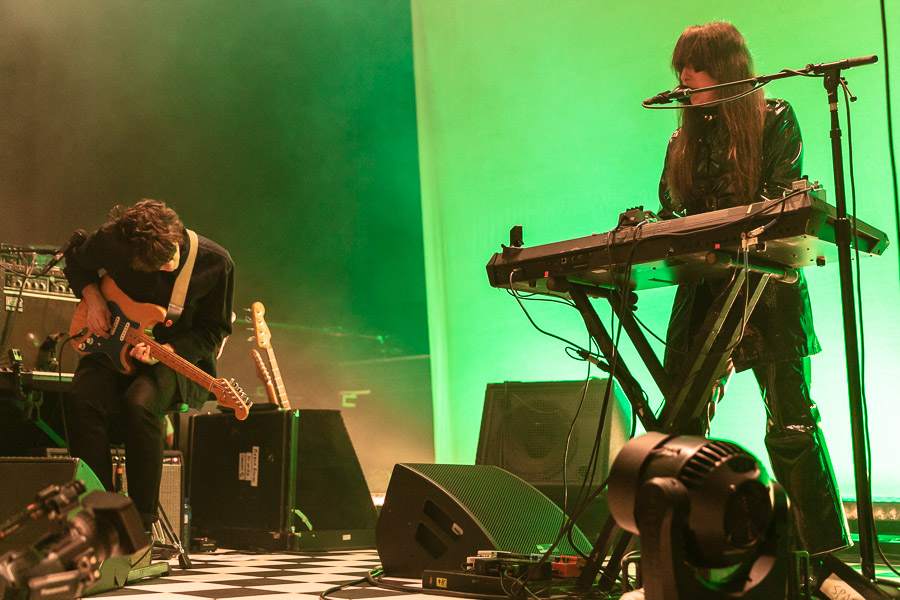
Dream pop has always had a problem with its name. The genre label suggests something passive, something you let wash over you while you drift toward sleep. The actual music is far more demanding than that. It requires you to lean in. It rewards the kind of listening where you stop parsing lyrics and start paying attention to how sounds move against each other, how a melody disappears into reverb at exactly the right moment, how silence inside a dense arrangement can hit harder than any drum hit.
The genre coalesced in the 1980s, drawing from shoegaze, post-punk, and the atmospheric end of new wave. Cocteau Twins are the obvious touchstone, a band that essentially invented a new grammar for how vocals could function in recorded music. Elizabeth Fraser’s voice was not delivering text. It was operating as an instrument, a texture source, something that implied feeling without specifying it. The Cocteau Twins released some of the most beautiful records of the 20th century and remained almost entirely absent from mainstream radio throughout their career. This tells you something about what dream pop optimizes for and what it does not.
4AD as a label was central to establishing the genre as a genuine movement rather than a collection of individual outliers. Dead Can Dance, This Mortal Coil, and early Throwing Muses all occupied adjacent spaces. The label had a visual and sonic aesthetic that cohered in ways that small labels rarely managed, and that coherence helped dream pop develop an identity even before the term was in wide use.
The genre’s second major wave arrived in the early 2010s, and this time it had the internet to help it spread. Beach House are the central figures here, a duo from Baltimore whose records from Teen Dream onward accumulated a devotion that was disproportionate to their commercial profile. Victoria Legrand’s voice, Alex Scally’s guitar work, and their combined willingness to play with density and space created something that felt new while remaining clearly connected to what the Cocteau Twins had done twenty-five years earlier.
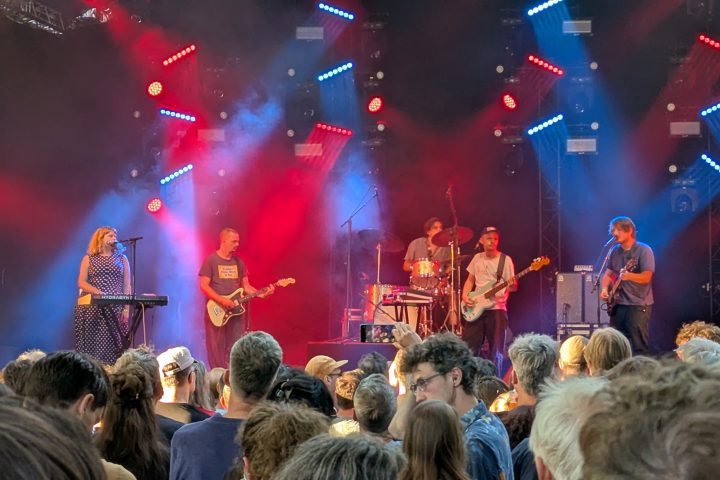
Beach House also demonstrated something important about dream pop’s relationship with live performance. The genre has always been accused of being a headphones genre, a studio genre, something that dissolves when you take it off record and put it on a stage. In practice, the best dream pop acts have found ways to recreate atmosphere at volume, and Beach House in particular showed that a live set could function as an extension of the recorded material rather than an approximation of it.
Other contemporary figures include Grouper, whose solo work by Liz Harris operates in the most minimal possible version of the genre, recordings that are sometimes barely audible and all the more powerful for it. Washed Out, Tame Impala at certain angles, and early Alvvays have all operated in territory adjacent to dream pop while developing their own distinct approaches.
What the genre keeps solving is a specific problem: how do you write about interiority? How do you make music about the inside of an experience rather than its surface? Most pop songwriting works from the outside in, describing situations and hoping the emotion follows. Dream pop starts from the emotional texture and builds outward, which means the architecture is inverted. Melody serves atmosphere. Words serve sound. The result, when it works, is music that communicates something that prose cannot easily touch.
The genre is currently healthier than it has been at any point since the early 2010s wave. New acts continue to find their way into the tradition while finding new angles on it. The streaming era, whatever its problems, has been good for dream pop: the algorithm rewards replay value, and dream pop rewards repeated listens. A record you can live inside is exactly what the shuffle generation has quietly discovered it was missing.
I respect the write-up but let’s be honest , dream pop gets think-pieces and ‘atmosphere as the point’ think-pieces, and meanwhile cumbia, norteño, corridos tumbados are doing things with texture and mood that are just as sophisticated and nobody’s writing long essays about that. It’s not that I don’t appreciate Cocteau Twins. I just notice which genres get the poetic treatment.
What gets me about dream pop is there’s always this gorgeous guitar work just floating underneath everything , like Robin Guthrie on those early Cocteau Twins records is doing stuff Clapton never would have tried, all that shimmer and sustain. I came to this genre late, kept waiting for the solo that never came, then realized the whole SONG was the solo. Took me a while but now I get it!
The article gets at something real about ‘passive’ being a misreading. Dream pop requires active listening to function , you’re not washing dishes to Grouper, you’re being restructured by it. What connects it to industrial and noise for me is the same thing: both use texture as primary compositional material rather than melody. The fact that one sounds soft and the other harsh is almost beside the point.