 Into The Music
Electronic music is the only genre that has no instrument of its own that is not already borrowed from something else. It uses the synthesizer, which was invented for classical experimentation. It uses the drum machine, which was invented to replace session drummers at weddings. It uses the sampler, which was invented to make it cheaper to use real instruments in studio recordings. And from those borrowed and repurposed tools it built a world that has absorbed every other genre of popular music and changed how all of them sound.
The genre has been declared dead approximately every five years since the early 1980s, and each time the obituary was filed, electronic music was in the middle of mutating into something new. Disco died and spawned house. New Wave peaked and sent shockwaves into synth-pop and industrial. The rave era peaked and collapsed and gave birth to drum and bass, ambient techno, and trip-hop. EDM as a commercial phenomenon peaked and retreated, leaving behind a generation of producers who knew how to build a crowd and had nothing left to prove to one.
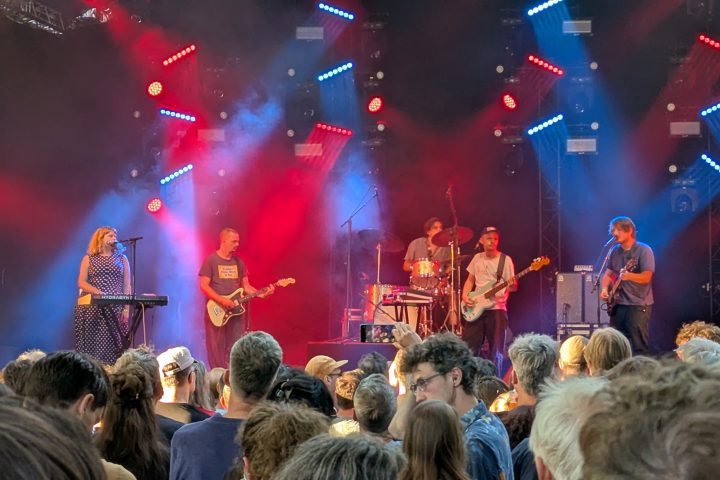
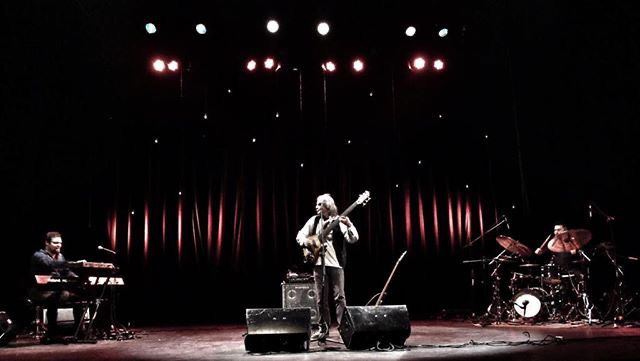
What makes electronic music genuinely distinct from every other genre is that it has no fixed relationship to performance. A rock band is defined by the act of people playing instruments together in real time. Electronic music never had that constraint, and the culture around it has always been ambivalent about what live performance even means. Some artists play synthesizers and drum pads live. Some trigger pre-made sequences. Some stand behind a laptop. Some of the most powerful electronic music events in history involved one person moving their hands over equipment in ways that the audience could not fully see or understand.
This created a different kind of listening culture. Electronic music audiences, particularly in the club and rave traditions, were never there to watch a performance in the conventional sense. They were there to be inside the sound. The distinction matters because it changed what the music was supposed to do. A rock concert is oriented toward a stage. An electronic music event is oriented toward the floor.
The genre’s relationship to technology is also unlike any other. Electronic music gets rebuilt every time the tools change. The Roland TB-303 bass synthesizer, famously misused by Chicago DJs in the 1980s because it was too cheap to be used correctly, created acid house as an accidental byproduct of someone playing with a machine they barely understood. The Amen break, a six-second drum sample from a 1969 funk record, became the rhythmic backbone of drum and bass, jungle, and multiple generations of electronic music that came after. The genre runs on happy accidents and misappropriation.
In 2026, electronic music has no center. That is the most accurate description of its current state. There is club music, ambient music, footwork, hyperpop, noise, drone, experimental sound art, and dozens of subgenres that do not have names yet. The unifying thread is the technology and the attitude: the willingness to build from whatever is available, to treat the studio or the laptop as the instrument, and to make something that could not exist without electricity.
Every other genre of music that has survived for more than a few decades has found its core and defended it. Electronic music has consistently refused to do that. It does not have a sound, it has a method. And the method is simple: take what exists, break it down, rebuild it as something no one has heard before, and then watch someone else take that and break it down again.
That restlessness is what keeps it alive. It has been alive for fifty years and shows no signs of stopping.
This landed somewhere unexpected for me. The idea that electronic music has no fixed home , that it’s always borrowing, always between places , actually describes what makes it so effective in therapeutic contexts. Music that doesn’t belong to one place can belong to anyone. I’ve used ambient electronic pieces with clients who feel like outsiders everywhere, and something about the statelessness of it provides a kind of comfort nothing else quite does.
Erica, what you’re describing , music that lives between places , makes me think of Caribou, honestly. Dan Snaith is from Dundas, Ontario, which is about as landlocked and geographically unromantic as it gets, and yet his electronic music sounds like it belongs to no place and every place simultaneously. Same with Jessy Lanza out of Hamilton , that cool distance, that sense of sound unmoored from geography. Canada has produced a remarkable number of electronic artists who seem to embody exactly this quality the article is describing, maybe because we’ve always been slightly outside the centres of things and learned to make that our own kind of freedom.
Erica I hear you on the therapeutic angle but I’d push back gently on the ‘between places’ framing as a universal positive. For hip-hop producers in the early 90s , Pete Rock, DJ Premier, RZA , the specific PLACE mattered enormously. The Bronx, Queens, Staten Island , that geography was in the music. Electronic music being stateless is one thing. But when hip-hop started going stateless in the 2000s, a lot of people said it lost something real. There’s a difference between music that was never rooted and music that gets uprooted.
Growing up in Hong Kong you heard this firsthand , Cantopop in the 80s and 90s was already doing something similar, absorbing Western synth pop and Japanese city pop and coming out as something neither. But electronic music as a whole category took that further: no geography at all, just a process. What’s interesting is how that rootlessness created its own regional scenes anyway , Detroit, Berlin, Chicago , as if the music needed to plant itself somewhere even when it theoretically didn’t have to.
I taught music for thirty-two years, and one of the hardest things to explain to students was why the synthesizer , which is just electricity shaped into pitch , could carry genuine feeling. The article is right that electronic music has no fixed home, but I would add that this is precisely why it has been so freely adopted everywhere. In Accra in the 1980s, highlife musicians were already folding the Korg into their sound without any sense of contradiction. The instrument didn’t belong to anyone, so it belonged to everyone. That kind of freedom is rare in music history, and I think we haven’t fully appreciated what a gift it has been.
Tresor. 1991. This argument was settled then.
Coming from the world of ska and pop-punk where EVERYTHING has a home (usually a sweaty basement in New Jersey) this whole genre-without-a-homeland thing is genuinely fascinating to me. My musical knowledge of electronic music basically starts and ends with some Chemical Brothers tracks I found on a burnt CD in 2003, so I’m probably not the authority here, but the idea that statelessness is a feature rather than a bug? That’s wild. My music scene has a very specific zip code and I kind of can’t imagine it otherwise.
The argument that electronic music has no instrument of its own is interesting but it sidesteps what I think is the more compelling question: does the absence of a fixed instrument create a different relationship to expression? Thom Yorke’s solo electronic work , ‘The Eraser,’ ‘Tomorrow’s Modern Boxes’ , is fascinating precisely because it strips away the band as identity anchor. You get the sense of a voice looking for a body. Radiohead were always moving toward this anyway, Kid A being the obvious moment, but the electronic solo work makes the displacement feel more honest somehow.